
51: Benoit Kim: Discovering More with a Podcasting Policymaker Turned Psychedelic Therapist, "Third-Culture Kid" and US Army Veteran


 Apple Podcasts

 Spotify
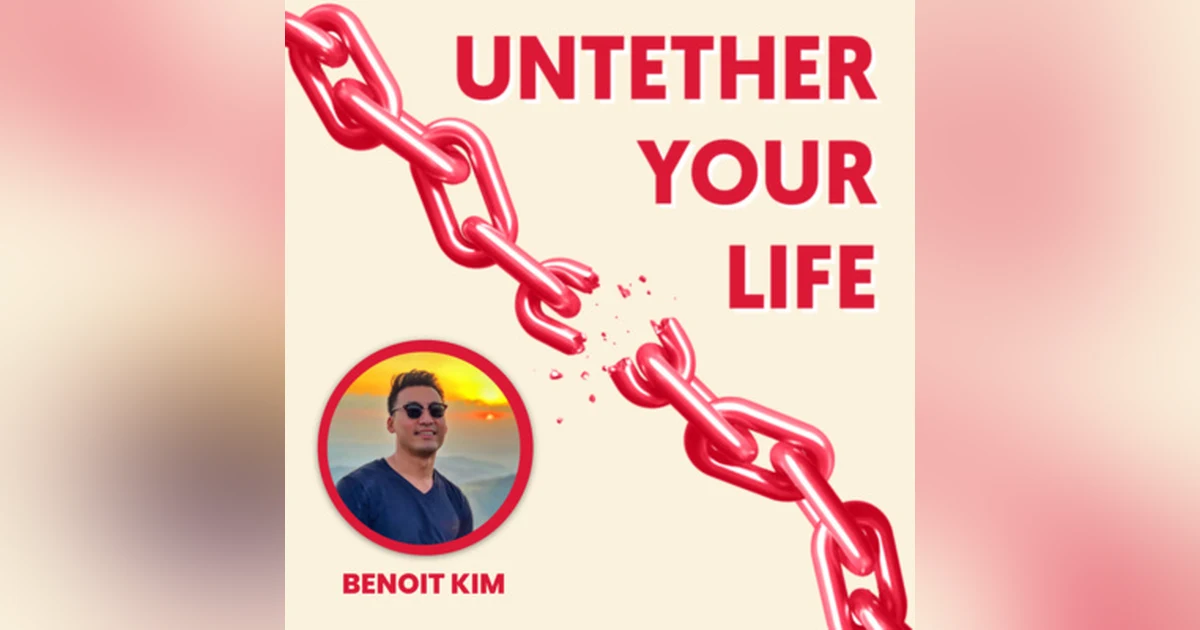
Benoit Kim could be seen as the poster boy for the mission of Untether Your Life, as he has broken free of the traditional templates of success for Asian Americans. Further, he’s gone above and beyond in owning his health, exploring the benefits of psychedelic therapies for managing mental illness both in a personal and professional capacity.
Benoit is a former policymaker turned therapist, US army veteran, and host of the Discover More Podcast - a show for introspective thinkers with growth mindsets seeking authentic life stories.
On this week’s episode of Untether Your Life, Benoit and Nikhil touch on numerous topics, including:
Benoit’s journey in launching Discover More – a top 2% globally ranked podcast - 3 years ago, and some of the incredible guests he’s spoken with How podcasters and content creators can leverage social media for benefit, and overcome its destructive elements, which some scholars have equated to a casino. Insights from thought leaders such as Naval Ravikant, James Clear, and Dr. David Rudd Benoit and Nikhil’s struggles and successes in navigating the journey of the Asian diaspora, characterized by a sometimes toxic combo of pressures and prosperity How schools of meditation like The Silva Method can help to tune down the static in the "radios" of our brains. The ramifications of psychedelic therapies such psilocybin, which was shown to eradicate complex PTSD and treatment-resistant depression for more than 80% of participants in a study published in the prestigious research publication Nature
To learn more about Benoit, please visit discovermorepodcast.com, or search for Discover More on Apple Podcasts, Spotify, or wherever you get your podcasts. You can also connect with him on Instagram or LinkedIn.
Connect with Nikhil to learn more about Untether Your Life and other projects:
0:00 How can podcasters and content creators leverage, social media to our benefit and overcome its destructive Elements, which some Scholars have equated to a casino, how can schools of meditation like the Silva method, help to tune down the static in the radios of our brains and enable us to use 2% of our effort to improve 98% of Our Lives. What are the ramifications of psychedelic therapy such as psilocybin? Which was shown to eradicate complex, PTSD and treatment-resistant depression for more than eighty percent of participants in one landmarks. Study and what is the Discover more podcast all about? Why is nikhil mentioning White Castle Sliders in relation to other podcasts out there? Is he trying to leverage the popularity of the Harold & Kumar films to boost this latest collaboration between two Asian Americans.
0:45 Stay tuned as we touch on these and many other topics on this week's episode of untether your life. Welcome to untether your life, show that empowers you to own your own health and break free of templates for managing physical and mental wellness. And looks at Key issues. Impacting the South Asian diaspora. I am your host and Kilt or cigar, and I'm passionate about the power of conversation to catalyze change this week, we speak with Benoit Kim, a former policy maker turned therapist, US Army veteran and host of The Discovery more podcast. A show for introspective thinkers with growth mindsets seeking. Life stories, his 2017, near deployment to the north South Korean border, caused him to experience his first major depression, which catalyzed his Venture into the realm of mental health.
1:37 After a few years of work in the policy sector, he pivoted recently into the clinical field as an aspirational psychedelic. Assisted psychotherapist the Discover more podcast launched three years ago and Benoit leaned into his curiosity. May the Top Apple podcast 200 charts twice in 2022. And Recently became a top 2% globally, ranked podcast in all categories. And with that, let's get untethered. So Benoit, thanks so much, it's great to have you on the show. Thanks think he'll very very excited for today's conversations and the thoughtfulness behind your show as well. Yeah. So do you want to tell us a little bit more Benoit beyond the description that I gave? I think that was a little bit of a teaser because you've definitely got one of the most interesting and eclectic backgrounds, but if you could take us through a little bit more about some of those keep bullet points as part of your journey. Yeah.
2:26 The Eclectic background is a good way to describe my host of diverse curiosity. But first and foremost, I think I'm a student of life. I have endless curiosity because I truly believe in the healing property of what curiosity means. And when one person has a humility to wield that Curiosity, I think you'll be often surprised by what life presents you on the other side through all these gateways that open up like you talked about the community, the networking, the insights, because I We believe the collective being of us being humans and I don't think any of us walk our path alone which is, I think the thesis of what mental health is, that we are not alone and through difference intuitive Whispers, through my intention, through the Legacy and the impact I want to impart onto this world. I went through a numerous series of pivoting and life sequences, so to speak.
3:19 And currently, I'm serving my clients through my background and identity as a clinical psychotherapist while also trying to Trade a ripple effect on the podcast, talking to like mine of folks who are collective impact makers. So, I was telling you a little bit about show discover more. I just absolutely love the podcast. And the way I told you is I kind of think of a lot of podcasts. As, you know, White Castle, sliders they're bite-sized nuggets of information that you can get, you know, while you're getting your oil changed or while your kids soccer game or whatever. But yours is definitely something. I kind of equated more to like a filet mignon. It's definitely very Substantive, very weighty and I always walk away with so many insights and so many either, you know, people that I want to connect with or books, you know, that I haven't explored the tell me a little bit more Benoit about discover more sort of, you know, what was the Genesis of that Venture, how it's evolved.
4:14 And yeah, a little bit more about what your intention is and sort of how its impacted your life and others. Yeah, it's to all the listeners. I just want to start this by saying that I started my podcast before the currents podcast Renaissance, I started the podcast three years ago in 2019 with a very selfish and self-serving intentions of just capturing some of these conversations on a public catalog like a podcast. I think all of us have these moments of profound insights through talking to your loved ones or friends. Maybe over a glass of wine. Maybe too many glasses of wine but how many of us do we remember those conversations? Because when you're in a diss immersive elements through this respect and curiosity a lot.
4:56 Of amazing insights and talking points emerge. So I wanted to capture that with a friends but then we pivoted to interviewing more world-class experts from different walks of life. And to your point I did keep this podcast more long form orientated even though it's not the best algorithm fitting with this death of attentions in 2022. But I'm more about 1,000, true fans. I care more about cultivating an intimate really like minded deeply intentional community of Fans versus hundred thousand and as a by-product of that process, if listeners can take away something discover more about insights and stories and the collective experiences that we all go through, even though that made a difference, that's what I hope to impart and Achieve on my podcast for many more years.
5:46 Yeah. And you're doing a great job of that. So my hats off to you, you and I had met on a Facebook group, I think there was a group for podcasters and so, you know, that's one of Of a host of experiences. I've had that have really pointed me to the beauty of social media. And that it is creating a community and that its opening your eyes to insights and different walks of life that you might not have had exposure to. However, I listened to your episode, I think it was with David Rudd, where he's talking about how social media is like a casino. So there's obviously the dark side to that. I'd love to hear a little bit more about your insights on social media. How it's played a role In your journey, not just with the podcast but overall because, you know, as I was reading a little bit more about specifically.
6:34 This is a very interesting thing Tick-Tock apparently is for people, specifically, in South Korea, I guess has been helping teens get better access to therapy or it's been a form of therapy or that which I found a little bit interesting, but I'm just bringing that up because I wanted to understand sort of what your thoughts are on social media. In terms of like how its shaped your journey and social media in general. Really. Yeah. Great question. So super quickly, I'm a third cultural kid or Global citizen like I was born in Paris and I lived in South Korea which is - City also spent six and a half years in China. So I speak fully Mandarin and I conduct all my therapy sessions in three languages but on the same token nikhil I think in China which is the origins and the creator of tick-tock, all their Tick-Tock content is extremely educational.
7:22 Hmm. Like they don't have all these 12 year olds dancing. It's extremely about a Todd's Educators, all these very very growth mindset content whereas obviously u.s. is very opposite of that and I joking talk to my friends about how this is the best new ones form of cyber warfare. How do you beat out your Ivory? You wipe out the next Generations Minds, how do you do that? You strength and suppressor attention, spending to 20 seconds or below? And I think that's what's happening. And I think there's talks in the US Congress as we speak that they may potentially ban or put restraints on Tick-Tock for The American Youth but on the same token. That's how I view social media, where I think you feel the same way as a podcaster compared to three years ago.
8:05 The attention span of my listeners who have honestly have tuned into these own and a half long form. Pretty deep and heavy conversations week after week. But even now I'm seeing some decrease in the retention for my cordless centers, according to analytics. And I think that's because of Instagram reels, how recently Instagram implements an You to change all videos in all posts. Two reels and reels are now 20 seconds, or 30 seconds or below, 60 seconds is too long. Now, it has to be 30 or below and I've seen that with all greater than engagement shifts. So because of that, I think social media usage has contributed a lot to these superficial relationships and human. Just don't really know how to interact anymore. Like, one thing, I talk a lot about with my clients is closure, like, how do you closure with today's relationships?
8:56 Man, sickly or friendship-wise you, don't people just block them off or ghosts or leave them on read and never attends to that conversation because it's uncomfortable. Nobody want to deal with uncomfortable conversations, obviously, but then that translates your real life where you don't know how to be cordial and courteous towards a fellow human being with the same genetic makeups. And I think that's a real concerns that have this far, reaching implications more, so than the attention spend more so than all these Brain cells being killed by social media usage but it's very very nuanced. And I think we're going to see this on a macro level. Few more years down the road.
9:36 Yeah, and I mean I think that's a great answer. I mean I think that social media is just a tool, right? And obviously there's a very Sinister pretext to this. There's a great book called digital Madness. I'm forgetting the author's name. But just some of the facts that I've come across in terms of how these companies have shaped their Products. I mean they literally have phds on staff who are paid to short-circuit our brain chemistry to basically get us. So addicted to that dopamine. Hit that. When you see that red button and I mean, this is the silliest thing, but like, I don't know about you, but like on Instagram you'll get an alert that say you got to like or something, but it'll just be something like up fooled.
10:18 You you know, Boston chicken is running a sale or some completely inane trivial event that is I was supposed to take you away from as we look at the Eisenhower Matrix, you know, the important and Urgent quadrants, you know, just shifting us into that loud. Clanging noise that occupies our attention, you know, that this gets us in this constant fight or flight mode and looking for dopamine. I think as a parent these days that's because I look at it from two different angles, one is, you know, obviously as a content creator obviously as a business owner I see that social media definitely does have have a lot of benefits in terms of getting the message out there. I think our former president whose name I won't mention the be talked about it as basically like having your own publishing company, which is so valid.
11:08 You know, I think that a lot of content creators, a lot of thought leaders scientists journalists. They are able to get their message out in a more efficient way. But there's always too much of a good thing, but I think for kids, especially the onus is a lot stronger. Now on parents to really Shape their kids values and teach them that, you know, racking up 1,000 likes on that silly post is not going to get you to the right outcome. You know, it's not going to get you to that pot of gold. So I do think that you know as a parent as someone who shaping the leaders of tomorrow. It's definitely a harder task. I think with that casino. That's a dr. Rudd had talked about before.
11:50 Yeah, if I may just a few commentary on that so on my latest episode with And Eddie episode 115. I interview a psychiatrist and psychotherapist dr. Justin, he actually talks about the origins in the purpose behind dopamine release and of course a lot of people demonize what Doberman is is simply a biological response and a lot of us called a molecule of more you want to do more of what she just did and dopamine release is very, very instrumental to our human survival in the past. Like in the cavemen prehistoric time, when you found Meat Source or a food source, your Doberman, releases increases your journaling, your stamina, your physical pollicis. So it allows you to hunt more.
12:36 We have the same response now from these likes and Clicks in social media. So we have this molecule of more being a release of dopamine and we want to keep doing more of what we just did. Wait has zero survival implications, it does not help us survive at all. And I saw this interview by haha Davis. He's a pretty big Ian on Instagram with 7 million followers, he talks about the Illusions, a social media presents to people. He said he was broke living, his mom's basement with 5 million followers. And he's a numerous paid gigs and sponsorships. I followed him for many years and to that token. Like, on my YouTube channel, I started six months ago and we're nearly at 1.5 K Subs, which is great.
13:20 And in that sense the reels and Instagram, they do provide this virtuous Loop of bringing more Scribers and engagement to my podcast on the YouTube front. At the same time, a lot of those engagements aren't as high in terms of retention because the attention is not the same. So I think the public has to recognize a lot of these nuances, vs0, Instagram, or social media is great or it's the worst. It's like truth is probably in the middle. Yeah. And again I mean at the end of the day it's a tool, right? I mean, I think it's really up to us as thoughtful human beings. You know, who are the most evolved? Species to really exercise that you know with great power comes great responsibility to really exercise that power that we have. And it's not easy obviously, because it's the rewards, the low-hanging fruits.
14:08 Are there you talk in your podcast a little bit with your co-host about meditation. And I think what I found interesting was you talked about how initially it was something that you might have been a little bit resistant to it because I think your mind is very active you know and it sounds like the pendulum shifted a little bit more and now You are more into meditation and how it's helped you and bringing that up because it kind of segues about for me. Meditation is helped with keeping those Sinister forces of Instagram, and Tick-Tock at Bay, just looking for something, going deeper and more introspective. I'd love to hear a little bit more about how that experience has been for you with meditation and how you shifted your perspective on that practice? Well, in the kill, you did a deep dive, I did. I've been departed from my co-host like nine months ago now.
14:56 Now yep. So yeah I first viewed meditation as I get this traction even though it doesn't really make sense, what I mean by that is I'm a stereotypical or archetypical thinker, although everyone's on a spectrum. But I fit the definition pretty long. So I always viewed my incessant thinking and all these intrusive thoughts as a competitive Advantage. I thought it's my way of thinking on my insistent, uncontrollable thinking as an edge above My peers and I attribute a lot of where I am and are cool success to my thinking. It's the funniest and dumbest thing I've ever thought about because I've you meditation as dialing down a radio signal if we can visualize a radio channel or radio and there's an ox and you can almost turn down the knob in terms of volume and frequency and even channels. And that's what happens to me where it before. I meditated three years ago since I've been at daily, meditator for about 20 minutes every single Eagle day for the last three and a half years and I've you meditation has saved my life, many folds.
16:01 And we can talk more about that too, but whenever I met it to you first thing in the morning, before I hit the gym, my chatter or my upstairs is quiet, the entire day. What that means is when I'm doing my work or doing my podcast right now with you. I have a zero other Chatters. I have zero. Internal dialogues between myself. I'm Craig completely in tune with what you're saying, the content and the intention of the on your questions. Responding within this container of conversations because my signals internally or dial down through my morning, meditation practice. So, in that sense, I think it's what really allows you to be optimal. And I tell people who I think a benefit from meditative or some sort of a mindfulness practices, I assume a very similar questions is if I told you there were an evidence-based, guaranteed way using 2% of your effort to dramatically increase the scent of your life.
16:57 Would you do that trade off? Most people would say yes because 2% 498, that's how I view meditations. And therapy know it's interesting that you mentioned the radio analogy and I've used that quite a bit myself because one of the schools of meditation is the Silva method. I don't know if you're familiar with that one, but it's very interesting because Jose Silva was actually I think radio repair man so it's almost like he brought that conceptualization of the Mind as an instrument, as a vice You know where there is a lot of static where there is a lot of noise that needs to be calibrated. I think to get the best output but no that's the great analogy. I want to understand a little bit more. So meditation was one of the things that you had talked about one of the other topics. You talk about is self care and, you know, obviously being a successful professional, obviously you've had some very impressive accolades in your career, tell me more about what self-care looks like in your world and sort of how its evolved over time.
17:56 And how its benefited you yeah. Borrow this term from a fellow friend and podcaster and Monte Fowler. He calls himself the self-care savants. So that so I call myself as well because I'm a veteran, first and foremost, and I had my first catalyzing major depressions through my near-death, deployments back in 2017. And I think, ever since then near-death experiences, I view my wall being as the number one priority. It's a non-negotiable for me, it's not an afterthought. Because I think a lot of us underestimate our capacity to grow and I mean to grow in terms of compounding skill sets, but also our distress tolerance also compounds over time.
18:38 So a concrete example is nikhil whatever amount of work you're doing being part of the Geo star marketing podcast Blog, the book, the movie that's coming out, you view the work or you're doing now ten years ago. I bet to ten-year-old younger version that kill. Can't even fathom. The amount of work you put into the Today as a father, as a partner in addition to everything I just mentioned but now we view that as just a normal Tuesday for a normal Wednesday. And so I think we have to recognize how far we've come and how much more work we're doing if you're being intentional. So in that sense, I think self-care has to be the first step because when you're not feeling well emotionally mentally, especially at South Asians and Asian Americans at both of us that distracts us and that relational stress spills over to other.
19:26 Apartments and other areas of our lives, there is no way, I could be here 100% with you. If I'm dealing with some sort of a relational incongruent or family drama in the back of my mind, life doesn't work, we're not robots, are he eyes? So I think we have to self care and make sure that we are at our maximum capacity of our versions that could possibly be. And then through that, I think we can do. More about accolades, achievements are Co success whatever Ambitions you have. Yeah. Very very well stated and you touched on the cultural element. And obviously as you know, both being part of the Asian diaspora that's been a very big factor in our mental health Journey. You said you grew up in a tiger, mom household.
20:08 And I'd love to hear a little bit more about sort of what the mental health Journey has looked like for you being part of the Asian diaspora because as I talked about earlier, it's a double-edged sword. Because as a demographic, you know, Indians Koreans from the In diaspora, and we've had a very successful track record, but the darker side of that I think has been a lot of suppression. There's been a lot of stifling, our feelings and disregarding self-care that you very well eloquently talked about the benefits of tell me more, because your story is very interesting because as you mentioned, you said, you're a three culture kid was at the term. You used, third culture kids. So your experience is a little bit different from maybe I guess the run of the mill but you know obviously being of Korean origin, I mean that has shaped it so I'd love to More about what that looks like for you being of Asian descent in mental health.
20:58 Yeah, I think it's a double-edged sword packed with more nuances. Like the model minority myth that I'm sure you're familiar with. We're sure a lot of us are Airco Successful by this Asado metrics with honorifics with fancy titles degrees salaries, but most of us agent disparity, there are not doing really well, like New York City has one of the highest concentrated impoverished Asian. That's right. And that could be found in Oakland California, a lot of these places and for Chicago as well. But yeah, like I said, my mom, she went to the best schools possible at the best job. She was a partner at her firm at age, 25 back in her generation that was unheard of ever especially for a woman. Yeah.
21:41 For one who has literally never heard of so that's what I was raised under that achievements over. Everything perseverance will always Prevail and now learned it always prevails until it doesn't So, I didn't believe in mental health, I thought, you can just sleep it off. Work harder, keep your heads down, and I think that's how I spent the majority of my adolescent years and the first half of my 20s, where I just aimed at for achievements, I went to one of the best schools in the world UPenn. I know, you went to Chicago as well, but then I realized that all these expectations and self-worth that attached to these accolades or achievements didn't really make me happier.
22:21 And of course, a lot of others have said this before. Or us. So this is not original idea by any means. When you're expecting something on the other side, the anticipatory Bliss when you get there, the Bliss is often not there. And instead I realized most miserable people that I know are the most successful people, whether that's education's, intelligence, whatever. So, I think I needed that to, for me to Pivot and obviously, I became a mental health, Advocates, because I saw this other consuming darkness, that place a lot of us every single day, But most of us are Masters fiction, writers or a master actors and actresses what I mean by that, is we all put up this mask and like just a quick trigger warning. My background is in suicide prevention because of my density and Veteran communities, and a lot of veterans who commit suicide and about 70% of individuals and patients, who commit suicide.
23:17 They commit suicide a week after they told their loved ones or therapist that oh, they're not thinking about suicide and Within a week they Clow 70% 7. So it can you say that again? You said 70%, 70% of clients and patients, who seek therapy with suicide risk. They will tell their therapists and their loved ones. That hate. I don't have any suicide risk. It's not that severe, I'll be fine. I'll be back next week with in one week. Those same 70% of individuals who actually committed or even attempted suicide and what that tells us is that we're so Not covering our pains, even from the people we trust the most. And that's how I view mental health. And that's how I view double-edged sword, where if we don't address this on a micro level, it's going to contribute the macro because the macro is compressed in life, that's a wild statistic.
24:11 I mean, because for me personally, my journey with mental health was the fact that I was the same way and this is ironic because my father was actually a psychiatrist, you know? And there was a lot of clinical Detachment because there was this sense and I'm sure as a psychotherapist in the making you can relate it's something that you you know really immerse yourself all day from morning to night on people's problems on trying to help them. And then you come home and the last thing you want to do is have this inkling that it lives under your roof when you want to detach yourself from that because I don't know what the statistics are but I think Medical professions.
24:54 I think psychiatrists have, if not the highest at least one of the highest suicide rates, even though and my father was very well accomplished very well credentialed psychiatrist, very good reputation but even he couldn't see it. Whether it was denial or it was just, you know, something that he couldn't see because again, like you said, you know, you put the blinders on you. You have this you're telling yourself this narrative. So I personally even with all this training, with all this information at my disposal, Yeah, I mean my journey with mental health began or you know, Booth getting the diagnosis of bipolar disorder. The precipitating factor that compelled me to get treatment was when I started talking about taking my own life.
25:37 I was lucky because I got to a point where I could articulate. It, you know, where I could say, I'm thinking about life's not worth living. I want to end it all, you know, because that's the litmus test, right? That's the one where your loved one is supposed to take you in to get impatient. In treatment. But that's really heartbreaking. That there are so many people out there who don't articulate that sentiment and you know, they don't get that second chance they end up having to take matters into their own hands. So yeah, I talked about an often, not on this show in my clinical work where death is an inevitable outcome that comes with birth but I think suicide is an entirely preventable.
26:20 Public Health crisis because nothing is end, all be all. All but suicide, it creates a ripple effect. It does not only impact, the individual obviously, and impacts the caregivers, the loved ones, the family and friends for many weeks months, and years to come. And so suicide, landscape has been pretty bleak for the past, few decades, veterans, or otherwise. That's why I'm really passionate. And I'm going to become an aspirational psychedelic therapist because according to research out there, which is extremely robust. Psychedelic medicine has great Possibility and efficacy to, I think, reduce, and finally address those Public Health pandemic that's been plaguing Us in the world for so many years. Ya know, it's interesting.
27:05 I think you read my mind because that was the next question. I was going to go to was, you know, when people hear about Psychotherapy, it's kind of like this monolith in their minds. They think about, you know, going to sitting on a couch and whining about your problems, and I don't mean to dismiss it, obviously, it's been very valuable in my life, but I'm saying that because Psychotherapy has evolved so much in the last couple of years. One of the things is a use of alternative therapies such as psychedelics and I'm getting it also because that dovetails with the mission of the Shelley story, which is to own your own health and untether your life because owning your own health means when you go to your therapist and they tell you something, or when you go to your GP and they say you're fine, give you a pat on the back and let you go and then you, you know, dropped it a couple weeks later.
27:53 That's That is preventable. What I find very heartening. Is that it sounds like the Psychotherapy Community is becoming more accepting of innovative modalities such as psychedelic therapy, and so, you could tell me more about your view of psychedelic therapy and your experience with it. The benefits you've accrued from it and also your journey with it as a practitioner. Yeah, of course, how much time do we have a second helping, says, my account in potatoes. So, yeah, I'll first Established efficacy or effectiveness of psychedelic modalities briefly. And now I'll talk about how I was able to move through my biggest, sexual trauma, in college through psychedelic therapy.
28:34 So, according to research and all these are FDA-approved research by Maps, John Hopkins, hospitals, and there's host of new emerging research every single day, which is exciting under this. Well, a lot of people call psychedelic Renaissance. So to speak, even though psychedelics has been around for eons, even before the currents are opposed Nick And administration. So a quick thing I want to share about is it's a research done by maps for FDA-approved who was published on nature Journal which is the most prestigious scientific peer-reviewed journals in the world for credibility sake. They recruited about 110 participants and all these participants had treatment resistance depressions and complex PTSD. What that means is not one post-traumatic stress disorder but multiple and all of these have sought It therapy and medications, like antidepressants or ssris for at least 10 years.
29:30 Let this sink in. These are the eligible criteria to even be part of this study. What that means is these participants and patients have sought out so many different modalities. And they've tried literally everything within their holster to seek help and I'm sure some of that works, but their route causing diagnosis, were still there until seven therapy within I believe, too. Four sessions with control dosage and they did a two-year longitudinal study for follow-up to see the sustains efficacy of these medications. Because what's the point, if it works for eight hours and then it goes back to the or reverse back to the Baseline. Baseline 86% of these participants, third disease, and their diagnosis of complex PTSD and treatment-resistant depressions work eradicated.
30:20 Wow, let me see that again. It's not harm reduction. It's not symptoms of citing its eradications of the disease and the diagnosis itself. What that means is after the psilocybin assisted Psychotherapy, 86 of this participants no longer had any depressive symptoms. No longer had any PTSD related symptoms after 10 to 15 years, seeing therapists and on medications, like ssris. And then brings out to. I don't like bashing ssris because they work and they serve a lot of folks. But the serotonin releases by ssris, or antidepressants are equivalent to about 30 minutes to an hour of rigorous exercise and running the runner's high, right?
31:05 Yes. Think about that so it works but it's not a magical, savior pill and of course psychedelics have serious risk factors like heart disease. If you have psychiatric history, like if your family has bipolar personality disorders or some sort of a mental illness, it's not recommended because the increase. Has the chance of psychosis. What that means is, you're a mental illness, may your brought and once it rubs its irreversible, it's permanent. So it's not a magic pill but for those who are eligible per physician consultations and of course, I'm not a physician. So please consult with your doctors about this. If you're eligible, then the efficacy is established in evidence is very robust and quickly into how that benefited me and how that catalyzed my hope and aspirations to become a psychedelic acid.
31:53 The psychotherapist is, I actually had a sexual trauma in college. I was actually sexually assaulted by someone by a woman and of course, we know that sexual assault is most common for women, but men, I think one in eight men get sexually assaulted as well. It's not as commonly talked about. So of course, this was traumatic, but I've worked through their trauma. So I'm happy to talk about this for fellow men who may be able to benefit from this. I've held so much resentments and anger and I was vindictive towards not just This person, but Mall woman, because I was pretty religious growing up. So even in college as part of Greek life, I actually wanted to see my virginity or save myself for not my wife necessarily, but for someone special and then obviously this incident happened and after that I became this what people call like fuck boy, I guess I wanted to revenge against all women. So there is a lot of promiscuity than it. Sounds like a lot.
32:50 Yep. And I wanted to like, take revenge back to the world. The one man who did this to me until I came across psilocybin therapy within eight hours in the kill, within eight hours of psilocybin. Assisted therapy by this person. The next day, I had this thought of nowhere and this was premeditation is, wow. I wonder how that person is doing. Should I reach out and tell her that? I forgive her, not for her sake, but for my sake to give myself the permission to move on from my pain. So this sort of activated The Compassion switch. In your brain, the psilocybin nerve for yeah, well I wish there was a word stronger than compassion empathy because I view this person as enemy and has plagued me so much pain, that impacted the mid-20s of my life from college so mid-20s.
33:37 That's like seven, eight years but we didn't one session. I was able to not only forgive that person but also to reach out. I was able to move through that and now I just got engaged as you know, last week, my lifelong learner Becky and none of this will be possible. With all psilocybin that's why when I found that out I was like this has to be more than just party drop more than just seeing colors that has to be some serious clinical implications therapeutic benefit, you know you know. So that's how I came across a lot of research and ever since then I've been like a second delic nerd. I read about everything near a policy related on psychedelics of my post on most psychedelic research out there. Now these I'm sorry you had to go through that.
34:19 I mean that sounds very difficult but I'm very happy that you were able to And something that helped you turn the corner and to have that level of forgiveness and compassion. And the fact that psilocybin was able to help you achieve, that turnaround is quite impressive in terms of patients that you're working with in terms of your clinical work. What is the general receptivity of patients out there to this treatment? Is it something that they are actively seeking and you're helping facilitate that? Or is it something where they're sort of in that template mode of, you know, just take your Medications go to therapy like how is psilocybin sort of entering or other psychedelics? How is that entering into the suite of options that you provide patients?
35:03 So I currently don't practice it since I'm still working towards my licensure but I have guided some of the folks offline on an unofficial capacity so I'll give a more broad answer. I think on a macro level like in Los Angeles, which is where we're at. And obviously organ just recently decriminalized psilocybin or I think they legalized it I believe. If which is a huge front, step towards the frontier of psychedelics and healing for help Seekers who are interested. So, I think on a macro level, there is a huge upside, and there's a huge shift in terms of a culture and how the world perceive these party drugs and the actual healing properties and the potential it has a substance at the same time. There are dark side and new ones aspects of not. A lot of people talk about is a lot of people to enter questions people.
35:53 We'll need psilocybin or psychedelic medicine. The most most of them are are on SSRI or antidepressants and how psilocybin and a lot of psychedelics works is it works through the serotonin receptors, it releases and lines of Serotonin, right? And that's how ssris or antidepressants work, what that means is if you're on SSRI psilocybin or out some psychedelics, do not work for you. Hmm, it doesn't work because the serotonin receptors already binded by the ssris. What that is is because of these big Pharma campaign and big Pharma influence, the people who are in desperate need of psilocybin or psychedelics can actually not benefit from psilocybin and psychedelics. Is that a disqualifying Factor?
36:36 Because I think you had mentioned that they do like an intake form. They probably have to look at your risk factors. So let's say I go in and I'm taking an SSRI. Would that disqualify me from psilocybin? Or would I have to wean off of it first? Great question. So it depends, but in most cases like, Where I live. This clinical trials are hosted in Israel. Canada, Switzerland, and some other places including the u.s. most of them will not admit any patients. If you've been on SSRI and a lot of them will ask them. Like some generous places will allow you to partake or receive the help if you've been weaned off of it for six months but the half-life of ssris or most intensive presence or actually up to a year. So most clinics and psychedelic centers will actually require you to wean off of your Asians for at least a year and then you can partake which creates additional unintended consequences of withdrawal.
37:30 Here, all these issues that comes with. When you take off of antidepressants, imagine someone like the participants alluded earlier in the clinical trial and study, where they've been on this medication as a Lifeline for 10 to 15 years. And now they have to take that off. Yeah, to try out this potentially life-saving medicine. That's a huge risk and a gallery disruptive. Yeah, so there are a lot Nuances in psychedelics? Yeah. No. But what's interesting if you listen to some of our older podcast, psilocybin is becoming so much more mainstream right now. I could say that because we talked to the head of Nami Chicago, you know, the National Alliance on Mental Illness and she was talking about psilocybin. She was talking about ketamine. That's one of those products that again, as you talked about earlier, was always seen as like, a party drug but it's definitely entering the mainstream.
38:17 So I definitely take heart in that. I mean, I think being in the stem cell business, I can say that the u.s. really Really has a lot of catch up to do, not getting into a soapbox about the FDA and big Pharma, but I do think that there are glimmers of Hope and my hats off to people like you who are trying to point people in the right direction and tell them that there are alternatives Beyond just, you know, the Slick marketing campaigns that big pharma's putting in your path. So if I could say one more thing. Absolutely. So with ketamine people, call the Special K, I view it as like a gateway. Second delic medicine. So according to meta-analysis and all the research I've read ketamine is actually on the lower totem pole of the efficacious psychedelic drug. What that means is the sustained. Efficacy of ketamine only lasts up to two weeks after that. Whatever the benefit you go from ketamine therapy, which works. By the way, it is evidence-based that efficacy or Effectiveness or a fade out after the second week. So you have to constantly administer the drug and continue to do it for a long time versus MDMA and so seven, assists therapy, the efficacy sustained.
39:27 At least minimum two years and more at the same time. I think a diamond is a great entry substance. You see if you're okay with that, if you're comfortable with what it feels like, then I think that's a good first step to get to the some heavier and bigger stuff, but I think it's over applied and it's like hailed as the golden standard for psychedelics now, because it was the first one to be approved by FDA for clinical usage, which is great at the same time. It's not as amazing as well. People say according to research. Yeah. So I think it's kind of like a mileage may vary type thing. Just make sure that don't go to it as necessarily this, you know, cure all that's going to solve all your problems and things like that, you know? Right. As I mentioned earlier, I mean I think whenever I listen to your podcast you know there's so many amazing thought leaders that you guys have either interviewed or you guys have alluded to in terms of philosophies, I know you talked about like, Kamal, Ravi conned you, talk about James.
40:20 Clear, can you tell me if there's Any source of inspiration or source of insight. That has really resonated with you because as I said, you know, the insights that you have on your podcast or very valuable and I think a lot of our listeners might benefit from a provider of that type of wisdom if you will. Yeah, very thoughtful question. So I think that answers highs into the thesis or the central message of my show, where I really believe in this intricate and interconnected relationship between killing The Optimal Performance and of course, I'm a huge mindset, believer. I'm all about optimizations like a lot of self-help junkies are. I started reading self-help book since I was 13 and I'm, Yeah, you mentioned the secret or something was icy cream can write.
41:07 That was my first clue. So I share that because tying to my earlier response where I really feel like emotional capacity or emotional functioning has be synonymous with Optimal Performance and novel ravikant talks about this where he says the best. Things in life compound and iterate over time. Whether that's investment, although we're in a pretty fair market, right? Or relationships, skill sets competency, if you are being intentional and delicious, ins with, whatever you're cultivating, like, a skill set. That thing really compounds in grows over time, and you'll be amazed where you're at, like five ten years down the road. I view that as the same thing as emotional capacity and Optimal Performance like what does it mean to be optimal? Is what can you do to sustain?
41:53 That Peak Performance for as long as possible, that's optimality, right? So to do that, what do you have to do sustained? Which we're doing for a long time. I've really, really are cause successful friends /, societal standards, there are making a killing financially. They have their business owner, serial social entrepreneurs. There are getting four or five hours of sleep in their late 20s because they have to work hundred hours a week because of their businesses, and it's a self-chosen sacrifice and I respect And tip my hat off to their work ethics at the same time. I know this as a fact as a clinician that they're killing themselves when they hit 40s or even late 30s, they may have a stroke their physical health and stamina May deteriorate.
42:38 I know this guy I will name is name so successful, but he's have four strokes at age 40. Oh, wow. And he's lucky that he's not paralyzed and dead, but guess what? After he survived his fourth one, he went back to his routine. He has four different This is with more than 100 employees under him. He hasn't had that wake-up call. It sounds like, I mean, even after getting those kinds of disruptions, he's still wanting to go along with the status quo. Yeah. And I think a lot of are called smart people. We place too much value on pattern recognitions is we look at the past as a predictor of the future that another flawed because the past is a documentation of what happens, the future hasn't happened yet.
43:22 So I think to, Is mine on a lot of these high performers are like, oh, I have enough mileage on my body, I could will power through it through my cultivated willpower routine, systems whatever, but just because it hasn't happened, there's not mean it won't happen. So I tied that into your question where for me, as long as I mean shirring that I'm at the peak Primal mental, health States, emotional health, State plus, physical health because I think mental health is Health overall, I know that whatever. Ver, barriers and struggles and challenges come out way. I have hundred percent of fuel and capacity to address those issues head-on versus a lot of these folks who are high performing now, they're running on 60, 70, 50 percent of fuel. And you don't know when that tire is going to pop metaphorically or when the engine is going to blow, but it will because even the best cars have mileage limits are, we're not machines were humans.
44:19 So that's how I want to answer your questions in a more long-winded way where I really think all of us is to society, especially Asian Americans and Asians. We need to equate, emotional capacity and mental health to Optimal Performance. Not the other way around. Yeah, it's not a nice to have, as you said. I think you had said earlier, it should be a non-negotiable because you're not going to be good to anybody. Regardless, I mean, especially if you have kids and, you know, you haven't spent any time with them and you've just been, you know, burning the midnight oil and just neglecting your health Emotional and physical then that eventually you got to pay the piper as they say, right? And this whole mentality of all, I'll sleep when I'm dead as just, you know.
45:03 It is not a recipe for success, that's for sure. Yeah. And if you're like updating, all your career Ambitions, through all these things, what are you doing to update the quality of your life? What are you doing to update your internal system? Most of us, the answer is we're not doing anything about it, like we shower more every single week, Week than some of the sea therapist right there are 168 hours in a week and therapies like an hour a week. So if you're not even willing to do at least that an hour out of 168 hours. Yeah. Be doing with your life, you know, because all these external things will fake. Yeah. And analogy, I really enjoy is, there's probably so many people who've done this, but the founder of mine, valleys names Vision, lucky oniy.
45:45 He had made the great analogy of how the brain is like an operating system and think about our operating systems, I just updated my iPhone and it's draining the hell out of my bag of, but, you know, we update our operating systems on our phones. We updated operating systems on our laptops all the time, but our mindset our mentality. What does success look like we're still especially as Asian Americans were still harboring those operating systems like the equivalent of like Windows 95 like what our parents told us coming to this country that, you know, this is what success looks like, you know, to be a physician And have a nice house in the suburbs when in fact that stuff needs to be tossed out. And again, I wouldn't say that I'm the expert on this because I'm still as we all are and work in progress. But I would definitely say that I'm being more thoughtful and I'm being more intentional in terms of what I'm looking at. In terms of just breaking those connections between bullet points on my resume and you know what happiness and success looks like.
46:49 Yeah and like and when you're a field that healing Ripples through all your families are. You can attend and show up for your families and loved ones better. Conversely. Your destructive behaviors. Also ripples through. And he does not only impact, the individual impacts everyone around you and if that's the dichotomy or dealing with might as well, choose a healing route where, why don't you want to show up and Elevate everyone else around you as well. And that to me is what optimal means? Yeah, absolutely. I know this question is sort of like asking a parent to pick out their favorite child. Yeah, but is there any guest in particular that you've had on the show or any episode that you would Point listeners to, and say this is exactly what I was looking for. When I launched the podcast, this validates, my decision to do the podcast.
47:37 If there's anyone in particular, I'd love to point listeners to man, that is a hard question. Tough question, with all plugging. My latest episode, I want to go with episode 110 and 111 with Vinny crispino. Use the founder of pain Academy, very amazing holistic health movement on social media. It's called like 300K followers from following like the holistic psychologist. Dave, asprey and a lot of these legitimate holistic, health Advocates. So in The credibility is there for sure. And yeah, we talked a lot about pain and how a lot of us want to run away and avoid from pain and suffering. But as any chance at best suffering and pain comes to life, right?
48:19 So he talks a lot about that. Of course he's a movement. An expert, but he has amazing amazing. Holistic. Emphasis on visual, logical health, and mental health. And what that really means, he was a former eight time all American athletes. He almost went pro but had a life near-death like life-altering back injury that gave you this permanent physical disability and he was paralyzed for many many years which kind of lies his own journey to become where he is currently. So I'll recommends episode 110 and episode 111 which talks about why healing takes At least sometimes why pain-free life is not possible but you can Embrace pain and take away what you met to elevate and update the operating system, as you said earlier, those two episodes and David Rod episode, I think that's hundred thirteen or fourteen.
49:08 He's a top 1% most cited psychologist and all of PubMed database for suicide specifically. He's also the former president at University of Memphis. He is one of the most brilliant people I've ever spoken with, but the entire Hour episode is it Non-stop. Ted talk. As you said. Yeah. So those three episodes is where I want to paint my listeners to yeah. Okay no definitely. I think I had checked out the Vinny. I didn't realize that he had been almost fully paralyzed. That's incredible to Journey that he's navigating from that. 20 point is it's impressive. The healing power of the mind and body, you know, to not accept the cards that are given to us and really harness that healing power. It's really truly impressive and tying it back to going full circle.
49:53 All the fact that we're able to talk to these people and get their insights and share with the world? I mean, for me personally, and this discussion is a great example that validates my purpose, more than any listen, notes score or any number of downloads, I have on my show for sure. It's kind of a mild honestly, like I used to feel pretty lonely in the world in terms of like, oh why don't other people are into esoteric things, why don't other people have these white diverging interests? In life, why don't everyone can talk about everything from politics to mental health, to sports, to music to food. And then I came across podcasting and everyone, I speak to the, on the show, can literally talk about everything and they're experts in many folds.
50:37 I'm not quite there at the expertise level, but I think I have the Curiosity that I'm willing to engage in these conversations, but you're a hundred percent, right? It's the people that came across, makes the podcast worth it. Plus the messages that I get from listeners once in a while. So what's next for you? Benoit. I mean, obviously, I didn't officially say it, but you got engaged recently. So obviously that's a big Journey. Congrats on that. But yeah, tell us more. What's on the horizon for you? Yeah, my partner. Becky, she hates when I mention her name. So I just mentioned her name for the sake of but she's a physician as I spoke with you earlier. So she's also very busy. So I want to be the most supportive emotionally to my partner and I don't use the word partner just as a PC turn, I view my future wife.
51:23 My fianc�� more than just fiance, he's partnered to me. Is encompassing term that talks about lifelong partnership. Emotional Partnerships Ambitions, all these things. So that's my number one intention is I want to be better because I was not always the best boyfriends but I want to become the version of man, that God is proud of. But also my partner's proud of in the secondly I want to eventually get my certifications and licensure and psychedelic assisted Psychotherapy to really creep. Ripple in this can't Suicide Prevention lensky. That I think's as plate, too many Americans in the US and the world. And I want to spearhead that changed their psychedelic medicine and just keep doing and talking to amazing folks and insightful folks Like You on the show and hopefully we can impart hopeful messages hopeful insights. And so for people to discover more about whatever they want to take away from conversations, that's an incredible journey. And you're doing an amazing job, is there anything else you want to?
52:23 To touch on before we wrap things up. Yeah. Just the central message of that, I think mental health is just for all of us to recognize and accept that none of us walk this path of life alone and sometimes the life really feels lonely at times. Sometimes, the life feels dark a lot of us may feel like we don't have a lot of things to be thankful for or be grateful for at the same time. I want to urge and tell everyone that's listening that none of us walk this path alone and it's like the common Humanity. T piece, where humans evolved from? Homo sapiens as the apex predator. Not because we were stronger than the end of the most. There are bigger, according, to fossil records, we became the humans.
53:04 Because we had the largest tribal, Gatherings / fossils, I think Homo sapiens had about 100 M plus neanderthals. And other homo species is only about 60 to 70. So we're almost more than double in terms of social Gathering and I want to tell everyone that that's part of our prehistoric DNA. All those are literally wired to be together to be social and to walk this path together. So that's my last in party message. We talked about it on an episode that of releasing this week talking about the power of community. And really that is what obviously sets us apart. And even in this increasingly fragmented world where we're all heads down on our phone, we really gotta get back to that, Get Back to Basics and really harness the power of community.
53:49 So I have your information here than while but if Here's this. And they're really interesting. They want to recharge where can people find you? Yeah you can find me and content and the conversations we have on a bi-weekly basis on YouTube. Discover more podcast or on Apple podcasts. Audio file wherever you get your favorite dosage of podcast at discover more and I know discover more is that the credit card line by discover. But discover more ethos is just about discovering more. Toolkits discovering more insights and discovering more. Or stories authentic life. Stories to tell you that. Oh wow, my suffering and my pain is not unique to me other people.
54:30 Before me have gone through this but I love to connect with everyone offline and bring this conversation to the next level. So Ben why was amazing having you on and look forward to continuing the discussion. Yeah. And the killed. Thanks for having you on and excited to have you both on my show coming soon and appreciate you for your thoughtful questions in the work you're doing as well. Yeah, thanks a lot Benoit. Thanks so much for listening and I hope you enjoyed that episode four more of these types of conversations. Please visit us at untether, your life that Co you can also find us on Instagram and untether your life, as well as on Apple Spotify and other platforms by searching for untether, your life. And if you did enjoy this episode, please leave us a review or share it with someone who might also benefit. Thanks.
55:15 And until the next time we meet stay untethered.

