
61: Tanya Mitra - The Remixed Relationship, and Managing Mental Health in the South Asian Diaspora


 Apple Podcasts

 Spotify
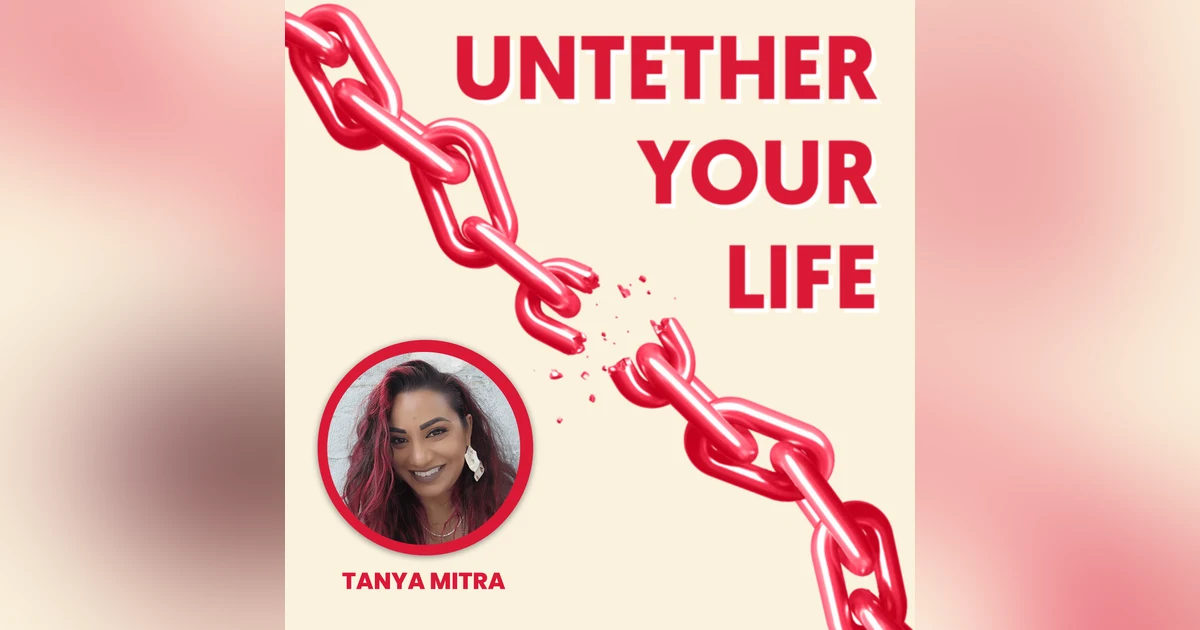
Of the many issues impacting the South Asian diaspora, one topic we haven't discussed on this show is relations with other minority groups. So I was very excited to connect on this week's episode with Tanya Mitra, one of the most prominent voices on the topic of Blindian (Black and South Asian) relationships. She is a perfect illustration of a life untethered, as she's broken free of numerous templates in the South Asian diaspora - in her choices of career, romantic partner, and strategies for managing her mental health.
Tanya is an Indian-Canadian-American former luxury fashion executive turned Conscious Change Life Coach who works with Women of Color + Women of Immigrant Descent to break the cycles of limitation by unpacking toxic cultural and societal conditioning.
Tanya is also the creator of The Remixed Relationship (formerly known as Blindian Bliss), a group coaching program and community that supports South Asian women in a relationship with a Black partner who are struggling to navigate familial and cultural disapproval by learning to courageously and confidently live in their truth.
We touched on many topics, including:
How relations between black and South Asian communities – specifically romantic and marital relationships - have evolved since the 1990's, when Tanya began her first relationship with a black boyfriend in high school. Tanya's incredibly challenging journey with mental health, which began at age 16 with several suicide attempts, hospitalization, and multiple rounds of trial and error with medication. By getting curious, reading extensively, and probing beyond the "script" read to her by doctors, she was able to own her health and achieve happiness, balance, and stability in her life. The mission of Blindian Bliss, a group coaching program that helps South Asian women in relationships with black men achieve "self-awareness, love, heart-centered guidance, and enjoy the best and most important ride of their lives," along with success stories of women who have gone through the program.
To learn more about Tanya's story or find out how to work with her, please visit tanya-mitra.com, or connect with her at @the.remixed.relationship on Instagram.
Connect with Nikhil to learn more about Untether Your Life and other projects:
0:00 One of the ones are has on this show, is own your own health, this is relatively easy to do in a world with ubiquitous information at our fingertips. What was it like to educate yourself about mental illness, in the 90s, in the days of tile up and AOL CDs. However, relations between black and South Asian communities specifically romantic and marital relationships evolved over the past 30 years and what is blind, Ian Bliss and how does the founder of this program? Help fellow South Asian women and relationships with. Black men, achieve quote self-awareness, love heart-centered guidance. And enjoy the best and most important ride of their lives. Stay tuned. As we touch on these and many other topics on this week's episode of untether your life. Welcome to untether your life, a show that empowers you to own your own health and break free of templates for managing physical and mental wellness.
0:58 And looks at Key issues, impacting the South Asian diaspora. I am your host a kilt or cigar and I'm passionate about power of conversation to catalyze change. We've examined, many issues impacting the South Asian diaspora on the show, including mental health, career paths, and ancient wisdom Traditions, like pranayama. However, one topic we haven't touched on. Is relations with other minority groups, a vital topic given that minorities are projected to make up more than half of the US population within the next two decades. So I was very excited to connect on this week's episode with Tanya Mithra. One of the most prominent voices on the topic of blind, Ian or black and South Asian relationships.
1:39 Tanya is an Indian Canadian, American former luxury fashion executive turned conscious change life coach who works with women of color, and women of immigrant descent to break the Cycles of limitation by unpacking toxic cultural and societal conditioning. Tanya is also the creator of blind and Bliss. A group coaching program and community that supports South Asian, women in relationship with a black partner. We're struggling to navigate familial, and cultural disapproval by learning to courageously and confident we live in their truth. And with that, let's get untethered. So Tanya, it's great to have you on the show. Thanks, so much for having me. I'm excited to be here and I kill. Thanks again. Yeah, likewise My pleasure. Can you tell us a little bit more about your background beyond what I've shared?
2:24 Sure, of course, I am an Indian canadian-american. I was born in Toronto, Canada raised by parents, who immigrated from Kolkata, India and raised in the various diverse but also very Indian cultural Centric household where our weekend's were filled with family, friends, and Pooja has and events of that sort. So I was very, you know, oh integrated into my Indian culture, but many things just didn't fit, right? Didn't feel aligned for me eventually, long story short, I moved to New York to pursue a career in luxury fashion. When I was 23 years old and never really looked back. So, I spent about 19 years in New York about 18 of those in luxury fashion.
3:09 And really realized in the last four or five years of my career, that the way I was serving into the world and the things that I had fallen in love with about fashion, we're no longer Aligned with, who I was becoming who I was at all, being into being. And when I really started thinking about how I wanted to sort of rebuild my, my life and serve into my purpose. I really, I knew that I wanted to work with women, women of color women of immigrant descent, and I really wanted to help them navigate some of the challenges that I had faced growing up that I didn't really have the support and resource to help me. And that is when I decided to become a life coach, but certified, and last year, I started a program called Wendy and Blades, which is specifically for South Asian women who are dealing with the scrutiny. The objection, the disapproval of their parents and family members because they've chosen to be with a black partner, which is my lived experience of 27 years. And you know, it really saddens me to see that that type of thing is still going on in our community and I really wanted to work with these women to help liberate them truly beyond their relationship, but you know, help them really claim that sovereignty and in Dependence to make choices that were aligned with their true rather than somebody else's vision for what they should be.
4:26 As I said in the intro, I think your story really aligns with what this podcast is all about, which is untethering. Your life on so many different levels because number one, you know, the menu of options. I always elude to for South. Asians is doctor or engineer or failure or lawyer interest liked in your Spurs there. But, you know, you went into fashion. So, obviously, that was a little bit off the beaten path if you will. And then, you know, obviously in terms of choice of life partner, I think we have evolved a bit, I think in the last generation, but it is, it is disheartening to see that. So many Indians are still in this tunnel vision that, you know, you have to, you know, pardon the pun but stay within the tribe as they say, right? Which is just, and it's really unfortunate because finding somebody from the same Village in India, doesn't necessarily guarantee a life of happiness and conversely know, just because somebody is from a Slightly, different cultural background or socio-economic background. Variety is the spice of life people should embrace that more. And so, I really applaud you for getting out of that template on on reading different levels.
5:31 The other thing that really resonated with me about your background, was your openness and your willingness to discuss your journey with mental health. What really caught my eye is that you really talked a lot about positivity, you talk a lot about uplifting yourself and conscious change which is very commendable but you're very real. Well, because the other thing that caught my eye on your Instagram page, I was a photo that you had posted about, I think it was when you were in a psychiatric facility but you also were doing a photoshoot at the time that just really struck a chord with me. And I thought about just this facade that we as South Asians definitely put out there, which is just we have it all figured out, you know, work going to the best business school. We've got the best job.
6:14 We've got a beautiful house but were broken on the inside and so you've had quite a journey. With mental health. So I would love it. If you could just talk to us a little bit about your journey with mental health. Some my, you know, my struggle with mental health, had started quite a few years before I was fully institutionalized that happened when I actually had my 21st birthday inside of the institution. So I will never forget time flies how I went down. But my my struggle with mental health started really in childhood. So to give you a little bit of context, I was born in the in 1880. So this was the 80s. I was skipped two grades. So I started out sort of at an advantage, but also a deficit and this is I think something really point to point out for especially within our culture where it looks good from the outside.
7:04 I was five years old in the second grade. What is more in Toronto? G. Yeah, walk stability. As you know, playing classical piano I was doing all the things reading out like a sixth, grade level. I was already, you know, bilingual all of the things but to put a Who is socially and emotionally not able to be, you know, to really rally with the seven-year-olds. Sure. And really start together an emotional social deficit and that and then you add the cultural disconnect. Well, I mean I'm sure it was diverse but at the end of the day, you know, you're in the quote-unquote other category yet because it's quite a, I was the little brown girl who wore glasses and had the, you know, mushroom haircut, who you know, maybe sometimes smell like Curry.
7:47 I don't know, maybe I did, maybe I didn't. But you know those were the stereotypes kind of Bhutan. That's right. And I lived in too many of them because that was actually my truth and so I realize now looking back that that's really when my mental health struggles started but you don't look at seven year olds 10 year olds 12 year olds and think that they're struggling. Today we do a little bit differently, we have a little bit more Grace with our children, right? But in the 80s it was not a thing and certainly not a thing that my parents were investigating in are very traditional South Asian household. So by the time I got to high school, I had kind of blossomed and I was becoming much more who I am now.
8:27 I was still that little girl on the inside who had been rejected, who have been bullied, all of those things, and try to reconcile all of that along with the cultural stuff that comes with being a third, right? Being having a whole completely different life that goes on behind the closed doors of your home language, food tradition. Action all of that. Try to reconcile that with this Persona of who I was becoming and blossoming into was really, really hard for me. And I didn't have any support, I didn't have any siblings, I didn't have anyone to really talk to her, go to about it. And so, a lot of the pressure, I think that parents put on us at South Asian children. I am worked and I started putting that pressure on myself to perform to be perfect to look a certain way to be a certain way and by the time I got to college it was just Much too meaty along with you know the trauma of my childhood that other ring that always being left out the bullying and it kind of just came to a head.
9:28 So I was diagnosed with a few things. The first time I was hospitalized, I was diagnosed with major depression eventually. I was diagnosed with borderline personality disorder that came a little bit later, around 17 or so 17 or 18 and eventually at 20 turning 21. I was institutionalized for my fourth. I'd attempt. I was pretty serious about wanting to end my life. It wasn't really a cry for help. As you know, many people assume all the time, right? I didn't know and I didn't have the tools the skills, the resource to put all of the pieces of meat together and stand in my truth confidently and courageously. And so, you know, that experience has really informed why?
10:10 I do the work that I do now, but yeah, on the outside, it looked great, right? I was doing all the things I was supposed to do with that a top business school. I was Great. You know, amazing grades a physically, I had blossomed like I said and so, you know, there was no, there was no area of my life that didn't look good on paper. Look picture-perfect. Yeah, but that I was so broken. I was so fragmented internally and I just didn't know where to go and how to manage it. And then in terms of on an ongoing basis than Tonya, what? It's one of those things. Obviously you know after you got done with college, then you went on to a very successful career in fashion and now you have a very successful life. A coaching business, tell me more about mental health.
10:52 How did you sort of strike a balance? I talk a lot about mental health. I struggle with bipolar disorder, and I've had my challenges, and people ask me. Oh, when did you? When did you get fixed or when did you know it? And it just laugh because it's not like this binary on off thing where it's like you flipped the switch and voila people. It's not anything malicious but there's this lack of insight into the fact that managing mental health, it's a process. It's not necessarily a phase. Seeing where it's like I was crazy, you know, driveling like blah blah blah, and now all of a sudden you know I got everything figured out, it's not like that. It's an ongoing thing. I've had my journey. I was in our facility as well and I found tools but I'd love to hear more Tanya about your journey and sort of how you've been able to manage it and become a very positive force in this day and age.
11:41 Well, I appreciate that. Thank you early on, you know, I was heavily medicated because that was the answer to every right. You are diagnosed with major depression. Shinhwa, let's get you on antidepressants. There was a part of me that wasn't just going to accept the diagnosis that somebody else gave. I actually started doing my own research into the my diagnosis into the medication. That was be given to me prescribed to me about other and you were and you were 20 at the time. Correct 70? Oh wow. So this was pre Google, this was pre WebMD and everything. It was pretty old. I think we had the internet. Keep me, remember problems? You've Got Mail.
12:23 Yeah. Like whatever it was the dial up, but no, I would actually go to the library and read the books and you know, there's the big. I can't remember what it's called now. But the big, the mental health diagnosis. Yes, M, yes! Yes, sir. And so I would sit with these books for hours and just read and research my own diagnosis, my own prescriptions other mental health illnesses, our afflictions that I was seeing around me because when your hospital Wise is not just you it's many other people with many other afflictions so people with bipolar disorder people who are struggling with schizophrenia people who were majorly depressed then so I started doing my own homework and the the medications I would get them and then I would stop taking them.
13:06 Almost says it's test to see what would happen because I knew there was something inherently in me. That knew that Joy, the power of my own mind, I could affect change. And now his I was Diagnosed with something chemical, right? So that's a different reality and I don't want to speak too, broadly saying that everybody can manage their condition with their minds. I know that that's not the truth, but my diagnosis were major depression, where do I personality disorder? And the more research that I did, the more I was like there are resources and tools available that I can maybe work this out by working it out. And so that was the beginning of my own Wellness Journey. You know, really early on at 17.
13:51 And to be honest, it was the insular Journey. There was nobody that I talked to about this, not my community knows no message boards, or no, and not even within my own family, my parents certainly didn't understand and they wanted to. But once again, you know, being a South Asian descent, a lot of it still was stigmatized or they wanted to keep it behind closed doors. So, they didn't even know what to tell other people write. Like, they were just Mounds were not resource with the Language or the experience of what do I tell other people. So it was a very solitary experience and one that I also understood that my friends couldn't understand it. He said t at age 18 at age 19, right?
14:33 They were out doing their own thing while I was studying borderline personality disorder. Like those discussions, I really did this very privately and so my Wellness Journey, like I said, start it done, but they tried all the medications they gave me. Medications for psychosis. They gave me a hallucinogens. Like, I mean, they overmedicated me in so many ways that at times, my condition would get worse by the medication. I mean, they would put me in solitary rooms saying that I was in psychosis. When I was not, it was a really exhausting and scary experience, which is why I knew that I had to take matters into my own hands to some extent because I was little, you know, 16 17, 18 year old girl that I felt like I was just being sort of rallied around everywhere, like, I was just sort of being over to this doctor. What do you think?
15:28 It was just a lot of opinion, and I didn't feel like anyone was really digging into the root of why I was struggling the way I was, you know, one of the other things we talked about is owning your own health. The you and I were talking earlier on in the show about my journey with my father-in-law who won on force of recently passed and I'm in the hospital. I'm seeing that we are Are really at the mercy of healthcare providers, where we just accept, whatever the doctor says, is Gospel. We don't probe more deeply. We don't dig further, we don't ask the questions because you're scared of ruffling feathers. Or you know, we don't want to be that patient to who went to, you know, University of Google right to try to get all the answers, what you're saying, resonates with me because I had the issue where it was like with bipolar disorder. A lot of patients, they only go seek treatment. Hit depression.
16:20 And so, my disorder was always diagnosed as depression, which the way it was treated, actually exacerbated Mania and the bipolar disorder. So it's it's pretty impressive that at an early age, you were able to scrutinize and be a little bit more Curious. You know, even with out the resources without the communities find a fight, the system as a young person by yourself, is really difficult, right? A lot of times doctors didn't want to treat. They didn't want a lot of doctors either one. Didn't take me seriously. The or to thought that that was part of my borderline personality aside and I'm like no this is just who I am. But like let's talk to me as though. I am who I am and then dig a little bit deeper and I found back then especially that that was not so fast forward.
17:04 Then I mean what is it? You're doing these days that is helping you sort of, you know, be able to manage your mental health. I definitely believe in the power of the mind. I definitely believe in the power of reframing, beliefs positive. Self-talk, Framing situations as circumstances and not assigning good or bad to them until I really evaluate them, you know, I let myself feel feelings, 100%, but I don't sit and stew in them for very long. And what I've also made a very sort of conscious decision about in my life is to not ever play. The victim. Never never allowing myself to be victimized by because I know that it isn't within my control to some extent to affect change in my own life.
17:49 And that is why the possibility to do so, right? It's not, nobody is going to care for me the way that I care for myself. And that was, you know, that was another, you know, thing that I had to learn along the way because I don't think that that message of self-love. Self-care is really one that's taught in our household in our community, especially being of South Asian descent. We don't talk about internal Wellness. We talk about external access and so I've stopped equating my internal Wellness. With any version external success. And that keeps me really grounded and that keeps me able to see things in my life through a much your lens. Which helps me manage any kind of depressive stuff that might come up, which really doesn't vary much anymore. You know, I will tell you very transparently just a few weeks ago.
18:38 I was struggling through something that was going on in my life and it was I could have slid into a very dark place and I had to make the decision. Where am I going to go? Where am I going to allow? Myself to go and recognizing that it's within my control to make that choice. So, I'm really very conscious about how I choose to see things how I choose to reframe things. How I choose to move through the choices that I make in my life, and in the last five or six years, I've only been making choices that are really aligned with my purpose and my mission for self. And I find that to be the thing that brings the most energy to my And to those around me, I've abandoned certificate the care for what other people think, which I think is that really can drive our mental health into a negative space.
19:30 I don't live by anybody else's rules. So those are some of the things that I do as well as meditation and, you know, a morning, practice journaling, really investigating my thoughts and my feelings, that helps me a lot as well. My morning practice helps me a lot. Yeah, I mean, that's what we talked a lot about on this show is just stepping back from the here and now because It's so easy in our hyperstimulated world to just get bogged down in. How many likes we got on that latest post or how many, how our business is doing. And it's just at the end of the day, it's all illusion, it's all just, you know, BS and we really have to if we don't have that happiness within then that's just a never-ending, it's a never-ending Chase, there's like a dog chasing our tail then and we're just going to, you know, Drive ourselves into a very dark place.
20:14 And so you know met, thank you so much for that. I mean, I think it's really helpful. To hear from others, South Asians, who are coming forward and sharing their stories about mental health. Now, I do want to, I don't know if it's necessarily a pivot, but, you know, Bill Indian Bliss. That is your coaching program. Let's go through that. If you could talk me through maybe sort of the journey from, I think you had mentioned that you had your first black boyfriend, like, 17, was it? Yeah, and yeah, 16 or 17. So, to go from that and to know I mean unfortunately even in this in this day and age, There's still so much just so much racism. There's just so much just ignorance in our culture about as I said before.
20:56 Going outside of the tribe, has, you know, of some fellow Indians? I'd love to hear more. Just about that Journey about going from dating outside of Indian culture, as a teenager and then, you know, sort of how the journey informed the launch of Bob Linde endless. So I met my first boyfriend ever, he was like really my boyfriend in driving school. So there Very innocent the way you would meet any first love, right? Like so we're never really occurred to me that he was black and that it was a problem, it might be a problem, right? It was, it was more so. Oh my God, I like a boy, that's going to be a problem, right? Shooting was not talked about in my house and I again was an only child. I'm a girl. It was just not a topic that was ever broached in the house. I just kind of knew it was off-limits and so, I did it in secrecy.
21:45 Not because he was black. But because I was dating somebody Period, long story short, my parents ended up, finding out about him because he was in my house hiding in the basement while my parents had gone to see the movie Titanic. So this go well that's because I don't like a 90s sitcom right now. All over him. That's not good. Exactly. So for the first, you know, first little, while after they found out about him, it was sort of equal parts. The lying, the hiding, the secrecy as well as he's black. And so, once the Lying the hiding the secrecy was reconciled then it became okay. Well and he and his wife so it took a few years in those first years after I met that boyfriend, I was with him for three years so it was like the duration of our relationship that it took my parents to sort of break out of their own biases and their own beliefs about not just black people, but about being, and what this might look like for. I'm sure that maybe after that relationship was over that, they hoped that.
22:48 Maybe then I would find a nice Indian guy and do things the quote unquote, right way. Right. Or the way that all the template are the script didn't think. Honestly, I think by then they kind of knew who I was. Because remember, these are the same years that I'm struggling with mental health, these are the same years that I'm yes, went to business school, but knowing that I want to pursue a career in fashion, you know, there was a lot of dichotomy and like the way I was presented in my life and my parents were the only two people who are really seeing all of those. Parts of me and so I know it was a struggle for that but really since that first boyfriend, I have only ever dated and partnered with black men and you know, a lot of people might have the opinion that that's Pious or I haven't tried anything different and maybe I don't know, there's a great Indian guy out there but there have been great black men out there for me, right? Who have align more with who I am and sort of the non-traditional way that I have chosen for many years to live my life.
23:47 That being said, You know, I got married in 2010 to my ex-husband and we had a son together in 2011 and that relationship lasted from beginning to end about 10 years. So we met in 2018 got married shortly after and, you know, we were doing things a very non-traditional way. He had two children from a prior relationship and that was a hard thing for my parents to understand travel became around with that too. So, you know, as I was growing up, Evolving. So, were they, they were trying to open their mind to new possibilities, new options, new ways of seeing things, new ways of saying people, so that marriage did not last. However, my parents didn't feel any way about it, you know, like there's so much stigma in our in our culture as well about divorce.
24:38 Yeah it is easy to then say see I told you so this is sort of the the story that you are just if you're just married a nice and the invoice. This would have never happened. Also say that by that time, my parents had seen marriages between a nice indian girl, in the nice Indian boy, fall apart to, right? So you had lived enough life at that point to see that it really didn't matter what the race was. It was about two people. Divorced, divorced knows, no color color, right? It was whether you're compatible, not, whether you're growing and evolving together, or not, right? Whether your values are a wide door. So I re partnered in 2019 with my current partner and we have a three-year-old daughter. It's been a lot. Different nuances of being in biracial interracial entropy relationships for me.
25:25 And I understand how hard it can be. Last year, I shared my story, my personal story on a platform on Instagram and I was blown away by the amount of without the Asian women from all over the world that reached out to me, sharing their struggle, sharing how hard it was for them to either tell their parents or the backlash. They were A saying from having told their parents or that they were living a complete double life of secrecy because they were hiding their partner from their parents. And it occurred to me that I need to be the one to support them through this very unique, nuanced complicated Journey that a lot of other people just can't understand.
26:09 And that is how blind Ian was just born very organically and it is you know, the most sort of personal and passion driven work that I do. I do. The coach women of Colored Women of immigrant descent as well. But blind and Bliss is, you know, 100%, my lived experience. And I know how much these women are suffering and struggling just by virtue of the inherent anti-blackness in our community. And I want to be part of the generation that affects change, that's so important. I mean, the strength of community really can't be overstated you know? And that's why with this platform. There's a lot of people that similar experience where once you Share your story in your open and You're vulnerable.
26:51 There's a little bit of risk. I mean, obviously especially in a culture that's so image-obsessed is Indians. Are you are risking that coveted seat at the country club? Or I don't know what at the temple or whatever you're gonna do, you define is as making it right, and but there is real, there is real power because I'm sure you can relate their people who have come up to me and said, you know, you're sharing your story. I have a sibling who's struggling with this or I personally, you know, I've had this problem and I haven't been able to put my finger on it. So when we I think open up and we sort of you know, show that we're not perfect and we show our scars in our wounds, I really think that it can have that butterfly effect that can be very therapeutic and that can really make an impact on a broader scale, you know, more than any many words per se and you touched on. I want to go into that a little bit deeper know you touched on the just a discrimination towards Black people in Indian culture.
27:50 I don't know if you've seen his it Hasan, Minaj, or he would have you seen his stand-up? I think he was talking about colorism in our culture, it's just so ass-backwards. I mean, it's like, you know, I don't know if, you know, if you haven't looked at through here lately, we're not white, right? I mean, it's like we are of color. Yeah, and yet we have this, you know, and even with that, within our own culture, it's just I don't remember, I don't know if it was Dove but there was this fair and lovely Campaign, which really came under Fire where it's just Equating light complexion with Purity and Beauty Etc, which I think is just complete bullshit. I feel like the change is coming, but it's very slow and a lot of times it is lip service because it's so embedded in our culture s.
28:33 I'd love to hear more from you about what you've witnessed or what you've experienced. We talked a little bit about it before the show, but tell me more about, I'd love to hear your insights about how that has changed over from your, you know, beginning in your journey in that in the 90s. To today. If you see if you're seeing glimmers of Hope or is it still pretty fit? But we have a long ways to go God. You know, I will tell you I was really surprised that there hasn't been as much change as I would have expected. So, you know, have by virtue of me having, you know, face to those challenges, many years ago, personally and moving to New York and living a very different type of Lifestyle bear International. I worked in fashion that traveled, a lot, of course, I need and listen, my children are Biracial their half-black and I have Indian, my son is 11 years old. So for 11 years, I've been even more hyper aware of the reality of being black in this country, right? So it's never been lost on me.
29:31 They anti-blackness that exist in general, but to anti-blackness that exist in our community. I didn't think was as rampant as it still is and so, because I had been a little bit removed from it, I guess I was leaning into hope that it had just sort of naturally. Lee or yes because you are you said you when you were in New York, it was like because it's such a Cosmopolitan Multicultural Society or because of that. Because time has passed because we have the internet because we are connected in a much more Global way. Because in India, they love black culture and they, you know what I mean? But that's the main is, like, you love it for what it can serve you, but when it gets too close, it gets too close. Yeah.
30:16 When it gets in your house, very nice. Anything anywhere in your vicinity, that's too close and then you start to see the truth of people come out. And so last year, when I shared my story and had all of these, all of this Outreach, I was a little bit blown away. I will admit that it was still, so inherently ingrained into the way that people were being raised. And, you know, the women that I serve and when he and Bliss are quite a bit younger than me, they're in their 20s. Most of them and maybe early 30s my most of them. Are in their 20s. So their parents are not that much older than I am. I will, you know? And I ask that question to all of my clients, how old are your parents? Because it gives me context around Generation stuff and true understanding where they sort of came into their experience. It really informs a lot of their experience. But I have seen that, you know, working with various clients, various parts of the world.
31:14 It's pretty much just as prevalent. They anti-blackness as it was When I was growing up and I will say that I am more shocked that it hasn't changed, then I would have been if it had changed like I was expecting. Yeah. And it shows up in, you know, so many ways. I mean, our media doesn't help. This is the thing, most of our parents. Most most South Asian Elders, do not take the time to really develop friendship with black people. They don't integrate into other communities and societies other than really, the white Community very simply. And so their information, Nation is informed by external resource rather than internal experience, right?
31:55 They don't have the lived experience of really understanding Black Culture, the black experience black history. And I think also by virtue of us being Brown and feeling like oh we're other two that we have this, this idea that our experience is similar to theirs. And while we figured it out, we came here with nothing. We're all professionals, we've all become doctors. Real forgetting the deep and dark history that exists specially in this country, for black Americans, right? So that ignorance in the lack of wanting to learn. More is really what's hindering us from moving forward? And I'm really hoping to break some of those biases as we yeah, with these women, I just did an interview with a gentleman named Encore Varma.
32:42 He's got a project called brown, man, therapy. And we talked a lot on that. Show about the model minority myth. And patriarchy in our society where it's like, you know, we are given this designation where we are the quote-unquote, the good minority that stays in our lane and we don't make any waves etc, etc. And you hit it on the head where it's just like I don't want to trivialize it, but it also it's almost like a good pet, a pat on the head. You get a gold star whatever. And yeah, I mean we are sometimes forgetting that it is the experience of black people in this country is it's a very troubling Legacy. Some of our most shameful history in terms of how that Group was treated over the years and I think through more of discussion people sharing their stories that gap between our two cultures will hopefully start to close up a little bit. And I think one thing that's a find, a very interesting is that we have a vice president who is black and Indian and still, it just that was such a watershed moment when that election happened, there was so much celebration, but you don't hear anything about, you know, you I would expect those types of event to catalyze change.
33:48 I don't no us. If you had a lot of hopes when that happened, it seems like it's just kind of been pushed under the rug, I don't know. Yeah, your thoughts are but yeah, I would have to agree. No, I was really excited, especially for my kids to have an example of somebody in that type of office, who were just like that. Because in what other experience do my little children, get to see themselves fully represented, right? They don't, they have to kind of choose. There are black people that we can look up to him and their Indian people that we can look up to but, you know, Kamala Harris. Even has ended as and she's a woman. You know, in that right there should have power. Having both of their that, my children ancestry like, was really a beautiful moment.
34:29 And I was hoping for more dialogue about interracial Interfaith relations about anti Blackness through the lens of other communities, that are not white, because when we talk about anti-blackness, we talk about it. So often do the white ones, we don't really address it through the lens of Asian people or other people. And so I was really hoping that there would be more dialogue around that. I mean, what I do think that, you know, has happened a little bit more, is that celebration of Indian culture which doesn't really happen on that level as much. We're seeing a lot more Indian media attention media representations him, the media is paying more attention to us culturally but outside of that I haven't seen much change. Like I was hoping to see, you know they had a the Wally celebration At the White House and I was really hoping to see her show up in something, beautiful and Indian. Sorry, yeah, of the culture and she was there in her stance who took the hint Chuck Taylors.
35:31 No, that was for a vote. Never but, you know, it just it lost its impact a little bit me, you know, I know that she does what she says that she does identify with both especially having been raised by her mother who is Indian, but I feel like there's a lot of white adjacent. See there and not a lot of adjacent seat to the South Asian or the Black Culture as much. And I think that that's the part of that. Maybe we were hoping would be a little bit different that isn't playing out quite the way, we at home. Yeah. I mean I I'm still holding out hope and I mean I see it every day. Like I started this podcast a little over a year ago and, you know, I feel like, you know, this discussion included.
36:12 I mean, I just feel like the types of conversations that are happening I think will spark change, and it's One of those things, I don't know. It's like the Tipping Point where there's no change for a long time. And then, all of a sudden, crossing my fingers overnight, maybe, maybe will, you know, our kids will be inheriting a much different world, you know, so we can have to hold out hope. But let's move on to the actual program, blending and Bliss. I love the title. I feel it's very uplifting and it's very hopeful tell me more about just the mechanics of the program and you know how it works for people who are interested sir. So we work with the course of 12 weeks. And listen. Let him list, really isn't about, you know, reconciling your relationship, with your parents, or them getting on board and suddenly having a change of heart, it's really finding your own personal Bliss within the reality of your life, right? Because that's sort of the thing that we've been talking about this entire time, right?
37:06 Is about owning your own true, being your own self Advocate about really being confident in your own choices. And that is the work we do in the program. Yes. Through the lens of being in a relationship with a black And yes, we do work on a lot of communication and things like that with parents. But really, what we do is we work through our own belief systems, our own value system. Then we really start to identify what are ours and what our there's it will have we just sort of absorbed from them without questioning and does that align with who you really are, who you want to be. Because just by virtue of somebody choosing a black partner, which is so far removed from the expectation that our parents have for us. Us says something about who they are. But you know, a lot of times they're not, they don't have the courage to fully claim it.
37:54 And that's the work you do and to really own your truth to live inside of your own belief system, to really claim the independence and sovereignty, that is your right to create boundaries around your own emotional and mental Wellness, because there is so much impacts that happens because of the parents disapproval, because of the parents objection, there's gasoline going on there. Shaming going on, there's projection going on. There's you know, a lot of abuse of language. In some cases, there's physical harm. It gets really really serious. And so this is about this program, really is about living in your own truth, really being clear on who you are and how you want to show up in the world in your relief and far beyond.
38:42 Because what we say in coaching is how he do. Want thing is, how you do everything. So if you're showing up with fear, if You're showing up in shape, like you think that you're doing something wrong, even though you've chosen this thing but there's a part of you that still thinks that you're doing something wrong, that's how you're approaching 10 a perm. Yeah, it's going to permeate to the whole rest of the thing you can't, you can't neatly compartmentalize, you know? That's just it. That's how you're showing up at your, at your job, right? That's how you showing up in your friendships and your relationships. There's always a part of you that's questioning that's looking for outside approval. That's meeting a second opinion. So Validation, validation, all of those things. So those are really the pillars that we work on in the program over the course of 12 weeks. We also have like some South Asian sisters, come in, and share their stories of linnaean relationships. Because I think it's important for us to hear different iterations of this story where, yes parents got on board or no parents did it but I'm doing it anyway and I'm happy my choice, right?
39:42 So they're able to really learn from other people's experiences and then they get A lot of just, you know, this group that's going through the program, right now, we just started last week, they're getting a lot of open coaching because I'm recognizing that this is really, this is life coaching just in a different format. Is this like the second or third cohort I guess your answer. Was that their cohort going to it? Oh wow. Okay, and then I'm sorry to ask this but when did you launch it again, how long ago was until onset and April of last year, I shared my story. I got all of this outpouring of like, I need help. I'm, you know, all of this inquiry. And you know, just almost like desperation at some level, you know, for believe because there was nowhere for these women to go, they had nowhere to go, there are platforms on Instagram and so on where they can see themselves represented, but there was nowhere for them to go for support for guidance for commuting.
40:38 So, that's what I created and I created it in a matter of six weeks. I put it together and I enrolled my first cohort and, you know, we're just, we're going strong, I'm building more Community now. Now which I think is something that really is going to help them find that resolve and that strength to keep going because, you know, there's strength in numbers and if she found it, I can do it too, right? You gain confidence and you pull that strength from each other. So, you know, I'm just really working on trying to make this the strongest resource that it can be to support as many women on this journey as possible. Hmm. And over the course it took you said it's a 12-week program or so you guys have like weekly Workshops then or and that and like, I'm assuming it's virtual or you guys.
41:23 Well, you actually have in person as well or know. I'm assuming most people probably come from all over the country. And yeah, yeah. So we have people in the US, the UK, and even then in the wow. Okay, people oh, wow. Staying in India for right now but, you know, has have studied abroad and that's where they met their partner. I'm really curious. How is it being received in India? I mean, just because there's, you know, we talked about in the u.s. being in the Really in the stone age's, in terms of Enlightenment in this regard but I'm curious. How is it in India in terms of like what you're seeing like and how is it being received the program? So I Jessica doesn't roll my first client who is currently in India, okay? Instead I get is that it's still very deeply entrenched in our culture there to receive even more. So that here I think here just by virtue of seeing visually seeing other interracial relations. We don't necessarily want I'll accept it. But yeah, it's not so foreign to us as it would be in India, which is so very evil genius and it's makeup. So let you know the story is relatively the same. No matter what part of the world I have heard from people, as far as Australia, you know, struggling with the same sort of reaction from their from their parents. So what we do is we work through over 12 weeks, we work through six modules and so every other week is a module, so that's more learning and unpacking, you know, sort of of esteem. So for example, this week, we actually tomorrow or session is tomorrow will be learning about
42:55 our personal history and our collectivist history, right? So understanding the impact of collectivism, understanding the impact or unpacking rather really the our old belief systems and biases and really trying to unpack those of our parents or what we call her objectors. Like anybody that's objecting to our relationship because it's important for us to understand where somebody else is coming from. Because when we understand, you can also let it go. So, when we understand it rather than being resistant to it, just simply understanding, you don't have to agree with it, but just understanding it, which is the thing that we're asking of that, right? We're asking them to understand us and we has to be a two-way street. Yeah, you kids.
43:36 So we do that and then the following week is always a workshop based on that module. So next week, we'll be doing more of like the actual thought work that is associated with evaluating your own beliefs because you have to. We're your own biases before you can expect anybody else to co-sign your relationship or your choices, you have to clear, that doesn't mean that you have to remove all of that, but you have to accept bench, have them. So that's the type of work that we do. And then we also do spotlights on the clients in the group where they get, open coaching on anything that are struggling with. So not just from me, but by the entire group, which is nice because you get lots of different perspectives and and then mr. Stories, like I mentioned, which is Fan favorite. They love having the other Indian women come in and chop wood.
44:22 That sounds really great. Really uplifting and I think it's it's such a challenging journey to go through and to try to do it alone as you can attest to is can be really just debilitating, you know? So it's great that you're providing that community and that support, you know, there's always a strength and numbers for sure. In terms of success stories, is there any you know, I'm sure we would all like to say and they all lived happily ever after and Who became the happy DC family again. But that's not always the case but you know, and it doesn't necessarily have to be my parents. Welcome new back with loving arms and because you mention that point, it's not always a fairytale ending. There is that estrangement from your parents?
45:04 So I'd love to hear maybe if there is one or, you know, success story, you can point to just it shows, you know, the results that can happen when you take this approach that you're taking. I mean, listen, the process takes time and this is something that I prepare my Before we even jump into the program, like this is this not going to be one conversation and then it's over and everybody lives happily ever after. It is everyone's on board, right? This isn't, this is a process. It's a an evolution. It requires a lot of Shifting of beliefs and perspectives and opinions and reconciling, especially for the objectors. What will other people think? Like, there is a entire mindset shift that needs to take place for the people who are objecting to our Relationship.
45:49 So to me, the successes have been clients who were living in full secrecy hiding this entire part of their life, finally able to have the courage to share this part of himself. Yeah. That to me is huge success, right? But yeah, we'll leave them at the anxiety of the lies and the guilt and all of that, you know, that was affecting their mental health and emotional Wellness. I have another client who was finally able months, She got engaged to tell her parents that she was engaged, right? Like this was Nate, that was weighing on her for so long. So they knew about the relationship, but they were not know. So they had they hadn't gotten married there, Johnny, Rotten engaged.
46:33 And so, the parents knew about the relationship, but they weren't on board and they were, you know, fully accepting. So she was scared to tell them that she and Boston engaged to she was continuing on with her life. And so, to me that's a story, right despite Her parents disapproval. She knew that this was the person that she wanted to spend her life with or, you know, she wants to commit to in that way and they went on to get engaged. And then she found the courage to finally tell her parents. And now, there is a situation where her sister was also opposed to. It is coming around and they're starting to do things all together with the sister's husband and her partner. So, there's a Reconciliation happening, maybe not on the parent level but on the sibling level that is Help you know, support the reconciliation with the parents so those are some examples.
47:24 Yeah it's all trade-offs I mean because it's like there's at the end of the day I mean what I found is just that if there is a relationship that is not serving you and if it's causing disruption in your emotional, if in your mental or physical health, then unfortunately, you know, that's just that's the way the cookie crumbles you have to if you're with a loving partner and this is enriching your life and Helping you be a best version of yourself and unfortunately, you know, your parents aren't on board. I hate to be so cynical and cold about it. But that them's the breaks, right? I mean, it's and it sounds like good. Correct me if I'm wrong. Sometimes, that's something you helped. Some of the participants navigate to right, where it's like, don't always assume that quote unquote success means that you have this amazing relationship with your parents because that's not always possible that, right?
48:12 Not always possible. And I will say again, that takes time, there's never been an occasion where Are you are hiding something for years and years and then you break it to them. And it's just going to be accepted in that one conversation with any, right? If it was a career change, especially something like marriage and relationship with just held in such high esteem in our culture. This oh, yeah. Thing that our parents think is like the ultimate thing that we all have to achieve and attain is outside of our professional success is marriage. That means we're successful. So now for bringing home, somebody that looks completely The opposite than what they accept as being the right fit the right partner then you know, there's going to be some this going to be some time that needs to happen some conversation dialogue, some discomfort on both at that is to be expected and so that's what I prepare them for is how are you going to do this thing? How are you going to live in your truth without their approval?
49:10 Their example is the cherry on top should that relevant but we still have to learn to live Our Truth outside of Anybody else's opinion of what we should or should not be doing. And that's really the work. Yeah. And I think that's what this generation is coming to grips, more with its unprecedented, really. I mean, I think breaking away from the family because that, you know, be like you said, use the word collectivist. We've always been such a collectivist society where family is everything but yeah, navigating that is not. I think the word is discomforted. It doesn't always end up, you know, with nice bow on top up. The one thing I always ask at the end Tanya is as you know, Oh, the title is podcast, is untether your life.
49:50 And so we've talked about the theme of Breaking Free of templates and managing owning your health, whether that and managing your definitions of success, where that's career or family or marriage, I'd like to hear from you in terms of what you would tell listeners about how they can untether their life based on your lived experience and maybe some of the things we've touched on in this in this discussion. I think that you know, until during your life really just means the things that we've been saying claiming yourself. T really, really understanding that you are a constant evolving being and so the choices you made yesterday, do not need to be the same choices that you make today, you know, and being okay, with that being, okay, to explore and to grow, and to evolve and do new things because that's truly what we become, untethered to other people's opinion to the standard to the Norms to tradition. Right.
50:48 Like it is, it is well within your right to create new versions. You're going to ratios of that for yourself for your family, whatever that looks like to you. Right? There is no right or wrong way to live. There is no right or or wrong way to effect change, right? Like whatever. Feels right. I think really leaning into your intuition, is that the way forward into finding the strength and the courage and the resolve to do that. But once you are able to do that leaning in, And, and listening and following that instinct rather than all of the outside noise, allows you to truly become untethered, from whatever might be holding you back. I couldn't agree more.
51:31 So, is there anything else you want to touch on Tanya? Before we before we wrap things up? The last thing really, I want to say is we are responsible for our mental health journey and our Wellness journey. I think it's such an important thing for us to recognize to stop resisting. That we might need support. To stop worrying about what other people might think what are culturally has been passed down to us to release themselves from that stigma because every single one of us can benefit from support, guidance, whatever, iteration, whatever that looks like we can all benefit from it and it doesn't have to be forever. Because eventually you do, learn how to manage your own emotions in your own Wellness.
52:14 You find the right fit for you initially, we might need some support. May I think being okay with that and finding peace within that is so important, especially in our Salvation community. And I think that's changing the younger generation. I think that they are speaking much more candidly about mental health and what struggles look like in that realm. But, you know, there's still this part, by car culture, that stigmatizes it to the extent that it might prevent us, from seeking the support, in the time. That, so that's the last thing that I want to say, is that We are the only ones who can affect that level of change in our own lives and it's our responsibility. It's, we want to have happy healthy successful, fulfilled Purpose, Driven lives that we need to be in charge of our own Wellness agree, 100% so cono.
53:04 Where can people find you if they're looking to get in touch with? You? Sure. My website is www.tanahoy.com ITR a.com and I'm on Instagram at Tanya Mitra coaching. And also, at blendy invoice. Those are the best ways to find, okay? So you have an Instagram feed as blind, Ian was so surprised when he was as well. So Tanya, this was a great discussion, I really enjoyed speaking with you and I'm sure this will resonate with a lot of our listeners on many levels. So wanted to say, Tanya thanks again for coming on to untether your life. Thank you so much for having me to kill. This is great. I had a really great time. Thanks. Thanks so much for listening and I hope you enjoyed that episode four more of these types of conversations. Please visit us at untether, your life that Co you can also find us on Instagram and untether your life, as well as on Apple Spotify and other platforms by searching for untether, your life.
54:00 And if you did enjoy this episode, please leave us a review or share it with someone who might also benefit. Thanks. And until the next time we meet stay untethered. Thanks so much for listening and I hope you enjoyed that episode four more of these types of conversations. Please visit us at untether, your life that Co you can also find us on Instagram and untether your life, as well as on Apple Spotify and other platforms by searching for untether, your life. And if you did enjoy this episode, please leave us a review or share it with someone who might also benefit. Thanks. And until the next time we meet stay untethered.

