
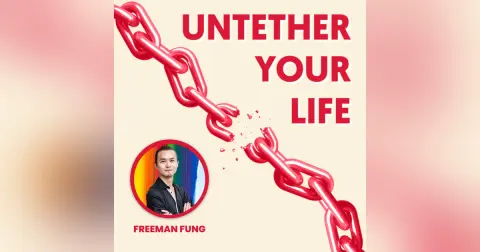
101: Freeman Fung - Travel for Transformation, Identity, and Intention


 Apple Podcasts

 Spotify
I first connected with this week's guest - Freeman Fung - through the Mindvalley community. At the time, both of us were actively questioning inherited templates around success, identity, and growth. What began as a conversation about travel quickly revealed itself to be something deeper - a reflection on consciousness, culture, health, and what it actually means to live intentionally in a complex world.
That context feels especially relevant now. My son is currently sailing around the world through the Class Afloat program, and I'm watching in real time how immersive, lived travel can fundamentally reshape how someone understands themselves and their place in the world. This past fall, my own travel through France, Spain, Germany, and Portugal was in service of helping get him situated and positioned for that journey - and along the way, I was reminded how learning even a few words of a new language can instantly change the quality of connection.
Freeman speaks from lived experience. Growing up in Hong Kong, traveling through more than 35 countries, navigating burnout and chronic illness, and integrating ancient Eastern wisdom with modern life, his perspective is grounded, cross-cultural, and deeply human. This is not travel as performance or escape - it’s travel as engagement and transformation.
In this episode, we explore Freeman’s philosophy and the experiences that shaped it - from solo travel and global citizenship, to confronting inequality firsthand, to rebuilding health through responsibility, integration, and self-mastery.
This is a cross-cultural, deeply personal conversation about identity, consciousness, community, and the courage to untether from inherited expectations in order to live with more intention.
Topics we cover:
- Travel as a catalyst for identity and personal transformation
- Growing up in Hong Kong and navigating global cultural conditioning
- Burnout, chronic illness, and rebuilding health through integration
- Money as an amplifier of values rather than a solution to inequality
- Witnessing global inequality firsthand and reframing success
- Language, culture, and connection as doorways to empathy
- Community as an antidote to isolation and survival-mode living
- What it really means to untether your life
About Freeman Fung
Freeman Fung is an international speaker, author, certified life coach, and global citizen. He is the author of Travel to Transform, a book that blends travel memoir with personal development, exploring how movement across cultures - and inward - can accelerate growth and self-mastery. Originally from Hong Kong, Freeman has lived, worked, and traveled across more than 35 countries and currently resides in Australia.
Learn more at traveltotransform.com
Follow Freeman on Instagram: @freemanfung.global
Want to learn more about Untether Your Life and other projects? Let's connect!
Instagram
LinkedIn
0:00 Where in my life am I still chasing growth instead of allowing it? How is culture, money, or success shaped my identity? And which of those stories am I ready to question? And quick question for you, what if the place that changes you most isn't on your bucket list? Stay tuned as we touch on these and many other topics on this week's episode of Untether Your Life. Welcome to Untether Your Life, a show that empowers you to break free of templates related to career, relationships and managing mental and physical health, and looks at key issues impacting the South Asian diaspora.
0:41 I am your host, Nikhil Torzakar, and I'm passionate about the power of conversation to catalyze change. Some conversations don't change, they Orient. This is one of those conversations. IN2023I sat down with Freeman Fung, author of Travel to Transform, for a conversation that began with travel and quickly moved into deeper territory. Identity, health, money, community, and the quiet templates we inherit about how life is supposed to work. I'm resurfacing this episode now for very present reasons. My son is currently sailing around the world through the Class of Float program, and I'm watching in real time how immersive travel can fundamentally reshape how someone sees themselves and their place in the world. This past fall, my own travel through France, Spain, Germany, and Portugal was in service of helping him get situated in position for that journey. And along the way, I found myself nerding out on Duolingo and jump speak, trying out a couple different languages and reminding myself how learning even a few words can instantly change the quality of connection. That's what this conversation is about. Not travel as escape, but as engagement. Not movement for its own sake, but as a way to untether from inherited templates and live with more intention. It got me.
1:47 So sorry, I mean. And with that, let's get untethered. So, so Freeman, again, great to have you on the show. Is there anything else you want to add beyond what I had just shared? Yeah, No, thanks for reminding me sometimes to know my experience of this live as well. And it's incredible because you and I, we kind of met through this platform on my valley, right, the world's biggest self grow platform. We speak about how beautiful the community has been connecting us because possibly I wouldn't otherwise know your platform about giving this space to South Asians to share their story and to empower each other. I absolutely love it.
2:27 You know that's right on my gem. Yeah, obviously we will get into Mindvalley in a little bit because it's been such an integral part of my journey, my growth story. But before we go there, I did want to ask you a question. Is LASIK Joe fan May? Wow, Lasik Joe fan, May I? See Joe Fan May. That's impressive. Yeah. For the audience, that means have. Yeah. Have you eaten rice yet? Yeah, yeah. I was just going to say if you can tell me a little bit more about what that means because I think, you know, it was one of the many Nuggets in your book that I picked up on. But yeah, tell me about that phrase. And for the people who are wondering what I just said, what it literally means and, and actually, you know the significance, love to hear more about it.
3:08 So it's literally mean. Have you eaten rice yet? So I'm originally from Hong Kong and I speak Cantonese and this has been a really big part in our cultures. It's almost like a greetings in English saying, how are you? And obviously, you know, in the Western world, you know, we we all say, how are you today? And, you know, we have different ways to connect with each other when we are trying to open a conversation for us in a Cantonese context. We love to ask people, have you eaten today or, you know, have you eaten rice for the contest? Because for thousands years of history in, in the Chinese contest, actually, whether you can, whether you have Italian rice yet, it's a foundational question of how you're feeling that day or how you're feeling that way, because whether you have enough food is about survival. And as you may know, you know, also in in Asia, that's a big agricultural context as well.
4:01 So if you think about it that way, actually makes perfect sense that you are asking about another person's well-being and their state of being in a cultural way. And the importancy of that is there are also so many different other ways, you know, in different culture, like in India, right? So that's the reason I wrote about my book because that was the chapter about for me travelling to India for the first time. And you know what I learned there is the greeting faith, Namaste. And it's such a beautiful ways because it literally means I bow to you. But it's not just the physical bow. It means I am acknowledged at the soul level, the defined in you, the definity in you and, and whether you are religious or not, it doesn't matter because it is a way to see the culture and that's a beautiful aspect of the people acknowledging different dimension of the other person.
4:49 So kudos to you. And I'm just saying as well, when you are attempting to say a phrase coming out from your heart. And even though I'm sure you don't ask your children or your family whether you have eaten rice as often as I do with my family, but you having this attempt to wanting to try to say this phrase to another person. This has been something I've learned throughout my decades of trouble. It's the fact that when you hear somebody try to speak in a different language that they don't otherwise speak, you are connecting with the other person by subconsciously letting them know I want to connect with you. And that's no better feeling other than that because you are seen. You're being seen.
5:29 And this person is trying to go through something that even though they don't have that ability, that language ability, they are wanting to connect with you. So that is a beautiful way of expressing human connections. And I love how you're bringing this. Figure let's we got to start off on the right foot because there's that saying, you know, you never get a second chance to make a first impression. And so I think you've made a great point that when you come to the table and you're really trying to you're, you're showing compassion, you're showing empathy and you're showing a desire to really connect, not just take a transactional approach. Like, OK, you know, I've got an hour, I've got this guy in Australia, I'm going to record the podcast and I got to get dinner ready. You know, no, I'm like, this is a connection we're making, not just between us, but this is something that it's about leaving a legacy.
6:17 It's about what Nuggets, what takeaways can a listener come away from this conversation with? But the other thing and and I think that it makes for a better conversation. But the other thing, and I'm sure you're aware of this, is the concept of neuroplasticity, because when you're learning a different language, when you're learning how to play the piano, they've done studies where they look at like cortical thickness and they've done studies on cognitive function and people's brain function improves. So that's, I've always been a big proponent. I haven't travelled to as many countries as you. My passport is not as thick and and colorful as yours perhaps. But I definitely think that when I go to a different country or meet someone from a different culture, definitely try to, as they say, meet them where they are.
7:03 But but yeah, I know we took a little tangent there, but I did want to bring it back to the book. Tell me a little bit more about it, Freeman, because I love the title Travel to Transform. And I do think for anyone who's listening, I would say just drop what you're doing and go out and buy it because there are books that are self help. There are books that are autobiographical, but there's really few, I think, that managed to strike that balance between the two where it's just this laundry list of, you know, and then I went to the Eiffel Tower and then I went to this and blah, blah blah. Before it's like, you know, just throwing up on the reader about different self help mantras. I think the thing I love about the book, Freeman, is just that you're sharing a part of your soul, so to speak.
7:45 But then you're also kind of giving the reader, I would say it's almost like a cookbook, you know, about how they can transform their life through travel. But yeah, I turn it over to you and just tell us more about the book. First of all, you are absolutely right. There are thousands of travel guidebooks out there, right? And then they are preparing us for overseas trips, right? So they prepare us to be amazing tourists. But none of those talk about the day-to-day mindset, the day-to-day global mindset, I should say. So they are not preparing us to be a world citizen. At the same time, there are also thousands of self help book out there. But very few focus on travelling. But we live in a modern world today. People don't realize actually travelling is the ultimate fast track to personal growth in the world today.
8:29 And also the fact that there are also thousands of textbooks out there on globalization, on cultural studies. But the truth is people are not lacking of academic training. They need awakenings. Travel to transform is a transformation from within through travelling. I grew up in Hong Kong for the 1st 19 years of my life and I came from a background where I have this one of the most competitive societies, one of the most difficult public exams in the world, one of the most suffocated skyscraper cities where things are always going on the go. 24/7 nonstop, fast paid, financial driven city. So I feel in a place like that and you know, I've been trained really well by my families and my friends and my schools to be academic outstanding, sure, but I was never happy. And my, my life only start to have this new sense of finding that purpose when I first travelled solo. So when I was 19 years old, I I started university at that time and I got the opportunity to go through a platform called Isaac, which is a international exchange platform where young people, they get to travel to different countries and do volunteer work.
9:43 And I got to went to Romania, which sounds very random, but it turns out to become one of my best summer, even though it was the first time going out solo by myself, thousands miles from home. And I didn't even know where Romania was, to be honest. I was just for, oh, I'm going to Europe. That's amazing. Like, you know that is it cool? Wait, that's. The same there's just one language, right? They all speak, they all speak European over there, right? Exactly. European, this language, it must be it, right? They've asked each other about. Have you eaten rice today? Yeah, right. Have you eaten croissants today? Yeah. That was how naive I was back in the day.
10:24 But that trip that summer actually moved me into a different paradigm because I was living with 40 other volunteers from 16 different countries. And I start to realize one thing, you know, everyone is so different. Everyone is so unique. And maybe, just maybe, I'm not here to be the same as other people. Maybe I'm not here to climb the same Ledger, to study the same degree to be successful. Quote, UN quote in life, which is to get the house, to get the car, to get all these things right. Maybe I'm designed in a different way where I can achieve a different purpose for myself as well. So that was the first time I embraced the power of diversity through living with this group of people. And I think like speaking here, like most people would thought, Oh yeah, that's how you become the traveller you are today. You know, then you start travelling another 10 years. Life must be amazing, but no, it's not true. Because you see, when we are travelling solo around the world, it always looks dazzling to my friends and it feels like it's not immediately compatible with their current mundane life. But the truth is, cultivating an international life is a process. It's not an overnight occurrence. Me myself, I had to step in shit. I face racial prejudice as well.
11:41 I fuck up from time to time. I just learned how to stand back out and continue my global journey and be became a better version of myself holistically and a world centric level. So what happened after Romania is the fact that I recognize I can travel, so I start studying abroad. I went on backpacking and then I went back to the UK to study in my masters as well. And then I got the opportunity to start an international career working with a multinational company in marketing. And then I start to get relocating. I live in Singapore. I moved back to London. I went on the road, which allows me to travel 14 months, strikes and living in a hotel.
12:22 And I love it. And I was young and I want to see the world. I was eager to do that. But you see, I was still in this, as you say, template, right? As you say the show. I'm still eating in this conditioning. I was still living in this paradigm where I have to chase my success. I have to chase my next promotion. I have to climb that, and only until I reach certain point, I am successful. And guess what? I spent all those years chasing my next promotion, moving to my next country, hoping the next place going to give me that fulfilling feeling. And it never happened. And even though it looks dazzling on social media, to my friends, my peers back home, to feel like I'm living a life that they could only dream of, I was never happy deep down. And then December 2019, I moved from Singapore to Sydney, where I'm living now, and it was a time where Australian Bush fire happened.
13:15 And that was a big hit to me and my career because I was launching a product expressive into the view, but everything was just orange. You can't even breathe properly when I was on the streets. And that was my first impression of Sydney, that I gave up everything I had in Singapore, the luxury, the panels, I was living in my global family in Singapore. And then I gave it up to come to Sydney to see this place and for this, and then COVID lockdown happened. Yeah, quite the timing there. Freeman in the butt, right? Perfect timing. Crazy. Yeah. And that just put me into a dark mental space corner when I was sleeping in a tiny studio by myself. My health broke down, my spirit broke down, my mind fracture.
13:59 I was identified by by medical doctors say I have CFS as well. Chronic phatic syndrome I had brain for. I couldn't think properly, I couldn't drag myself out of bed and I'm so afraid I will lose my job because I just got my visa here. I just relocated here and I was in that painful state of not knowing what to do. I couldn't travel and I'm a DJ on the side as well. I couldn't play any gigs. So I broke down mind, body and spirit in every way. And that was the time where I really took a different level responsibility travel to transplant the transformation from within and what I call to travel inwards. Because you see, there's this beautiful outside world where we can travel and venture into and we can explore the beautiful world out there, the mountains, the lake, the landmarks, tourist landmarks and try different local scenes. But at the same time, you see there's this beautiful inner world as well where we can travel to the depths of our mind, body and spirit.
15:00 And when this is true, well call lies. The overlapping part is what I call travel to transform because that is the ultimate fast track for our personal growth and to achieve self mastery. And that has become the core message for what I'm sharing because today, as you would know me, as you have speak about my list of accolades as well. Today I'm a joyful, free, happy human being. And I'm empowering more to be the same. I'm empowering more global citizens to step into this space to live a holistic, well centric life because we can all live an authentic life where we step into our true identity, where we are meant to live in this world. Not that template we're given by our society, not that template we're given by our family.
15:50 The true purpose that why we are here and how we can enjoy this life to be experiencing all the world could offer to us in a conscious way. And that has in my whole message from my book Travel to Transform. And like you said, I also share it in a few personal stories as well because I don't believe you can write a self help book or how to guide. You can't write something to have a step by step and hand it out to someone else and believe in somebody following these steps can expect their life to turn out in the same way. No, I truly believe our path are so unique. I truly believe we all have our journey. We all have different skin colour. We all have different eye colour. We all have different passions, different hobbies, different occupation, different skill sets and how we are crafting that path, that journey for our own self is the art and science behind trouble to transform.
16:42 You hit it on the head there, Freeman, because there is no one-size-fits-all approach to fulfillment, to making it up beyond the self actualization to as you talk about, you know, self transcendence going up the Maslow's hierarchy. What success looks like in one culture is completely different for another one. You talk about in the in the book about karoshi in Japan and in a lot of the Asian cultures where there is such an emphasis on success, where a lot of times people get to the top of the mountain and they look around and their health is shot, They're working on their third divorce, whatever, whatever side effects come with that, quote UN quote, making it sometimes it's like they then they look back and wonder, you know, was it worth it?
17:28 And I think it's so important, Freeman, that we are hearing from folks like yourself. I think the cultural aspect is so important because so many people in our demographic have quote, UN quote, made it to the top of the food chain. But there's not a lot of talk about how they got there, you know, and the triumphs and the travails, you know, all the scars, so to speak, that that went into that transformation journey. My big applause and gratitude to you for being so raw and being so vulnerable in this book. So one other thing, Freeman, I did want to touch on you, you know, obviously, I think how how many countries are you up to now? Is it 3536?
18:09 Yeah. 35 is still counting for decades now, yeah. Because one of the countries that you talk about in there is India obviously. So I don't, as I mentioned before, I don't have as many stamps in my passport as you might, but I have been to India and I obviously have a different lens on it. But I'm always fascinated to hear about non natives who have gone to India. If you could share a little bit about your your journey to India and what's your take away from that was? So that was a trip I believe is back in 2016. So it was the first time I went to India and the one of the biggest reasons. So my trip has kind of two parts. My first part is to visit my friends there in Chennai. So my friend Darshan and the couple of other amazing people. So it was a great time to have that trip to meet my friends. And, you know, when we're in Chennai, like obviously there are a lot of culture shocks.
19:02 That's right for me, like, you know, dancing in taboo style. And, you know, it's eating a lot of chili food. And there's really no traffic lights, you know, and different traffic. I've ever been just hiding one away. And then I was very chaotic. Is this is Lord I'm to describe it? Yeah, for sure. And it's so interesting. It's the first time I saw that, and I was riding on the bike behind my friend, and I thought I'm gonna die like every other second when we had a term. But, you know, I'm still here. So there are a lot of amazing, you know, cultural shocks and, you know, seeing the backwater and Killara in the South and, you know, all this beautiful nature as well. So that was kind of like the first part of the trip, you know, really embracing myself into that colorful and diverse culture in India. You know, they have so many different religious and language in one country.
19:48 And that's something I couldn't even easily comprehend before. Like you say, it's all about cultural diversity. I see unity in diversity as well. And you know, we can talk about about this more later, but back to the story. So my second part of that journey is to go to Mumbai as well, because I really, really wanted to see the slump. And I, I really want to see through my own eyes because you know, you probably watch a movie like Slumdog Millionaire and see a lot of documentaries. And I think The thing is sometimes when we are watching it through the screen, you know it, there is always a filter behind, right? That's editing behind. The best way to experience the world is still to go travel and see for yourself because. What people write about or what people perceive is not the same of your own perception with your own consciousness. When I was in Mumbai, I, I remember I tow a taxi because I think we were quite tired like me and my two other Hong Kong friends.
20:42 And we will just want to go to the, the hotel to check in and we went on the taxi and then it goes all the way to downtown. It's and so fascinating because I remember on the on the taxi, right, I see this beautiful the Bay at Mumbai and you see the skyscraper is along the Bay and a few minutes later we drive into some kind of like whole area was just great with, you know, rocks on the road and you know, like, you know, spumpy and then the other and the other minute then we are in downtown and I remember asking this taxi driver, Wow, this building looks so cool. How come there's only one building out of all this building looks like that. So it's like the taxi driver call always called the Antenlia building. It's a mansion.
21:25 It's not an office. Antenlia. What's that? So he was a very famous richest guy, richest guy in Mumbai, the billionaire. And I was like, wow, that's incredible. So he owned this whole building and he's like, yes, yes, Sir, Everyone knows. I think like 27th floors with a helicopter Paddy on the top swimming pool. Thousands of people work for him was like, wow, that's incredible. So a rich guy live there. So he wasn't joking because when I Google, when I did my research, that antenna building is actually estimate to, to worth like $2 billion or something. So, so then like, you know, we, we checked in the hotel and then, you know, like that hits me a lot and then, you know, we went in the slum as well. I know we took the train and you know, and I remember I was just looking through outside the train station because there was a platform where you can see this area and it's hard to put it in into words because it's just Gray, right? It's like there's also the iron rooftop as well. And it just rocks and and you know, my heart kind of not pumping, but you know, I feel a little bit that energy. It's like depressing.
22:30 Again, this is only my perception and I would encourage you to see for you yourself. But for me, as I get off the station and then, you know, me and my friends will start walking in. I remember it was just full of dust, broken brakes and sand. And the only colors I saw was the the clothes hanging outside the two-story houses and nothing more than the corrugated iron sheets as a roof and garbage and plaster and rust will just. Be I think there are is one of the most impoverished parts of the world. What's amazing is literally like, you go not even like 2 blocks, three blocks and you're, as you said, like the one of the richest people in the world. The contrast is pretty stark. It's pretty yarring, you know. Exactly.
23:11 And I remember the kids they're because we are aliens, right to them. I guess I didn't want to join intuitive, by the way, for the listeners, because I want to feel it authentically. I don't want people to find out to me. I want to see it through myself and my camera. I'm a photographer, a travel photographer as well, so I love to capture moments through my own lens. And I remember the kids coming to us and say asking us money, food, and they're just staring at us. And naturally my like, you know, she, she is just like very compassionate lady. And she wanted to give them money and food. But then we have to stop her because we recall when we are in Mumbai, Dasha and my friend told us, right? He said, don't give them anything, no matter how pity or compassion you feel, because there's a whole sum of people and what they call in India, the instant crowd, they're going to flood to you, right? And won't have enough to give everybody and anything could happen at that point.
24:03 So we kind of show our head and, you know, like I, I feel really bad inside. I feel a little bit powerless and guilty as well because like, yeah, obviously we look so rich and I have my camera, we have food with money, but you know, we can't help because, you know, that's not the way. But then we get to go to the platform as well, which is around near the place called Dolby Go, which is, I believe, the place where you can see the whole panorama of the whole slum. And the most, the most ironic thing for me to see there is that I saw the antenna building again is right at the back in that background. And there are more skyscrapers coming up with construction as well, luxury building. And in front of me, it's just this laundry mat and this slum. I feel shocked looking at this because when I went to India, I, I really wanted to ask, you know, to, to, to maybe ask for like a spiritual experience.
24:53 But what I asked for become such ugliness as I call because because poverty and inequality all of a sudden become more than worse to me. They stung, they stung, they really stung. They reminded myself I had only witnessed this one slump in India. But what about the children in Africa, right? What about the refugees in Syria? And the fact is right even that remind myself when I was back in Hong Kong. We have the the most highest number of tycoons and richest people in Hong Kong living in the Victoria Peak and seeing all the beautiful scenery of the Victoria Harbour of Hong Kong. And people like us in the rap race would never been able to get in the talk.
25:33 But I told myself, maybe I work hard enough. Maybe I could get good grade A in the exams. Maybe I get a a better job and climb the letter one day I can get there. But in the slum, it's not even about how hard work you can be. It's just almost like. Just about getting the next meal. Yeah, just yeah, exactly. By seeing the ugliness as, as the famous quote says, right, travel is the only thing you buy that makes you richer. I actually believe in this because when you are going out there and reframing your relationship with how you understand, the place for me in this trip is money. This trip reframe my personal relationship with my finance because what I believe is money will only make you of what you already are.
26:19 That's our record. What is our record, right? Yeah. It is. It is. It's a half, Yeah. I believe the book is The Secrets of the Million, Million, Million, because what that means is. So for the listener, what that means is if you allow yourself to have this understanding of money is neutral, then what that means is if somebody is a jerk, that money will only amplify their cruelty. But if somebody is generous, that would only amplify their love and their abundance to wanting to share more. And the reason I'm sharing this is because what I have learned from this trip. So later on, when I was really having this deep reflection, I realized from a cultural perspective, the more monetary system wasn't really created equal because the capitalist system, it's a system in place long ago where most governments nowadays and also banks, they still follow so that they can keep the world running. Capitalism and many other different system keeps the economy from not falling apart.
27:20 But at the same time, remember when it was first built, it was built on inequality of class, inequality of race, inequality of gender. And how far had this system got us to today? In fact, in in my book, I have list even more statistics for you as well. And as soon as I recall over time, right, I think I believe in the last 40 years, the richest 1% of the people have controlled more than doubling the well of the entire bottom half of our global population. Let that sink in. It is a pure fantasy to believe that our monetary system is everyone and it is a template again, that if we work hard, we will get somewhere successful, quote UN quote, and then we are going to save the world somehow. No.
28:08 So think about it in this way. On one hand, we have all this advanced technology, technological breakthrough, robotics, 5 GS, AI today, right, ChatGPT, renewable energy. But on the other, we are letting all this powerless children die every other, I do not know, 5 seconds according to the Global Wealth Report, and we are letting them die every 5 seconds due to property. Human beings really an advanced species or are we just primitive? So that was what I've gotten. I was the biggest from my trip to India. It was that first hand experience walking into the slum myself and being able to feel the powerless also in me to see how big that gap is, to see how I can reframe my understanding with finance and the fact that money is not going to solve poverty.
29:00 But the solution is already here. The solution is called human consciousness. Because by raising our collective consciousness together to realize you and I are just human being and you and I are just citizen of the world. There's no difference. There's no different behind. By having this understanding of human consciousness, then we can start raising our awareness of how we could help all these people. Because if when we are in survival mode, when we are still caring about our own career, paying our bill, fixing the relationship that have been broken in our personal life, all these things right? The painting and ring, the e-mail coming through the social media notification.
29:41 When we are still in survival mode and trying to fix ourselves. There's no way we can elevate our consciousness to this world centric level and to also care about our species. You know, usually people say, how was your trip to India? It's like, yeah, we saw the Taj Mahal and and the best food. Yours is definitely a lot more layered and nuanced. I think it definitely will give the listener a lot of food for thought because I just think especially here in the West, I mean, I think we just get so in the rat race, not just with our careers, but I would argue almost sometimes Freeman, it's this validation rat race where it's just about what kind of influence are we having?
30:21 And I mean, the crazy thing is, you know, I've read the books, you know, there's this amazing book, The Chaos effect. There's this book, Ugly Truth they're talking about with social media, you know, about how well, it's the seemingly innocuous thing where you pick up your phone and I I love the sing songy ping Ding ring is that you should trademark that. Where is it? You know that? Yeah. It's it's just that dopamine hit that we are so dependent on where It's just like my phone, you know, waking up in the morning, I got, you know, three notifications. OK, someone liked my post or somebody shared it. And it's such a bullshit when you think about halfway across the world, or sometimes even across across the city, in a different part of the city, someone doesn't know where the next meal is going to come from.
31:07 And so I, I really appreciate the fact that you shared that in your you call it a memoir, or do you call it a what? What do you call it exactly? But it's just for lack of a better word, but really to share, as they say that, you know, warts and all, where it's just not about this glowing depiction of how you had this eat, pray, love moment and you became this enlightened guru. You'd really did see this kind of the dark side side of humanity, you know, just kind of brought to the to the forefront. And I think that you can read about this and you can watch YouTube videos, but I think if you've really been up close into one of these slums and, and really seen and, and quite frankly, I mean, I've been there too and you've smelled it and you've really like experienced all 5 senses of that blot on humanity, I would call it what then it really feels like then honestly, I think the how many likes you got on that last Instagram post really doesn't, doesn't amount to anything. I really hope that more people after reading your book and after listening to this podcast, I think will be inspired to really home in on some of the less than Instagram worthy shots of, of, of what this world really looks like. Yeah, I love what you said because and and also to answer your question, yeah, I, I call my book a half travel memoir and half self help book.
32:29 And I also share like you know, to to the listener, if you haven't read my book, you're not reading the stories about me. You're just reading my stories to reflect about yourself. So let's say in the chapter about India. So every chapter I share my story and I share the lesson and I would challenge my readers as well to journal and reflect on the concept we just share about. So let's say what does money really mean to you? Are you relying on any materialistic goals at this at the moment to keep yourself happy? If you are being honest with yourself, what are the artificial desires you are already chasing without even realizing?
33:09 So I challenge my reader to reflect upon their life and I think this is one of the most powerful way to create transformation because like you said, when we had a how to guide you, the next person and follow this step and you can be enlightened. Most of the time it doesn't happen that way. We finish reading the ball, we go back to our 9:00 to 5:00 and then same thing happens, same trigger happened. I'm just the same person. But transformation has to come from within, which is also the basis of what I'm doing with my transformational life coaching work, Mindvalley and also with ever Coach as well. And how we can serve others is by improving ourselves and transforming ourselves from within to become a better person from within. And in order to change, we can't enforce ourselves by something from the external.
33:58 We can only recreate our identity and create change from within. And in order to make that change from within, we have to go deep. We have to face the belief that we have been using for our whole life to challenge our own belief, to challenge our own understanding about the world, our own understanding about others culture. So, yeah, so that is how I see quite a unique approach to accelerate the transformation. I did want to circle back because hearing about your story about India really gave me some pause because we're both of Asian descent and we have so much what I would call, I said, Like wisdom at our fingertips or wisdom in our DNA. There's so many wisdom cultures, you know, like from China, like Qiyong and then India, like, you know, Ayurveda and pranayam and yoga.
34:51 And I feel like this podcast, this platform is really giving me a vehicle or giving me a platform where I can really get back to the root and sort of tap into source of a lot of this wisdom. So one of the things you share in your book, it sounds like with your attempts to deal with CFS with chronic fatigue syndrome, it sounds like that it is the same. Is it a Chinese proverb that know in every crisis there is an opportunity? Is that Chinese? Harbor. Sounds like that that definitely played out for you with this CFS issue is that it exposed you to a lot of East Asian modalities for healing. I'm so I'd love if you could talk about that, whether it's Qigong or or other modalities from your own culture that maybe you hadn't explored.
35:37 Before I I love what you just share. And you are right, so in Chinese, right, so crisis and opportunities, they are the same words. So we write in the same way, pronounced in the same way, it's just the same word. So with that in mind, right, So my health transformation obviously again, you know when I talk about travel to transform, right? When I say transformation, holistic transformation in a holistic way, that means we are transforming ourselves through all aspects and different category of life. May that be financially, intellectually, emotionally, philosophically, culturally and all this dimension of life and health is definitely one of the big pillar in this transforming my CFS. When I was saying I was travelling around the world for 10 years, I never took care of my body and in fact I was a marketing manager by day.
36:25 I, I work in the corporate environment by day and then I was a DJ by night. I've all the energy I should jump. And you jump in a phone booth like Clark Kent, and from then to you're all there, you know my. Headset and yeah become the Superman and. Yeah, yeah. Get back on my decks and spinning the spinning my neck and exactly like I, I had all those energy back then and I thought I was right. I thought I could do this and I have so many private rooftop and my penthouse. When I was in Singapore with my best friend, I'll throw the party every single time. It was just incredible like I was, I thought I was enjoying life so much. But at that time, since I never talk about take care of my body. When I moved to Sydney, as I said, Bush fire and then COVID.
37:08 That was the time I finally broke down because not just my mental health going into the dark corner, my lifestyle completely changed. And actually, in fact, when I was in Singapore, I start having symptoms already. I will be walking down the streets and forget where I'm at again. And I went to grocery store. What's the one thing I said I'm here to buy? I can't remember and I start having more serious brain fall and then I got like I got sick, I got a fever like every biweekly. It's so frequent, it's not even normal. But for me at that time, I never thought I need to take care about my health because it's the doctor's responsibility. Like in the modern day contest salvation culture, right? We are also relying on the Pharmaceutical industry and medical expert quote UN quote.
37:52 So I was just thinking, OK, I couldn't sleep. I would just take sleeping pills. I don't have enough energy. I will ask the doctor what can give me the boost my like adrenal or whatever it is that didn't work throughout the whole time so. Like it's almost sounds like a like a transactional approach to health, right? Where it's like credits and debits where it's like, OK, I'm down now we take this and it'll just get me to that level. There's not this holistic and and let's achieve some stability. Very transactional and you are so spot on brother. It is in a way where we fought only when something bad happens to our health, then we do something. So this whole approach changed gratefully around one year in when I was in Sydney. So I moved to Sydney Olympic Park, which is where I living in now, another amazing penthouse over this area, but I got the green space as well.
38:42 I got the river by the water and I'm very grateful I got the opportunity. It's almost like universe or God or your higher self or whatever been this system you allow guide me to here, because then I, I actually went to see a Chinese practitioner in the Olympic Park clinic here and his name is Mickey Mickey home. I I found on Google. Oh great, there's a Chinese practitioner because by the time I know western medicine couldn't help me. So I started going to acupuncture, which doing a lot more work on my Meridian, which is more like the energy centers throughout the body. It helps recharge me like even though I see myself very western and I believe in science and stuff, but you know, I feel better that way.
39:23 So the more I get into the Chinese medicine, the more I get to reframe my understanding, to reframe my awareness about health. Because instead of waiting for my breakdown, instead of waiting my health go bad, go wrong, why not do the prevention? And in fact, why not optimize our body, our mental well-being and fitness or to an level where you can't even get beaten by any virus or germs or bacteria because your body is so resilient. So having that new approach, I start to reframe a little bit my understanding and my own responsibility. And thanks to I was just saying, I met Mickey as well, whom now I call Seafood Mickey home, which means my masters and teacher because he was doing acupuncture with me.
40:12 But then he also be so honest with me as a Freeman, I can put all these needles on you and make you feel better a few days. But if you don't change your lifestyle, if you are still eating pasta three times a day and drink bubble tea twice a day, if you are still drinking so much alcohol, this is not going to help you. And that really woke me up. That really woke me up. And it also asked me another question is, by the way, we also do a Shaolin Kung Fu training on Saturday morning here as well. Would you like to join? And I was like, yeah. And then that is the start of me getting into this beautiful ancient wisdom of Shaolin philosophy and Shaolin martial arts. So I'm still training with him. So turns out Seafood McKee home.
40:54 He is a Chinese practitioner. He knows all about, you know, he he's medically trained, but at the same time, he actually was trained with a Singapore master. And here's a few Nuggets I would love to share with the listener as well. So Shaolin martial arts training is not really about combat. It's not really about fighting. Although you can see the warrior monk like they, they, they can. You know when you see on TV the spear can't Pierce food as clean, right? And they can break rock with their bare hands. And they are not actually, they are not just stunts. They are years of dedicated training of their self mastery with their body. And that's why you look like they are defying physics to us. But it's actually self mastery.
41:38 And when I'm training with him, I start to learn how to become more in tune with my body as well. Because the martial arts, the body form, right? So the one I learned, it's called Nabukimbatoy. It means the feast from the South and the, the kicking from the north, something like that. You know, it doesn't mean much, but it's an embodiment of the animals when you are moving your body. So it incorporates the movement of the monkeys, the flexibility. And it also embody the powerless of the tiger, the fierce, the fearless, the courage in it. And there are also other forms of animals and mantis and, you know, different ways to incorporate the body movement of other animals into us. And the more I practice, the more I realized, wow, all this Asian wisdom is not about fighting. It's actually a spiritual practice. It's a deep personal practice.
42:32 How I'm going to understand my body more, how I can understand better the food that I'm putting into my body. How I can, even though I have like a corporate job sitting many, many hours a day in front of a laptop, which I'm sure a lot of listeners can resonate, but how I can incorporate movement every half an hour, maybe to install a standing desk to do more stretching day-to-day. All these little things incorporating into the life is how we can embody that ancient wisdom into our modern day contest. Right now. This is what I always share with my audience is that we are living in the modernized world where planes are on the skies, where we can just order Uber Eats to deliver to our doors well and instant gratification. But also like you said, this is also this deep well of wisdom coming from thousands years of Asian civilization. May that be the Shaolin wisdom, may that be the yogic tradition, may that be sand the towel or whatever modality comes from all this beautiful ancient wisdom actually have so many overlapping about what they teach. And in the health transformation context, what we can all do as a modern global citizens is to learn to how to be in tune with our body as well.
43:50 So not just waiting for that wake up call in our health, not that waiting for the breakdown to come to us, but how we can now to take the step to make a difference. And when I say take this step, it doesn't mean it doesn't necessarily have to be anything big at all. For me when I was learning martial arts, what happens also is instead of eating pasta three times a day and drinking bubble teas twice a week, I start cooking meals. I start preparing use for myself. The next thing I know I start doing something different. Next thing I know I start eating organic. The next thing I know I start to have I I become gluten free and dairy free on one diet. Right, it's like a ripple effect. Yeah, it's ripple effect and now today I become a bio hacker as well as you would know a lot in the my value community. We track our state.
44:36 We have red light therapy machine, we do cold therapy, right. We have a monitor things where you know, I also share as well in my book where I do IgG sensitivity testing so that I know what are the list of food that is good for my body that makes me strong. I also do GI mapping as well so that I know what is exactly the microbiome species and the quality and the cut fora in my digestive system as well, right? I do individual DNA testing so that I know you know myself better. And it sounds very overwhelming in in, in this minute, but it's a step by step process to transform our own understanding of our own health and well-being into a state from a state of surviving to a state of thriving.
45:19 Well, you know what I would recommend, Freeman, is you should have like a companion of just just the quotes, honestly, from your book because there's so many amazing Nuggets. The one that I really liked and I want to make a connection here. The one that I really liked was the one from Bruce Lipton where you're talking about how the human body, it's a misconception to look in the mirror and just see one body. You're actually looking at a community of 50 trillion cells, I think is a quote, right? And that got me thinking about this other quote, which is when I is replaced by we in illness that becomes Wellness. Where I'm going with this Freeman, is that this whole thing about health, it is not a solitary journey.
46:03 It is not something, you know, obviously we talk about monks on these journeys of self reflection and prospection and they have the highest frequencies of thought as we know through meditation and measuring their EE GS and they have amazing health. But I would say that really optimal health is it takes a village, it's a community experience. So I wanted to talk to you a little bit about your take on community and starting with your shirt, what we haven't even talked about that. What is what is your shirt? Maybe that'll segue into our discussion. About community, the teaser itself, right? So I say super coach here and obviously the most beautiful part is the wings here because it's not about identity, but it's about what brought us together. And the reason I was this morning, I was thinking, I'm going on the The Untended Life podcast and what should I wear? And it just come intuitively to me. It's almost like this T-shirt just dropped out from the cupboard itself.
46:59 Yeah, exactly. Exactly. I think this worked really well because you and I, we really connect through this platform, my Valley, which is also the place where it has transformed both you and I so much. And I love what you just said about the health journey. It's not a solitary journey at all. In fact, the reason I'm able to be the bow hacker, the martial art practice, this thriving global citizen I am today is because I have a community supporting me. I have this conscious global community where they inspires me, they empower me. They gave me all this new insights about health, about why I'm doing this to reminding me why I'm on this path, The constant inspirations from all this amazing people. It's why I can keep on going on this part. Because to be honest, if you are telling me to change my diet, you are telling me not to eat this. You are telling me I have to work myself out. How many hours per week, stress myself and feeling uncomfortable by myself.
48:02 It's not an easy journey at all. And I'm sure you could resonate because when we have the support of this community, when we recognize we are not alone, which is also so beautifully into with my message about travel to transform because we are living in one global village. We are living in only one giant globe. And in fact, when we are on the moon, right when we are on the moon and we take a photo back on the earth, when the astronaut do that, that's only one giant global planet floating in space, one planet called Earth. But this us is our ego, is our own society and government trying to defy us. And that's why we have that feeling of separation, but we are not separate at all. And when we find our tribe, when we find our community, no matter you are here to transform your health. No matter you are here to transform your cultural understanding, your financial circumstances, your career, your relationship with your loved one. No matter what aspect of life you are on the journey of this personal growth, you are entitled to a community yourself.
49:11 And that's where this T-shirt and the wing and my comes in. Really. Yeah, I was curious, Freeman, you're spot on about that. I mean, just the transformative effects, I don't even think we talked about it, But how did you come across the platform? So going back to when 2019 when I moved to Sydney, right? And then I went into this dark corner of my mental health, right? I couldn't drag myself out of bed and I was chronic fatty. I praying for and I was just asking myself the question, how can I even live by the rest of my life like this? I was just 20 something I have so many more years ahead of me. I can't like I was taking pills and I still couldn't sleep like it was a torture. And at that time my family came out and I'm super grateful this came up to my feet and then some of my friends told me about it. I knew Jim Quake, you know, we talk about neuroplasticity earlier as well.
50:03 So Jim Quake, the world's best brain coach came came across and I always love to improve myself like yes, that get me into it. And then my friends told me about six phase meditation by fishing the gun. One of the biggest influence for both you and I as well, a great teacher, Mind Valley. And there are also more things just lining up. And then I start realizing all this learning all this Mind Valley talks, let me know I have the power to make change by myself as well. And that was really the turning point of my health transformation right there. And then getting into the community because you are completely right. And I love how you're weaving this into the story because when I finish around like 910 quests, which is like the all my calls on Mindvalley, we call it quest.
50:47 And around that point, I was asking a question, why am I doing this by myself behind the computer screen live in Australia, that is a big continent. Where are the other people who are into personal growth as well, who are other people who are in this spiritual development? And as soon as I asked that question, I opened the Mindvalley app. And this is a funny part. I saw the Mindvalley team is asking for a volunteer and ambassador to serve the Australia community. But that's the beautiful point where I opened up my life so beautifully because I went for the interview with my Valley team and then I become the ambassador for Australia and then I was surfing in some of the quest as well with Stephen Kotler. That was three years ago. I.
51:27 Love Stephen Koller. Yeah, the flow guy. Yeah, yeah, the. Flow guy, exactly the flow expert and, and then throughout the year, I stopped building my tribe in Sydney as well. And throughout the year I've been working with my valley team to create a space and rolling out more as well. So when you come to Australia now we also have our tribe in Brisbane, in Gold Coast and in Melbourne as well and also in council as well in North Queensland. And I'm the coordinator really working with our local host to create this community space locally, Australia tribes as well. And as you will know, I just came back from Estonia as well. I came back from the Minor Valley University, which is the annual event where we have all the Minor Valley members all around the world flying into Italian in Estonia.
52:12 And we have the celebration, we have workshop, we have talks, we have parties and I got to be also part of this super coach. Well, I. Call it, I don't know if so, if you've heard this before, but people ask me like, what is it exactly? I say it's like Ted X meets Burning Man because it's just all this amazing knowledge, all these brilliant minds. And then it's just complete chaos. Two people are just going nuts at these dance parties till, you know, all night, two or two or three in the morning. And then there's like 8 year olds running around in the midst of all this stuff. It's this experiment that just, it's taken on like, like wildfires, a really beautiful thing to see. Beautifully sad and I, I, I can't wrestle anymore. It's like a super coach is like a tactics with Burning Man and who dare you meet is just incredible because like you said, when we will have this feeling of isolation, when we have the feeling that we are on this journey by ourself, everything is like 10 times more difficult.
53:09 But when we are in the space where we meet all this super coaches or you know, people who are just into personal growth, people who are just fanatics about becoming a better version of themselves, the energy in the group literally transform your feeling and your consciousness there and being in this space. This is the second time I just went back to Thailand because it was just so worth it. I threw over 30 hours last year from all the way from Sydney down under to Europe. And it's so worth it because the connection I got to make the soul family, as I would say, there's no prize you can put on it. We have a meaningful conversation and it doesn't even matter what our skin color is, where we are flying from, what financial background we have, what educational level we are at.
53:52 Doesn't matter. What modality, whether we are coaches or energy healer or athletics or peak performance, what career you have doesn't matter at all. Assume family. You have to stay family. We can be raw and authentic with each other. So yeah, I mean, I think the community aspect of Mindvalley is, it can't be overstated and I don't get any Commission from Mindvalley, but I but I can't overstate the impact it's had on me because this is a prime illustration. I would have never crossed paths with you. There's people all around the globe. We're not just absorbing information. We are taking this information and we're transmuting it, transforming it into other pieces of content or other things we can leave behind to our fellow man, to our kids, to the planet. I really love what you said because obviously we both don't have any Commission, but I think the reason we are kind of, you know, really an advocate about sharing at this because there's so many beautiful resources through this platform and people you can get to connect with.
54:53 We are sharing the possibility with all the listeners that if you are really interested to make change in your life, if you are really interested to take the next step about personal growth, you got all the people that would be genuinely wanting to support you because we are all on the same journey together. And that's a beautiful bit. And this so empowering. It's so empowering when we are in tune with one another and we can all learn from one another. And that's the reason I was saying as well, even with my Bo, you're not really reading the story about me. You're reading the stories to reflect on yourself. Because we as human being have this remarkable ability to be able to absorb ourselves in others person story.
55:37 And we learn the lessons through storytelling. That's why storytelling has been the biggest piece of any cultures through our generation. The indigenous culture, that's how back in the days when they don't have computer storytelling is how they shared the generations of story from their grand, grand, grand, grand ancestor. At the end, it's not about even the platform or the book that you, you, you get to delve into to make a change. Like you said, it's about integrating itself. I'm a big fan about integration because being a global citizen, being a thriving global citizen means we are integrating what we have to learn into our day-to-day modern world. You see the books we read, the quest we do, you know, all the things that we learn, it only stays in intellectual, it only stays in our mind. But to really take that knowledge, that wisdom, to be able to make an impact and take actions in this 3D reality, to make tangible changes, that part is called integration. And I love what you said about this community. We are a community that full of change, maker. We are a community full of people who take actions, who are shaping the world and making a dance in society in ways we have never imagined before.
56:53 And when we all do it together, we are changing the world together. There's no one magical bullet that we can transform the world with the blink of an eye. It doesn't exist, but the formula comes from when we transform ourselves, we transform others, and then we transform the world. Yep, A. 100% So Freeman, this is one of the most interesting conversations I've had. What I like to ask is, you know, the title of this podcast is Untether Your Life. What I would like to ask you, Freeman, is how would you tell the listener? What can they do to untether their life? It's such a beautiful question. When we are tether, what I see is we are in survival mode when we are tether. When we are chained, we are in a place where we're not living in the full potential and that's why we don't feel fulfilled, we don't feel happy. So to untether our life is to take that action, is to take that integration of what we learn and transform it into tangible impacts to ourself and to the world. So for me, untethering our life is to empower ourself and other to become the best version of ourself as a citizen of the. World very well sped.
58:02 Thank you so much, Bremen. This was this was such an amazing conversation. If people want to find out more about you and your platform or maybe work with you, what is the best way for for them to get in touch with you? So the best place to find me is on my website. So www.travel to transform.com. So I have a lot of free resources as well on my website and to help you to become a conscious global citizens and travel tips as well on how to holistically support our life and to thrive. And I'm also very active on on social media as well. So you can also follow me on Instagram, which is Freeman phone official. So FLGEMAN phone is Fung and then official. So I'm pretty active there as well as I do a lot of talks and, you know, sharing podcasts and my day-to-day insight as well. A bit more personal approach on that side. So I would love to stay connect with all your listener as well. So, and don't be a stranger.
58:57 We are all global citizens, so interwine the connected with technology. So shoot me a message as well. Shoot me a voicemail message, voice note. I'm always happy to listen to know what you think about the message that I share and especially with this beautiful and dead of live podcast as well. What's the one thing that you learn from the conversation today? Share with us. I would love to hear it. Excellent. Well, thanks again, Freeman. This was an amazing discussion and I think it is the first of many future collaborations to come. So, so thank you so much brother. Appreciate it. Thank you. Thank you. Appreciate it. Thanks for having me again today. Thanks so much for listening, and I hope you enjoyed that episode.
59:38 For more of these types of conversations, please visit us at untetheryourlife.co. You can also find us on Instagram and Untether Your Life, as well as on Apple, Spotify and other platforms by searching for Untether Your Life. And if you did enjoy this episode, please leave us a review or share it with someone who might also benefit. Thanks, and until the next time we meet, stay untethered.

