
62: Dr. Nilesh Satguru - The Science of Compassion and Self-Mastery Coaching


 Apple Podcasts

 Spotify
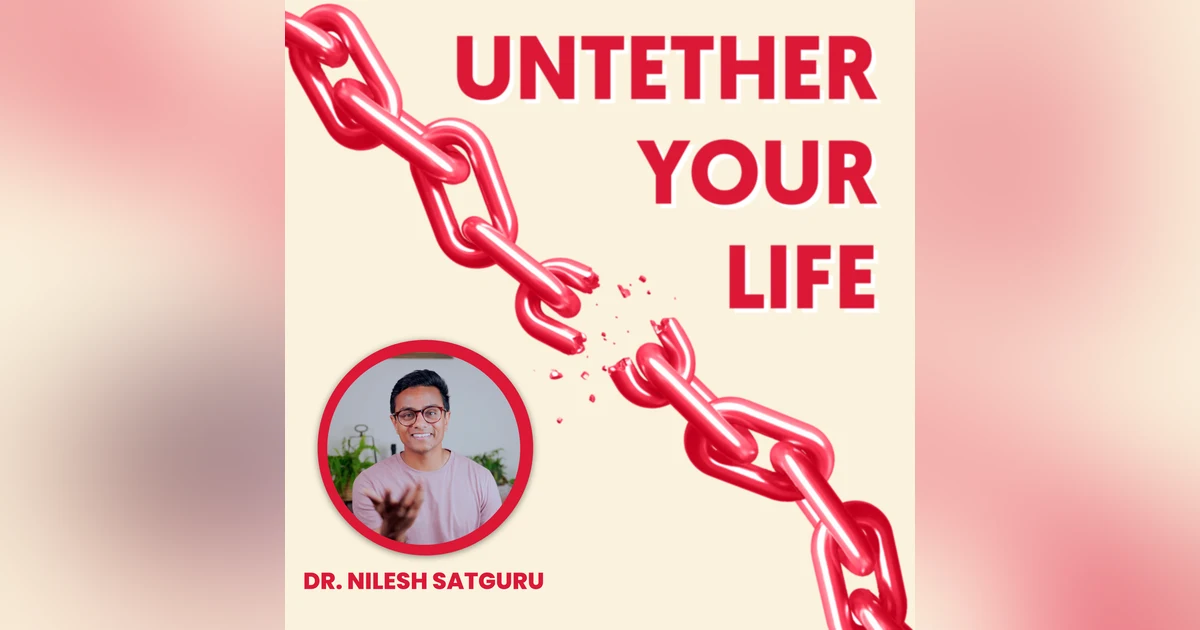
Gratitude is a topic that gets a great deal of attention in the personal growth space. However, an area that is less discussed is compassion - a subject that this week's guest (Dr. Nilesh Satguru) is very knowledgeable and passionate about.
Dr. Nilesh Satguru is a self-mastery coach, compassion expert and medical doctor. After over a decade practicing medicine, Nilesh now coaches entrepreneurs with powerful missions. His client list includes 7 figure serial entrepreneurs, ex-athletes, authors, executive coaches and award-winning charity founders. He was recently named by LA Weekly as one of "10 Leading Coaches to watch in 2023."
This episode explores a wide range of topics including:
The scientifically proven benefits of compassion, as studied by famed UCLA neuroscientist and researcher Dr. Daniel Siegel: how it can literally bridge connections between different parts of our brain and help maximize performance An overview of Altered Traits, The Body Keeps the Score, The Molecule of More, and other literature that demonstrate our power to change the structure and function of our brain Limitations of the overly compartmentalized Western healthcare system, which prompted Nilesh to explore functional and integrative medicine, and other holistic modalities. What Nilesh learned from the lotus flower - which thrives in mud - in showing resilience and learning through extremely adverse, life-altering circumstances in his career as a general practitioner in the UK.
To work with Nilesh, please visit drsatguru.com, or connect with him at @drsatguru on Instagram.
Connect with Nikhil to learn more about Untether Your Life and other projects:
0:00 What are the scientifically proven benefits of compassion? Can it really serve as a wonder pill that is in some ways more powerful than some pharmaceuticals? How can the? Challenges of the Western healthcare system inspire doctors and patients to embrace more holistic modalities to give us insight into how, as the famous book title states, the body keeps the Score. And what can the Lotus Flower, which thrives in mud, teach us about the power of resilience through adverse circumstances? Stay tuned as we touch on these and many other topics on this week's episode of Untether Your Life.
0:42 Welcome to Untether Your Life, a show that empowers you to own your own health and break free of templates for managing physical and mental Wellness, and looks at key issues impacting the South Asian diaspora. I am your host, Nikhil Torres Akar, and I'm passionate about the power of conversation to catalyze change. Today's guest doctor Nilesh Satguru really ticks off all the boxes of the mission of untether your life. His unique journey is sure to inspire S Asians who are looking to shake up traditional definitions of success, especially in the realm of healthcare. Doctor Nilesh Satguru is a self mastery coach, compassion expert, and medical doctor. After over a decade practicing medicine, Nilesh now coaches entrepreneurs with powerful missions. His client list includes 7 figure serial entrepreneurs, ex athletes, authors, executive coaches and award-winning charity founders.
1:35 Nilesh is the founder of a community called Compassion Mastery, whose purpose is to create and elevate compassionate entrepreneurs. His work has been featured in multiple magazines including Entrepreneur and he was recently named by LA Weekly as one of the quote 10 leading coaches to watch in 2023. And with that, let's get untethered. So, Neely, I feel like that's a high level overview because there's so much more that you've accomplished and done. So if there's anything else you want to add, yeah, on what I just shared with the audience. You know, well, I'll add something that I learned from from my coach is that that's the official bio and but the real bio is that I've had a lot of struggles and setbacks.
2:15 I've had times when I suffered. With self blame and judgment from patient complaints and didn't know if I was going to be a good doctor. I had challenges with my father's health and we lost my father just last year with the South Asian community. No chronic illness is a big thing and so there's an unofficial part of this that I've struggled with a lot of things and you may see something out externally. Actually, it's it's something completely different that's gone on. There's a journey that's gone behind that. I'd be happy to live in all those stories this time goes on. Yeah, absolutely. There's always the press release version of our reality, which is beautiful, and all your accolades and accomplishments. And then there's the. Muddier reality, which that's what this program is all about, is just trying to reconcile those two.
2:59 And one of the words that obviously plays very heavily in your brand is compassion. So I would love to dive in if we could just talk about that, about compassion and sort of your viewpoint and how it plays in your services and your journey. So the traditional definition, if you like, the Buddhist definition, which is where a lot of the compassion literature and research began, is compassion is showing an awareness of suffering. And taking action to relieve that suffering. But personally, I love to use this analogy and that's that compassion is a bridge. And that is all tool for connection from our subconscious to our conscious, from the negative to the positive, with our past to the present to the future. It's our true essence and authenticity. It allows us to access who we really are. And it's something that's been innate in every single one of us.
3:48 Just think about it for a minute. If your mother or your caregiver had no compassion, you wouldn't be here. So it is really inbuilt into our biology and our DNA. The other really important message about compassion I would like to share with you guys today is that compassion doesn't always have to be about suffering. It's also the bridge between awareness and action. So it's also the bridge for potential and true success and fulfillment. It's not just about suffering, it's about mastery too. So it's. Beautiful. Now I love the way you've captured that. So you. Traveled a lot of different paths. You've worn a lot of different hats. Whatever the metaphors you want to use, you've definitely done so many amazing things in your life, Neelish. And right now, I guess the term would be life coach. Would you say that's an accurate statement, life coach? Yeah, as many people know, identity is a big thing I speak about and I try not to get attached to any identities. I mean what the reason why I probably don't identify with life coach is because something a lot deeper and. That that I did it.
4:46 Traditionally I trained as a high performance coach. Essentially that is about human flourishing. That's based on data. But now I like to go even deeper and say it's Self Mastery coach, which is 3 things. Self Mastery #1 is the fulfillment of meaningful goals or projects with ease. This is really important. We'll come back to this point #2. It's the expansion of who you really are, your character. Which is what our soul is always here to do, to grow and expand. And then the Third Point is more aligned with my high performance work. It's the commitment to the disciplines that we know create human flourishing. So a life coach for me slightly devalues, I think some of the work because people the traditional life coaching model, not that I have anything wrong with it, has its place.
5:34 You know, you turn up, you say how is your week? You say great. What kind of challenges and struggles did you go through? How can we help you overcome those? And sometimes there aren't clear outcomes or evidence based behind it. And so I've kind of taken the the best of the structure from the High Performance Institute where I studied. And then I've also brought in some fluidity of life coaching work as well. So it's both. Right. Yeah. So I wanted to just put that out there, just so to make sure that I understand sort of where you are in your journey, because where you are right now is very different from where you started. One of the things I love about this podcast is it connects me with people who have, you know, we're all obviously very unique, we're distinct, but people who have traveled similar journeys because like you, you know, I'm of the South Asian diaspora. The other thing is I have a journey with healthcare because currently my wife and I, you know, we run a stem cell therapy center.
6:27 And that journey was predicated on the notion of owning your own health and finding a way to not combat necessarily, but finding a better path for patients than what is offered by traditional medicine. And this is something that I would love to hear your insights on because you have had a very storied past with the healthcare system in the UK. And so I'd love to hear more about what your journey was from becoming a very well credentialed GP is a GP partner, is that? Yeah. To your current role in the High Performance Coaching. They seem unrelated, but they're actually so much more connected than most of us would ever care to imagine. I'd like to take you back since I was earliest I can remember.
7:09 See my grandma. She was a psychiatrist. My mom's mom, actually. She was a pediatrician in Sri Lanka, and then she came over to the UK and became a psychiatrist as often those times. And she was someone who really inspired me from a young age to be interested in the body and health. And I remember reading, you know, the nutrition on the cereal packets to see what kind of vitamins had been added. That was my, my passion and my love. And so I was pigeonholed from a young age in a positive way because I was interested in it. No, that's just going to be a doctor. I also had this kind of caring side in me. I used to put my dad's socks on after a long day at work, etc. And. When I went to medical school, I think what I was really searching for, which many of us do is to help people, to help people transform and be happy and live full lives. Because of course, you know, without our health, we can't do any of those things.
8:00 You know this so well. Nickel, right. And so it came to applying for jobs after I finished, and I just had a real calling to go out into the community. And that's what you guys call in the state's family medicine. General practice and this is where I discovered what you discovered nickel is that there were certain groups of patients that I was seeing and around 4:00 in five around 80% were not getting better and it was very frustrating and I was putting them on sometimes I went to work in the surgery. I had two 400 patients on my list. So that meant that I would do all their prescriptions. I would look at all their blood results, but it was the same subset of people that were really struggling and I was really curious about that. And that's basically how I found something called lifestyle medicine which came out of the states actually it came out of some great practitioners like Dean Ornish and if you like it was similar to functional and integrative medicine, but it's slightly differed in its delivery, but all had the same intention, which is to treat, prevent and reverse chronic disease.
9:07 And so I I kept learning about that. I went and studied with the International Board of Lifestyle Positions and it basically taught me that just as you said perfectly, that our health lies very much in our hands if and this is a big if, if you learn about behavioral change and identity and and so that's what led me further in towards coaching and compassion because what I truly found is all these people that were suffering, what they were really suffering from was disconnection. Right. And I think, yeah, that, you know, the mind body connection is. Something that I don't know how it is in the UK, but it's amazing that in the US we've introduced these artificial compartmentalizations between different parts of the body. You know, if you're having heart problems, you go to a cardiologist, you're having stomach pains, you're going to a GI, when really at the root of it, it's about focusing on the root of the issue and the brain is so such a pivotal part of this.
10:01 And that gets segmented even further because you know you have to go to a clinical psychotherapist or or that type of intervention. Now this does tie into something that you talk about a lot and that's the notion of neuroplasticity, again, going back to the notion of empowerment that we have over our own health and our own thought processes. So I'd love if you could talk to us a little bit more about that concept. Sure. Yeah. I mean, look, I know many of you will be, well, vast on it, but essentially we have the power to shape and change the structure and function of our brain. And they say brain and mind is actually different. And I'll share that in fact, it's really fascinating work from Dr. Daniel, CEO.
10:43 He is a psychiatrist, but also a researcher and neuroscientist. And he got together with people at UCLA, 40 people, and he wanted to define what the mind is, is nobody actually defines this. Like, what is the mind now? I'm gonna shorten this but the mind. In that it wasn't just down to him. By this, like 40 experts from all different fields, psychologists, etc. They said the mind is a regulatory process that controls the flow of energy and information. Now it's also it's an embodied process, IE the mind and the body is 1. The brain and the mind essentially separate things in that department. Neuroplasticity means that we have the power. Through our own experiences, Through our repetitive experiences, through emotion.
11:27 Through novelty, to create new connections between our nerve cells. And of course, this is where compassion comes in so amazingly, right? Because what we know about neuroscience and compassion is that if we took the Buddhist monks who meditate on compassion for years, we see that they have greater connections between the left side of their brain and the right side of the brain through what's called the corpus callosum. And they have more connections from the back, the reptilian brain. Right to the front, which is the prefrontal cortex. Phenomenal stuff. And here's the most fascinating part is they also have more connections between what's called undifferentiated parts of our brain. So those childhood memories that have been repressed sometimes right back in our in our hippocampus. With compassion, you're able to make new connections. And essentially that's what I'm talking about when I talk about potential and true success, true fulfillment, your identity is just a fully integrated brain, mind, body, spirit. That's our natural state of healing. And so when I spoke about these patients who are really disconnected, you know, if you can make someone feel connected, you have done such an amazing thing for them in that moment that their body will.
12:36 And actually start to relax and potentially even start to heal depending on how connected they feel for how long. Yeah, and I think that we really do tend to underestimate that. There's that saying, you know, you can't teach an old dog new tricks, which I think is complete bunk because there's a guy, Bert Goldman, I think is his name. I don't know if you're familiar with him, but he was a Silva Method instructor. And then he had also come up with the methodology of quantum jumping. So I think a vision. Look, Yani had done a documentary about him or something, but he's this guy. He's in his 90s and he learned to play piano. At this late age. He had learned to introduce that whole new form of photography, just all the amazing things that really in the twilight of his years when you're supposed to be winding down, he was able to make all these new connections, these new synapses and and. And all these amazing discoveries and journeys that think really highlight the importance of retraining your brain and exposing new neural connections and everything like that.
13:30 So yeah, it's truly fascinating. Jump in just for one minute. Yeah, absolutely. Gonna mention one guy who is Richie Davidson, his work on neuroplastic. In fact, he was one of the original scientists in the 80s to bring in this time neuroplasticity. It's a relatively new concept guys, So, you know, if we were to speak to our parents. The science Back then, it wouldn't have been open to the fact that we can literally change the structure and the function of our brains and Richie's work. I would recommend you check out any of his books or anything with Daniel Goldman. There was a book Altered Traits. I don't know. If you've got one, yeah. Yeah, one you're. Referring to yeah. Is this a phenomenon? Was he the Co? Author of that Richie Davidson.
14:11 And Daniel Goldman. Those two teamed up for that book and yeah, which is I can talk about some of the compassion based studies and because they are, they're really, they're just very heartwarming but also very interesting at the same time. And that's what I love about your. Approached. Nilesh, because you hit it on the head earlier, is that the term life coach tends to get a little bit of a dismissive view in a lot of circles because it tends to be around just feeling good and this kumbaya sensation. But there is real science to back this up and so I love the fact that in a lot of the videos you're doing a lot of the content. You cite a lot of the studies that talk about when they look at functional Mri's, they look at different parts of the brain that show you know that this is not just hocus pocus.
14:55 This is something that can really impact the Physiology and can impact health overall. Not just how you're feeling, but how your overall body is functioning. Let's talk about some of that neuroscience they kind of touched in it earlier, but I know you listen as well and I and I love it too. You can hear it in my voice and it's what really lit me out at the start, cuz I have a very logical. Now I've, you know, really explored my spiritual self, but I was from the background of real hard science and logic, and it took me a long time to come around to moving to that. So yeah, compassion. Where to begin? And the neuroscient of compassion. It really is a wonder drug, a wonder pill if you could take it. You hear this statement a lot, but let's talk about. First of all, we have three brain systems.
15:35 This is from Paul Gilbert, one of the world's leading lights in self compassion, and he's based in the UK Now most of us are living in two of these systems. One system is called the wanting system and the neurochemical responsible for wanting. There's only one and that's dopamine. And that is about everything in our future experience. So, you know, if I was to reach. For something on my desk, it's dopamine. It's my wanting system that will be. And call it the, the molecule of more. I don't know if you've heard that expression, but now it's. Great focus. Well, we've read the same voice. It's a phenomenon. But yeah, the other brain system is the threat system, which is called salt and norepinephrine. These are the two neurochemicals that mediate that. And then there's the soothing system, which has oxytocin, serotonin, endorphins.
16:24 Now, most of us in the modern world, we're living between the wanting and the threat, and we spend very little time in the soothing system just to show you the power of this. Since I started to do this soothing system, I got my microbiome analyzed. Now please take these numbers with a pinch of salt. OK, you must remember this, but I've been reversing my age, so I got to analyze when I was 33 and it came out as 13. And it's only really been through these practices of soothing do you actually get to this now what's possible and it literally the reversal of aging and we again we've got loads of studies about meditators who are able to literally change their or keep intact shall we say.
17:05 The DNA as a result of the retreats and the meditations that they got. The genetics you're talking about that kind of thing, yeah. Absolutely. There's a little shoelace caps on the end of our DNA called tillamerase, which you may well have helped. Tillamerase is the enzyme that's usually responsible for breaking that down. And when we measure that in meditators, we see that they maintain these little caps on the end of the DNA, which is strongly linked to having a long and healthy and vibrant life. And this all comes through compassion. Awareness of how you feel, good or bad. It doesn't matter that there's no such thing. And then taking action moving forward from that. No, it's fascinating stuff. And like you said, I mean, we could probably spend the whole day talking about that. It's truly incredible.
17:47 Like it's like with meditation and breath work. The thing I love about it is it's something you can do anywhere. It's not something you need to have a big infrastructure or you know what I mean? It's just something like if you're stuck in traffic, for instance, and you just do some. What I do is box breathing. That tends to be very helpful and I know you're you're familiar with like things like Soma Breath that's that's been extremely revolutionary. I think we had talked about it on another podcast, but we actually went into our eight-year old son, his third grade class and we talked to them about breath work because their teacher had been using an app called Headspace, which I'm sure you're familiar with, to talk about just the importance of checking in and just paying attention to. To your breathing and things like that. And So what I'm saying is when you get kids into this mindset from the outset, rather than, as I said before, trying to teach an old dog new tricks, the impact can be not just for them. The impact on society and the world can be truly incredible. Would you also me asking you a little question? Absolutely.
18:52 What does compassion mean to you, Nico? Boy, that's a tough one. It's something that I feel like it hasn't been emphasized as much as things like gratitude. I think when people are in this space, gratitude tends to get the bulk of attention. And of course I think it's very important. But I think compassion. Is something that is in my mind. I think it's just about having grace and I think it's about, I would say, taking an objective view and not necessarily looking at what's on the surface level, just basically understanding that there are extenuating circumstances for yourself as well As for others. So let's say you're going through a very stressful time.
19:33 And then this is, I'm using a scenario for myself. I'm going through a very stressful time. So I'm, you know, eating a lot more sugar, consuming a lot more alcohol, indulging in in social media. So for me, compassion is not saying like it's just giving myself a pass, but compassion is understanding that there's a reason that I'm doing all of those things and really trying to nurture you talked about like the inner child, trying to nurture that inner child and not being so punitive. And realizing that there is a reason for this. And so you can't be compassion towards others until you're compassionate to yourself, which I think is something that you talk about as well. Thank you so much for sharing that. That's I'm sorry and I'm 100% sorry to hear that and I feel you I feel we're all actually there's two things I wanna bring up.
20:20 The 1st is that the forenable treats and Buddhism. Which in the model I used with all my my clients on self compassion and the full noble treat are as follows. #1 is that we all experience challenges and suffering. And if you first lean into that, the reason why challenges and suffering is so painful is because often we feel alone in our experience. So instantly you're no longer alone. The second thing is that your challenges and suffering, it has some causes. Now this really interesting and empowering because if it has causes like how you beautifully mentioned, you know you're going through a difficult time and this you're indulging in social media and sugar. So the sugar in social media is because of the difficult time, then this leads to the third truth. That means that you can do something about it. Now this is the piece that often gets missed in compassion and if we actually study.
21:17 The brain of someone who's been meditating on compassion, you can see that the pre motor area gets lit up, I E compassion and action are very, very closely linked. And This is why a lot of people, this is the big misconception that people miss. They think our compassion is understanding, and absolutely it is. But it's also like a mother would. Want their children to be healthy and happy and so wouldn't let them watch cartoons all day. It's it's acting from that place of a purity and growth and love and and not necessarily just from the space of of understanding. So I love the example you brought up. So my question would be what would your future self? This is very simple.
22:03 I know a lot of people use this. What would your future self say to you right now about this difficult time you're going through. So I think the future self would say that. I understand what you're going through. There are other people who are going through this. So don't don't think that you're special, not necessarily like saying you're, you know, the term special. And they're not alone. Exactly. That's. So that's a great way to say it. So don't dismiss it. Don't keep indulging in these things that are going to ruin your health. But take steps. Take, you know, the the old saying of the journey of 1000 miles begins with one step. Take that into account and. Put in place some steps to get there and don't try to do it all in one day, but just be understanding and loving to yourself. Beautiful, beautiful.
22:50 And this. Again, I wanted to spell another big myth here because a lot of people, if you're listening to this, you're interested in self help and personal growth and healing and maybe you've been frustrated or doubtful or impatient. You're like, I'm taking action, yeah, I'm taking action and I'm not getting better. This is something that would happen a lot. I'd see patients in my medical practice and coaching. There's a difference between acting from a place of fear and acting from a place of love. This is a real nuance, but gosh, is it powerful when you fully lean into self compassion and self love. And then you act. Well, your actions all of a sudden have a completely different vibration and different energy.
23:30 And often, you know, I can pretty much say that most of the time if I am, if I'm frustrated or impatient, which of course happens, it's because I'm acting from a place of fear and not love. No, 100%. I did want to take it back a little bit, Neil Ish, to what we were talking about earlier with, you know, teaching kids about meditation and and brushwork and things like that. So one of the most recent episodes we had was we talked to somebody who wrote about healing your inner child. It's a it's a very interesting discussion and I kind of alluded to this earlier when I was talking about compassion with yourself. Now you talk a little bit in in some of your videos. About the concept of childhood, you know, obviously you're a father as well.
24:12 I'd love to hear more about what do you think children can teach us about not just compassion, but just resilience? And what are some of the lessons that you learned being a father? So many, in fact. It was my son, Freddie. He's my inspiration for all of this. Because my son. When he was about six months old, I started to notice he would scream randomly, he wouldn't make eye contact. He then went on to had speech delay and I was watching. I was, I was distraught as my first son. I was overjoyed. I was at a very stressful period in my life, which I know now was clearly impacting in that situation. Do you know he's he's doing fantastically now, largely through all the stuff that we speak about.
24:56 How old? How old is he now? Six now. Oh, he's 6 now. OK, well, I'll be going to get him from school in about an hour. So yeah, I mean, what can we teach our kids? I mean, the number one, the number one thing if that you could do is teach them to be emotionally aware. And they can. They're actually teaching me that as well. Because yeah, actually, that's what I was. That's what I was asking. Was what? Can they teach us? He definitely teaches me that. He definitely teaches me to be emotionally aware. Because when let's say he says no or you know if we're trying to get him into the bar they'll do any of these little Bailey tuss and chores and he says no. It's always about me self soothing. The more I can self sooth and be unmoved by any emotions they're going through, the more that I'm training them to manage their emotions and also I just feel better as well. So it's it's it's an emotional journey being a parent because we love our children.
25:48 Problem is a lot of that love. A lot that comes with attachment. And so I think probably the two biggest lessons he teaches me is detachment and to be emotionally aware, yeah. And and I think the other thing that I've noticed is just there's that resilience, there's that lack of a sense of failure, you know, there this fighting spirit has not been beaten down yet, you know? And that's why, how do we think a child or a baby learns to walk? It's not that they get up, they fall down and then they just say up. You know what? I'll try it again tomorrow. No, they don't. And I don't say this in a bad way, but they don't have the intelligence yet to realize that there are things working against them, you know? So that's something that I think I've learned from my kids as well. They don't.
26:29 It's it's all about intuition as well. They haven't been stymied or stifled. Yet hopefully. So yeah, I mean they're they're very present and you watch the children being the flow. Like I can watch my son plays an hour and a half just in his own imaginary world and it's an amazing thing. So yes we we do we do learn that resilience from them And it's interesting I if you if you think about, I don't know what your first failure is, if you can think about it. But for most people it's very difficult to think of a failure before you were. In middle school in the States, we'd call it secondary school here. Right. Because in the first few years, you know, everybody's learning and we're all that. We don't even. There's not even really a concept of, oh, I failed, right, right. They're completely. I hear you on this resilience point. Yeah.
27:12 Yeah. And and I think this also ties into when we talk about like upbringing, that does tie in a little bit to the cultural aspect of things. I think. And I think you would agree it's a great time to be part of the South Asian diaspora just because. These strides that our culture is making is can't be overstated. I mean, it's just if you look on Fortune 500CEO's, a lot of them are of South Asian origin. And you and I were talking about how a lot of the thought leaders like Doctor Chatterjee, Jay Shetty's another one, obviously, yeah, there's so many people who look like us. So their messages I think are resonating for us and and and us as well as content creators. It's a good time where our message, I think will resonate with other people who, as I said, look like us.
27:57 But it wasn't always obviously like that. As S Asians, we were labeled other, you know, growing up. So I'd love to hear more. I know this is a broad question, but I'd love to hear more about your journey as a South Asian in terms of like how that's evolved and good and bad. Well, I'd love to share that and for the South Asians. That are listening. I would have been traditionally called the coconut. Yeah. My mum and dad were from Sri Lanka, they're from Sri Lanka and my dad was Tamil. If any of you guys know that in Sri Lanka there's Tamil in singalees and my mum was singalees and so they didn't teach us. They made a conscious choice not to teach us Tamil or singalees.
28:41 So my brother and I, we grew up really just speaking English, and apart from the food, we weren't very immersed in the culture. So it's strange because I didn't actually think of myself as different until people started to notice the color of your skin and until I was the only brown person in the school. And then as I started to go through school and I wanted to go into leadership positions and they didn't get them. I started to think my dad would mention a few things, that he'd been subject to some racial challenges when he first came to the country. And then I thought, oh, maybe it's because my skin and I didn't consciously think that, but subconsciously I There definitely was something there, you know, really took.
29:23 Going inwards and seeing other people, just as you said, you know, for a long for seven years I was off social media. I didn't want to be seen even though I was doing very similar things as to I'm doing now, but I just didn't want to be seen. And then I started to see people like Dr. Rupi, Angela in the UK, the doctor's kitchen, wrong and Chassi. In fact, I didn't learn about Jay till actually relatively recently, but. Oh, really? OK. Jay is a phenomenal, of course. Yeah. And they start to see these people who. You know, were born in the UK who were S Asians just like me. And I thought, wow, it's this feeling of I didn't feel so alone or disconnected anymore, you know? And for a big, a long time I was embarrassed to say that I was going into coaching because of course I was in medicine, which in Asian communities is one of the pinnacles of the. Pinnacle, right?
30:12 Exactly. It's the status thing, right? Like, oh, my, that's this person's son, the doctor, right. That's how everybody's referred to in that way. And and I get it. I understand that because. I think for them having secure income was incredibly important when you're moving to a new country. And so the more secure your job and your income, of course it gave you some some safety and security. Of course, there's a great quote from the the coach, Marshall Goldsmith. What got you here won't get you there. And we're in a new paradigm now where we're becoming entrepreneurs and leaders and thought leaders and content creators and sharing. Inspiration with the world. So that's my journey. And you know, now I'm actually part of a club in the in the UK there's there's a wonderful Asian contingent and that just just like you say, they're doing phenomenal things and I feel very blessed to be connected in in that community because it's just a very loving, a loving space to be.
31:08 Yeah and no. And I think one of the things that I'm really grateful for is that there's more dialogue about because mental health obviously has been. A discussion of great interest for for many years. But S Asians, I think it has been so it's been a blind spot because as members of you know the model minority it was just something that we always thought was not to be offensive but like a white person issue. You know, this is like, oh we don't have mental health issues in our community. This just keep your head down. Focus and leave that stuff to the side. And now. We are seeing that because bringing it back to what we were talking about earlier, it's not just about feeling anxious or feeling depressed. It's about the fact that these thoughts, you know as that that book, the body keeps score.
31:53 You know these thoughts, these traumas really manifest into different parts of our body and if we are trying to just take a piece meal approach to managing our health, that's not going to be the most effective. So and I think that because we are, you know, in this position where we have people who are talking about it and that you know we are creating content. I feel very, very fortunate that it's something that you know at the end of the day mental health in essence knows no cultural boundaries, but in it in other respects it does because there are nuances. To our experience, you know there are nuances to coming to a new country, trying to be accepted, trying to bring up, bring through elements of your old culture but also integrate into into the new world and in doing so not be too much of A, as you said as a coconut.
32:41 I love that expression. I use that all the time with my, my kids. I'm like, you know, but no, it's it's it's great and I I feel very, very fortunate about that and again. I think interestingly enough, you know, we, I did mention Jay Shetty and I was chuckling because there's he has a daily meditation called the Daily J on the Calm app. And today the meditation, he talks about the importance of posture and a flower, you know, how it spreads its petals to to be exposed to the sun. I'm bringing that up because you had a very interesting point about a Lotus. I think in one of your podcast you talked about how a Lotus, it thrives in adverse conditions and thrives in mud. So if you could nealish, if you could talk a little bit more about that metaphor and sort of how it's played out in your life, how Lotus thrives in adverse conditions. I'm so glad you brought this up because I read this and I think it was again through Paul Gilbert's work and I all that analogy and I just loved it.
33:37 I think nature gives us the best lessons it it's so much outside when you we open our awareness to it, but the Lotus flower, it needs to be sustained by mud. And I love this because you can think of the mud as your negative emotions or your difficult times. And his such an important take away for for me, I'm saying this to myself as much as everyone else is, that there really isn't anything is. And they say such thing as a name to times and positive times. It's just it just is. We ascribe so much meaning to things and as a result we kind of ride this roller coaster of emotions in life. But the mud is necessary to bloom the beautiful Lotus flower. And so I just urge everybody, if they are going through challenge, struggles, doubts, impatience, frustration, whatever it is, if you can open yourself to that, like the Chinese finger trap, right when you resist the Chinese finger trap, you can't get out.
34:30 But when you turn towards it and you lean into it, you're free. So this is the lesson from the Lotus flower, no matter how far in your journey you go, oh, there are challenges and setbacks and I and then I feel like, you know, if people don't say that. Well, they're enlightened and there are people that are enlightened, but it's more rare than one would one would think. Yeah. And I think you had talked about in your journey like you're with the healthcare system, there was a, I think there was a situation with a patient that you had encountered. I think would that sort of align with that whole? Thank you getting. Through those adverse conditions and. Thanks to remind me of this story. Yeah. So there's there's four big challenges that I faced that you know, my past which I've learned a lot from the mud as it were.
35:16 But the most personal one which you brought up nickel is you know I was working at this GP surgery like I said, I was very stressed 2400 patients. So I was trying to make people better. But the thing was is there was a 33 day wait to see a doctor in that surgery. And so I remember 11 kind of letter came through that this person had got bowel cancer whilst they were waiting to be seen. And anyway we actually got, I was very angry at the time. I certainly wasn't into meditation or any of this And so I was on this mission to try and reduce the waiting time and there was a lot of bureaucracy but there was a patient that came in and I was 20 minutes late and essentially I wasn't compassionate with this patient I I. I made the correct diagnosis.
36:03 I did everything by the book, but I wasn't compassionate and they wrote this complaint and I went into a period of, you know, basically deep and was only speak for a few weeks and I was very judgmental with myself. But that mud was what bloomed my study of compassion. I, you know, I've kind of felt drawn to the Dalai Lama. I started reading the Dalai Lama. I got really deep into personal growth meditation was was coming through then as well, so. You're exactly where you're meant to be. It's a cheesy phrase, but it is just so true. You're exactly where you're meant to be. But it all relies on your awareness of where you are and the possibility for something to bloom out of that.
36:44 Yeah, I definitely think that you have to, you know, you have to look beyond that goes back to compassion, right? You have to look beyond what is right in front of you because there are adverse circumstances that might. Cause you to behave in ways that are contrary to how you, you know you're idealized version of yourself like you you were talking about. I mean there were you were in a very stressful situation. This is not necessarily who you are. This is just you have to remove yourself from the adverse circumstances and that's how we get to hire actualized versions of ourselves. So Nilesh, I do want to shift to talk a little bit more about your coaching practice because one of the things that I found very interesting, you know there's.
37:27 Coaching programs like Tony Robbins or Jay Shetty, as we mentioned earlier, one of the criticisms, it's just that coaches tend to promise that you can be the best version of yourself and you can achieve the lifestyle of your dreams And you know everything is going to be solved if you just sign up for my course or download my white paper or whatever. But what I loved about something I saw on your site was you have a post that says I am not the coach for you. Which is very, I think it's very eye-catching. So I'd love if you could talk a little bit more about that. I'm really glad you brought that up because the biggest shift in my coaching came when I started to do deeper and deeper inner work, and something that came out of that was that I can't be for everyone, and that's completely OK.
38:15 And almost, even as I still say this, I kind of feel like a deep relaxing because coaches, naturally we're servers, We're people who are caring, who want to make a difference, whether it's coaches or someone in healthcare. If you're that kind of person, then you're someone who wants to try and help everybody. But it's sometimes not meant to be that way. So I actually had some challenges with different clients in my past, and I started to look, I started raise awareness through compassion. What were the challenges I was having here? What did it bring up in me? And it brought up these these few things. Number one, I love to work with people who have a desire to create a powerful mission that serves. And maybe they've already got the mission, like one of my clients who's trying to break the mental health to be in Singapore.
38:58 Or maybe they're just looking to create one as I've got another guy in the States who's got his own private equity firm but knows that there's something more spiritual for him to do to give back. And we're working through that. The second one is that I work with people with a history of success or accomplishment. And this is a really important distinction. Now you'll find different coaches do different things. At the first level. Some coaches will want to work on your habits and your tactics, and that's very helpful. Don't get me wrong, and I sometimes do that. The second level you want to work on mindset and strategy. Again, also helpful. But when you've already reached a certain level of accomplishment, the level that you want to play at is identity. You mentioned Bar Goldman. He's a great example.
39:40 Of that where you look into that identity and energy. So the reason why I like to work with people with a history of success is because I like to take them from already believing in themselves to believing what's possible even beyond their natural state of belief. And then, you know, I won't go into all the points. But then the other one which is important to me is I'm committed to the deep inner work and that people are also committed to look inwards so that they can give to others more people who. OK, circumstances, they can be challenging, situation can be difficult, but I'm always encouraging people to look inwards as to what did that bring up in them. And that's a very empowered way to lead as well because if you can soothe yourself and let's say you've got staff or family, etc, people instantly feel calm in your presence. This is important for me that I work with people who are powerful mission or desire to create one, have a history of success or accomplishment and people who are committed to going inwards.
40:38 Seeing the deep inner work. Yeah, I think that's that's a very important point elation because you can't be all things to all people. And as much as you want to show compassion and and help everybody, I think that you can end up doing yourself a disservice. Because if you're not, if you're a square peg in a round hole also for the client but also for yourself. Because it's like you know how are you achieving your mission of showing compassion and and affecting change. You you have to be realistic and I think you have to. I I don't know who said it, but they said I think it might have been actually Steve Jobs. It said sometimes it was not a matter. Of. What I said yes to, but what I said no to that right helped dictate my success. You know, it's all about prioritization and and focus for sure.
41:19 There is one question I always ask people. It's just, you know, obviously the title of this podcast is Untether Your Life. Obviously this is something you've done an amazing job of with your life, you know, breaking. Free of a lot of the templates of what, quote UN quote success looks like in the South Asian diaspora, you've done an amazing job of owning your own health using a lot of these practices, notably compassion. So my applause to you. I'd like to understand, you know, if if you could tell the listeners what they can do to untether your life, what that be. I think you know what's coming, right 11 Great one practice to embody and it's as simple as this is.
41:59 Throughout the day, pay attention to how you feel, and there's three three ways to do that. With words, with numbers, and with also the feeling within your body. If you did, she did that by itself. You will have a lot of wisdom as to how you can better help yourself and others and untether your life. Because you know, the reason why I was able to leave those templates was because. After a while, it just, oh, it didn't feel right for me to be working here anymore. And so I always encourage people to start with that, Start with those three points of awareness. Perfect. Is there anything else you want to touch on before we before we wrap things up? This and I'm so grateful for you, Nickel. And at some stage I'd love to meet Shelley too. I loved reading the article and I think it's really, really beautiful what you guys are up to.
42:44 And I'm just yeah, I'm in the space of real gratitude. I love having these conversations. If anyone wants to connect with me make sure you just get. In touch by my Instagram or Dr. sacharoo.com and I look forward to hearing from you guys because for me it's it's not about the number of connections, but it's about the depth of connections. So if anything spoke to you that I said definitely get in touch if you feel like you're aligned and if not that's also cool like I send you love and I'll look forward to hopefully seeing you in person at some stage nickel. Yeah, likewise. Maybe in Estonia, whenever. You never know. All right. Thanks a lot, Nealish. This was, this was great. Thank you. Thanks so much for listening, and I hope you enjoyed that episode. For more of these types of conversations, please visit us at Untether Your Life dot Co.
43:32 You can also find us on Instagram and Untether your life, as well as on Apple, Spotify, and other platforms by searching for Untether Your Life. And if you did enjoy this episode, please leave us a review or share it with someone who might also benefit. Thanks and until the next time we meet, stay untethered. I'm a.

