
63: Vasavi Kumar - The Transformative Power of "Saying It Out Loud"


 Apple Podcasts

 Spotify
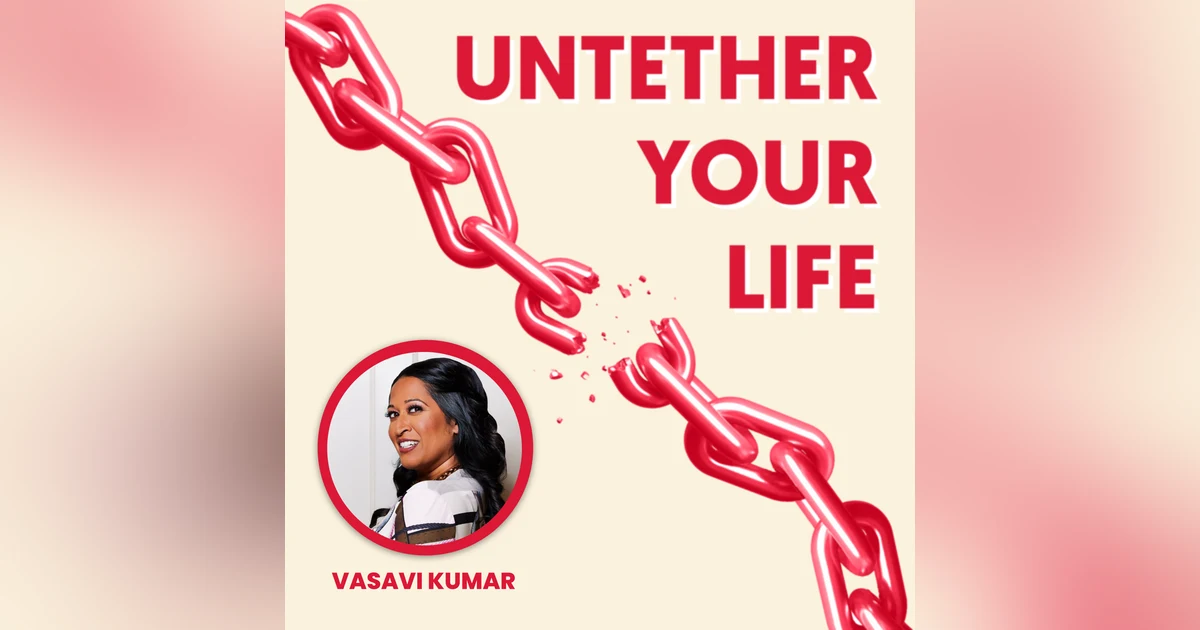
Vasavi Kumar is often described as the "Queen of Saying It Out Loud." A first-generation Indian immigrant raised on Long Island, NY, Vasavi has relentlessly searched to find her own voice, access the freedom of her creative spirit, and help others along the way...out loud.
When diagnosed with bipolar disorder at the age of 19, she made it her life’s purpose to understand how her mind works, starting with making room to hear herself think. Her mission is to share everything—the good, bad, and ugly—in order to teach a more mindful, practical, and simple way of running every aspect of your life.
Through her Say It Out Loud platform, Vasavi has taught thousands of entrepreneurs, creatives, and artists from all walks of life how to move through any situation — by saying it out loud.
In this episode, host Nikhil Torsekar speaks with Vasavi on many topics, including:
The mission of the Say It Out Loud platform, which includes a podcast (now in its 6th year) and a book published earlier this year by New World Library Vasavi's journey with bipolar disorder, and recommendations for other South Asians looking for strategies to manage this condition The struggle of South Asians and the complex relationship with our culture; long ridiculed and marginalized, it is now being embraced by the mainstream for Ayurveda, yoga, and other practices seen as trendy and worthy of appropriation or co-opting The empowering value of self-talk - something that we've long been dissuaded from engaging in The concept of "power leakages" - how they prevent us from living our best life, and what we can do to regain control
To work with Vasavi and get a copy of Say It Out Loud, visit vasavikumar.com or connect with her at @mynameisvasavi on Instagram.
Connect with Nikhil to learn more about Untether Your Life and other projects:
0:00 What are power leakages? How can we, as Jim Roan put it, stand guard at the door of our mind to ensure that we retain control and prevent it from getting sucked away by work, drama, family obligations, or Instagram notifications? What can S Asians diagnosed with bipolar disorder do to combat the societal and cultural stigma against mental illness and arm themselves with strategies to live their best lives? And. How can we learn to quote, say it out loud, and better serve ourselves? By empowering and listening to voices in our core inner being that have been abandoned or suppressed? Stay tuned as we touch on these and many other topics on this week's episode of Untether Your Life.
0:49 Welcome to Untether Your Life, a show that empowers you to own your own health and break free of templates for managing physical and mental Wellness, and looks at key issues impacting the South Asian diaspora. I am your host, Nikhil Torsakar, and I'm passionate about the power of conversation to catalyze change. As a cultural group, we as S Asians have typically fallen into the unwritten script that dictates that we stay in our lane, get good grades and good jobs, and conform to the tenets of the quote model minority myth. This template never really resonated with me, which is one of the reasons I launched the Untethered Your Life podcast. It's also why I love connecting with like minded change makers who are shattering the conception of what quote making it as a South Asian really means.
1:30 This week's guest, Vasavi Kumar is one of those individuals. Vasavi Kumar is often described as the queen of saying it out loud, a first generation Indian immigrant raised on Long Island, New York. Vasavi has relentlessly searched to find her own voice, access the freedom of her creative spirit, and help others along the way out loud. When she was diagnosed with bipolar disorder at the age of 19, she made it her life's purpose to understand how her mind works, starting with making room to hear herself think. Her mission is to share everything, the good, bad and ugly, in order to teach a more mindful, practical and simple way of running every aspect of your life.
2:11 Through her Say It Out Loud podcast workshops, keynote talks, and recently published book, Vasavi has taught thousands of entrepreneurs, creatives and artists from all walks of life how to move through any situation by saying it out loud. And with that, let's get untethered. So Vasavi, obviously the the most exciting thing at this point is the book. So tell us, tell us more about the book. Say it out loud. Yes. So Say It Out Loud is my first book published by New World Library. It's a book that will help you learn how to talk to yourself out loud. There's an old saying that's like, you can talk to yourself, just don't respond back. Just don't talk back to the voices in your head. And I'm here to shatter that.
2:57 I want to normalize it. You know, say it out loud. It's not just a book. It's a movement. It's a call to action for everyone to examine, question and prompt. The different parts of themselves out loud to hear what certain parts of you have been abandoned, have been disowned, have been swept aside. Every single part of us has its own unique expression and needs to express itself in order for us to move in this world as the most fully integrated version of our self. Right. All the different parts of us. And you know, in my book I just, I want to teach my reader. It's really about learning. To be curious about the parts of yourself that have been dismissed and silenced and every chapter in the book. You don't even need a pen or paper. You know, I like to say this is the alternative guide to journaling.
3:48 It's like verbal journaling. It's for anyone who wants to reconnect with their voice and feel confident in expressing who they are authentically in any situation. And let's face it, maybe you've read all the podcasts, you've listened to the audibles, you've gone to the workshops. But you're ready for a fun, fresh and simple approach, right? You don't need to buy an expensive journal. But what you do need to learn is how to talk to all the voices in your head that have been holding you back. And you can do that just by using your voice. And so I'm saying out loud, the book is sort of the latest iteration and the latest part of that platform, but the other piece of that is the podcast. I was wondering if you could tell me about that a little bit, like in terms of what's the philosophy? Yes, you know, I always love connecting with other podcasters, just finding out sort of what their mission is with their specific platform. And you know just in terms of any learnings you've had, you've been what, three years now and doing the podcast, is that right or?
4:41 No, 2017, I would say even like if you go on my YouTube, Vasavi Kumar, I I mean I've been on YouTube since like 2011, 2012. I have been interviewing you know self help, New York Times, self help authors when I had my own radio show. So I was on actual radio like terrestrial radio back in the day in an actual radio station and then when I started my podcast that was in maybe. 2017 I started and it was actually called Being Human with Vasavi. That was the name of my podcast for a very long time. I changed the name of my podcast to say it out loud when I got my book deal at the end of 2021. So that has been the evolution of my podcast. And as I've evolved, the podcast has evolved.
5:22 You know, I like bringing people on my podcast who are willing to say the thing that I think we all need to hear but maybe are too afraid to hear. So I just got off a great interview with my girlfriend, Alexa Martinez. She goes by that sex chick. That's her whole brand, that sex chick. It's all about helping couples feel more connected with each other and looking at their own sexual development. I've never really had someone on my podcast to come on and talk about sex or talk about relationship dynamics in this way, in the way that she did. So my point in saying this is that, you know, my podcast, Say It Out Loud is not just like, oh, tell me about your past. Tell me about this. Tell me about that. Like, no, I wanna look at, OK, you've been through some stuff in your life. How are you using what you've been through to now be of contribution to the world?
6:05 What are you saying out loud that needs to be said? That's the vibe of my podcast. I always say like when people ask me this question like, you know, ask you someone who their favorite guest is, is kind of like asking a parent. Who their favorite kid is. I know it's a tough question, but. Is there any guests you've had? On you can share that has been like, very illuminating. To be honest, no. I I know when I really enjoy a conversation with someone, it's because they're not trying to perform and they're not trying to say the right thing. I mean, the most fun conversations that I've ever had with anyone on my podcast are, well, This is why I handpicked my guests, right? I don't just let anyone come on my show. I make sure that I have a connection with this person or I've studied their content and I like. Their approach, I like their delivery and I believe that they are a person of integrity, that they are who they say they are. So that for me is really important and I need to see them embody whatever it is that they're putting out there. So my previous guest that I just had on my podcast, she is someone who walks for talk.
7:01 And it's very, that's very clear when you meet her, when you see her, you just know it. She's a living embodiment of what she puts out into the world. So that's what I really look for. But the most fun conversations are when it's just, you know, me and I'm comfortable in myself and this other person is comfortable in who they are and we're just being ourselves with each other. Talking about the thing that we love talking about. The way I look at it is I feel like the podcast that I really enjoy, the ones that resonate with me are the ones where it's almost like you're eavesdropping on someone's conversation. As opposed to someone coming on to try to pitch their latest. I don't want to say book because obviously that that's that's relevant here but you know just pitching just a walking advertisement those definitely I hit skip on the on Apple Podcasts right away to go to the next one. So you and I are both podcasters. The other there are a lot of elements in our backgrounds and I think are very there's a lot of overlap which was one of the reasons I.
7:53 I was very excited when we connected to have you on. The big thing is the the cultural elements are being both of South Asian descent now. I think it's a it's a very interesting time for our culture just because I think South Asians are coming out more to the front where you know there's more not just in commercial round but also in entertainment. I didn't watch the Oscars but there was some Indian musical that that got the best. Yeah. Are, are. Yeah. Are you into that? Are we here to that I? Am not a huge Bollywood fan, but I do. I did see RRR with my friend at her house and you know, it's it's kind of like one of the other movies Lagaan with Amir Khan, which is like British ruling India. And I think because it was stuffed in my face growing up, like the Bollywood movies, the three hour long movies with the same exact plot. I'm not into watching the movies, but I'm. In the fields of Switzerland.
8:44 Yes, exactly. Like almost pretending to kiss and then kind of turning away. It felt really good. I was at a sports bar watching the Knicks game. Knicks and Lakers went while the Oscars were on. And I remember like when I saw these two Fellowgu men, and I'm we're from Madras, but my parents were raised in Hyderabad, so they speak Telugu too. It was really, it felt really good to see 2 Indian men on screen. It felt really good to feel like. Man, what? I'm back in the day when we would watch the Oscars all the time, there was number one that looked like us there. So, like, this is, this is really a beautiful thing and I'm excited for the next generation of South Asian children who do not feel pressured to have to be a doctor. Or to have to go do, like do some engineering thing or this or something logical. You know, like we come from a country of over a billion people and we're obsessed with Bollywood in the movies. But like, we also can do that.
9:30 People who want, like they can do that. You don't have to just be a doctor to be worth something, you know? Yeah, exactly. And you know, where I was going with this is I just, I wanted to get your take on the South Asian experience and kind of how it's evolved from your childhood because from my understanding, as you grow up in a town where Indians were definitely the minority where. You're always being other, and so I'd like to hear more about how that's evolved for you, you know, your experience of being a South Asian. Yeah, my experience of being South Asian when I was a kid, I felt like I constantly had to defend who I was. Whether my mother would pack me roti and, you know, aloo subji or something, or some samba Rasam or some South in idli or whatever, that's, you know, with chutney and like the kids would make fun of. Did you have a Tiffin? Did you have a test? That we did, yeah, we did something. My mom would just wrap.
10:13 That shouldn't foil, you know? And I remember during Taco Tuesday, you know, my family's Hindu Brahmin. Turn eat any meat at all. We definitely don't eat cow. And I remember one of the girls, she like out a spoon of Taco beef. And she was like, dia, don't you want beef? And so my childhood was very much like constantly having to defend who I was defending, that my mother wore a bindi on her forehead or that she her name was Geeta or that's, you know, sometimes I'd come into school with coconut oil in my hair because my mother would braid my hair constantly defending who I was. Things that I just could not change. I cannot change that. My name is Vasavi. I cannot change that. My mother loves. Cooking Indian food and nor do I want to and my and I smell like Curry. I cannot change the fact that I am brown. I cannot change that.
10:55 I was always defending. I'll be honest now, I mean, yes, I'm really happy for our community, South Asian community. I think what I'm pissed off about is that now the western world is catching on to how fucking amazing our culture. Is a lot of appropriation. A lot of appropriation. You want it. You want our yoga. You want our turmeric. You want our Chai. You want this, You want the mantras and the tantras and the this. And it's like this shit has been around for thousands of years and predictably so. White people decide, oh, now we approve of this because it helps us. So now we're going to capitalize on this. We're going to monetize culture that's been around for centuries, but now we think it's. No, white people want it. We want it now. So no, but thank God, because you know, there's a lot more highlight, there's a lot more light being shined on Eastern modalities. But the fact is it's like I don't think it's South Asians get as much credit as we should for a lot of the stuff that people have just ripped off and and and capitalized on. So I hope if anything.
11:50 That S Asians are seeing how more visible we're getting and are starting to take more ownership of our culture and not let the West just rape our culture, which is what we've allowed since the British. We've allowed our country is a group of passive individuals who have allowed the British to take over. And we're still. You know, suffering from that. And we got to learn to take our power back as a South Asian community. And I think the words IO, you know, this is like appropriation, colonialism, those kinds of those topics that it is interesting how the script is completely flipped, right, Because we were the object of derision for so many years for a lot of those things you were talking about, like accents, you know, like I'll pull on The Simpsons.
12:31 We're talking about depictions of, I always say, like depictions of South Asians in the media or in entertainment. For years, you know it's great to have people like Hassan Minhaj and Aziz Ansari out there, but for you know because growing up we just had like approved from The Simpsons, you know so but there is a darker side to that part of the pun, but there there is a darker side to that in that you know there is a lot of sort of taking credit and Co opting a lot of these innovations that have been part of our culture for so long. And so that's really one of the missions of our podcast and our platform is really to reclaim that not necessarily in like an adversarial or. Confrontational way, but just really sort of, you know, put our imprint back on culture at large. And so, you know, obviously the cultural aspect, that's one thing that there's a common thread. But the other thing that I really find refreshing, Vasavi, is how you talk about your journey with mental health. There's a book you cited in your book called the, I think it's called The Dow of Bipolar.
13:29 That sounds very interesting and it's a very unique way of capturing this disorder because you know, as as you and I have talked. Is something that I was diagnosed with later in life. But the diagnosis has helped me to sort of have a roadmap, and I don't see it as like a death sentence per se, or like putting me in a box. I feel like it's giving me some type of perspective and some type of. Tools to manage this heroin right? You could be very disorienting disorder to contend with, but this is something I would love for you to talk to people who are listening, who are of South Asian descent, who might be either struggling themselves with bipolar disorder. Or have a loved one if you could shed a little bit of light on on your experience with the disorder. Yeah, once I was diagnosed with this label, with this disorder. Um, I hate calling it a disorder and I hate calling it an illness because I'm, I feel like one of the healthiest people that I know.
14:23 I feel like I'm more in charge of my mind than the average person. And and that's why first thing is I look at my diagnosis as the greatest gift that I've ever been given. Because of how God made me. I am a very naturally curious person and I am the type of person that does not let. Anything get in her way from whatever it is that I want to do. So when I was diagnosed with bipolar disorder when I was 19, I addressed it like I address everything else in my life is like, oh, we got a problem, let's fix it. That's it. We don't sit and wallow in our pain. We don't sit and wallow in our suffering. While I think there's a time and a place to sit and feel your feelings. Yes, but I could have let that diagnosis and that label really define me. And I did for a little bit, you know, because I family didn't know how to deal with it.
15:05 I come from a family of, you know, my uncle killed himself, my father. His brother killed himself. And we've come from a history of mental health challenges in our family. What I did after I got diagnosed is that I went and learned about it because my mother instilled education and knowledge in our head. So I treated my diagnosis with the same level of curiosity and hunger that I do. Is like, oh, you're gonna tell me my mind is ill? OK, well, I'm gonna fix it. I'm gonna heal it. And that's what my whole life has been about past 20 years is understanding my mind, organizing my mind, making peace with all the voices in my head, and really having my mind be a peaceful place and a creative space and me being the environment. To thrive like your mind has to be conducive for creativity.
15:47 Your body has to be conducive for creativity. I wouldn't have been able to write a book if I did not have the ability to organize my mind and my thoughts. So what I would say to anyone in the South Asian. Community is Do not expect anyone to understand your journey. Do not, like, go and talk to your parents about this. If they're, like, not gonna get help, they're just like, telling you to take meds. They're not trying to understand themselves and they're not trying to actually get the help they need to support you. So you really need to find a community. You need to be working with a therapist or someone, because if you're on medication, you're going to a psychiatrist for that. A psychiatrist job is not to help you with your emotions. A psychiatrist asks you how you're doing and changes your levels based on what you tell them. Right. But our feelings change, like the weather.
16:29 So who do you talk to? You know, who do you talk to? You got to talk to your therapist. You got to talk to someone every week. You got to talk to someone to process your emotions, your psychiatrists there to adjust the levels of your medication. You're just a Guinea pig in all of it. I'm going to be straight up. So I don't take medication right now. If this season of my life, I don't take medication. I've been on plenty of medication in my life since the age of 19. I'm in a season now where I do not take medication. I use other ways to keep my mind organized to still. Calm at peace. Slow down any intrusive thoughts. Impulsivity, I There are lots of things that I do to help myself and there's nothing wrong with getting on medication. So I want to say this too. If you've gotten diagnosed and you're like, oh, I'm, I'm so weak. If I take medication, stop saying shit like that. First of all, it's OK to take a little something to turn the volume down so that you can recalibrate and get back to a sense of self, whatever that looks like for you. So that's just, you know, get the help. Don't be afraid to get up, get all the help, like immerse yourself into it.
17:27 I went to a goddamn bookstore to went to the mental health section and looked at every single book I possibly could. I was soon to be dating my my. Well, he's now my exhusband. But I remember when we first started dating, I gave him articles on bipolar disorder. I gave him articles on how to talk to somebody, what not to say, what not to say to someone say to someone we met who's been diagnosed. Hey, did you forget to take your pills today? You don't say stuff like that, right? But these are things that people just don't know. They just don't know. And so it is your job as the person who has been diagnosed. Like take responsibility for your diagnosis, Be an informed patient, take responsibility for your mind and your internal state. Get on 100% and that that way aligned with the mission of our podcast also which is owning your own health because I think as patients or as you know as healthcare consumers, I guess you could call it a lot of times there is this tendency to slip into passive mode where we go in to see our doctors.
18:20 And we think oh they've gotten, they've had years of training and so their word is gospel. And a lot of times to your point earlier vos we which is just that these doctors they're not necessarily there to help us get better. A lot of times it's unfortunately this is a darker side of healthcare. A lot of times their incentives are tied to different things like how much of a certain medication they're shelling out if there's a medication that they're incentive to provide. They're prescribed, you know, and do they really care if it causes side effects? And obviously there are good doctors out there. And by and large, yeah, I would say they're well-intentioned. It's a broken system. It's not the way I say it is. It's not a health care system. It's a sick care system, you know, with. The philosophy is just it's not about getting you better, it's about selling you more drugs.
19:09 And one of the things that I would love to hear more about is sounds like you have really done a good job of owning your own health. Because as you said, medication definitely does have its purpose and for people who are going through a very challenging time, it's a must. I mean for me like definitely medication has been very beneficial. But this is another thing we talked about here is finding alternative modalities to maintain your mental health and it sounds like. You've done this in a couple different forms, so one of them is, if you could talk a little bit more is your journey with Ayurveda and Ayurvedic. That's. Not a huge part of my journey. I mean, I went to India for a little bit to to study Ayurveda cooking after culinary school.
19:50 It's not a huge part of my life. I mean, I think. The main principle of Ayurveda is like increases like it's so basically like if you're hot and you eat spicy food, you're going to get hotter, right. That's the principle. I it's like do if you do more of how you're feeling, it's gonna just exacerbate it. So I think for Ayurveda, the thing that I got got the most and you know I did write a book on it's called stop dieting Start living and it's on Amazon and I wrote this like Amazon Ayurveda Kindle book. But what I really love about Ayurveda is the holistic view. Of the individual. So you know, if you've been diagnosed with a mental illness, that is a imbalance of Vata because Vata is wind Vata's air. And that means your mind is a little unstable, right. So what?
20:34 It's a little airy fairy, right? So these are for my people that are scattered, they're very disorganized. You call yourself creative, but you can't even get yourself to sit down to write a paragraph, right? So you need to. You need to understand that any disease, illness of the mind is all I will say about it because I don't want to. I want, I like to stay in my lane. My topic is on selftalk. I'm not an Ayurvedic expert. I will say that for me, what I have learned is that to approach myself as a whole person, taking a medication to stabilize my mood, but then going to sleep at 3:00 o'clock in the morning, eating shitty food, hanging out with people who suck. Honestly, just like what is the point of taking that pill? So I don't listen. You want to take a pill, that's fine.
21:14 But you got to do all the other stuff to support that pill. I don't take the pill and I do all the things. It is actually harder for me because I do not have a pill. I'm doing everything. But I for me, in this season of my life, I would rather do that, then take a pill and do all the stuff. Like, I don't know, it's just I listen. What if I feel that down the road I want to take medication? I have no problem doing that. I have no problem getting on meds. I have thought about it this year to get on meds. Because I noticed a few of my intrusive thoughts getting louder and louder and louder. And I found that when I said out loud to a safe person, to my therapist, to a friend, what these thoughts were saying to me and they just listened, it actually quieted that part of my brain down.
21:55 And so it really does help when we say out loud how we're feeling. That's so true. You started touching on this a little bit which is self talk. I would, I would love to hear more about some if you could talk about. Just the importance of selftalk and maybe like for people who are struggling with this and how they tend to ruminate and beat themselves up, maybe if there's some guidance you can give and and being more gentle to that inner child and being better about selftalk self dialogue. Absolutely. So I'm going to say one thing. I'm here to normalize that. Saying your thoughts and words out loud really do have the power to transform your life, OK. Saying your thoughts, your words out loud, when you're actually hearing yourself, the hearing your voice has the power to guide you.
22:36 OK. So, so think about when you're up against a challenge, right, or a difficult decision or even, you know your own thoughts and scenarios in your head that you play over and over again, Your natural instinct might be to shut down or avoid or say, I'll figure this out later or I'm just not even going to. Think about it. Or you might feel overwhelmed by the situation at hand, and then you know all logic goes out the window. You start to spiral. And during those challenging, stressful times, this is where you get to notice how you speak to yourself, right? But I'm inviting my reader and my listener right now to talk to yourself out loud and play with the sound of your voice. Play with the tone, Play with the inflection, the volume, the pitch and the texture of your voice. Because your voice can help soothe you in times of stress, right?
23:19 So talking to yourself out loud, if you are five areas of your life, we're talking out loud to yourself. We'll help you Problem solving. You might ask yourself, all right, what is my top priority for me today? Problem solving? Say that out loud. You know when you get overwhelmed instead of being overwhelmed. Can help you talking to yourself out loud, Okay what is my top priority for me today. And then respond back or write it down what you need to do. Talking to yourself out loud helps you increase your focus. So you might want to say to yourself, All right, let's get to work, Okay. You get to play with your voice in that way to help you increase your focus, reducing stress. This will help with the that stressed out sad in her child maybe who's overwhelmed you might say you're going to be okay, I'm here, you're safe. You see how I changed my tone.
24:01 You see how I change my volume when I when I want to reduce stress. I'm not going to say get out of your stress. You're going to talk to yourself in a calmer way. It also helps you with motivation, right? You know, just think about the coach on the football field like you got this. You have what it takes. But like the way I sound may sound very different than the way you sound, but you get to play with your voice and figure out what will work for you. And all of this should be said out loud. We don't keep the shit in our head. We say it out loud because that is what I'm postulating. Is that the actual vibration and the sound of your voice? Can help soothe you. It can help motivate you. It can help focus you. And then lastly, you know, using your voice for just a personal check in like a friend. Hey, you know, saying to yourself, hey Nikhil, how are we feeling today? How are we feeling this morning?
24:44 People think that's weird. But you know what? For those people out there who think they're, you know, I'm lonely, I don't have anyone to talk to, you listen. When you talk to yourself out loud, at least you know someone's listening. So you got to understand that the voice that you use for each of these scenarios are going to vary, right? The sound of your voice have, like I said, has the power to calm you. It has the power. To reduce your nerves, it has the power to motivate you to take action where you might normally be paralyzed by fear. So once again, rather when you're confronted with something uncomfortable, rather than avoid it, run from it, lie about it, or beat ourselves up. We can actually talk to ourselves, talk ourselves through the situation by accessing different parts of us, the more wise and intuitive and logical parts of us.
25:24 That's so important and I think that in this hyper notified world that we live in. We tend to lose focus of that because I'm going to ask this question about use the term that you use in your book, which is power leakages. I think there's a lot of power leakages that we are just completely oblivious to because they're so innocuous. You know, when we were waiting for a bus or the train or whatever, we hop on our phone and we just scroll through Instagram mindlessly and we just give a lot of that power up where, you know, it's it's so much energy that we could be diverting to thinking. Yeah, like, like you said, just devoting that energy to being kind to ourselves and just tuning out the noise. But instead, you know, because it seems so innocuous, we tend to just grab our phone and start, you know, looking for the latest mindless update.
26:11 So that was a concept that I found very interesting because it's something, it's one of those things where you're aware of it, but when someone puts a name on it, it becomes even more powerful and it's something to have awareness of. So, yeah, if you could talk a little bit more about that concept of our leakages. Yeah, I love the concept of power leakages. It's really about looking at the holes in your life, right? Like you're like Swiss cheese right now. And of course we want to have spaciousness and fluidity in our life, but you don't want to leak power. And so one of the quickest ways. To hole up those power leakages is to have boundaries, is to have boundaries not only with others but with yourself. Like, listen, when I'm worried, when I'm worrying about something right, I do not just allow myself to go down that hole. I actually will say, I'll set a timer and I'll say OK, Voss, let us worry for 15 minutes.
26:58 We're going to worry for 15 minutes about this thing. We're going to worry about it as much as we want. We're going to think about all the worst case scenarios. We're going to just focus in on this one issue and then we're going to be done with it. And that's what I do. That is one way that I stopped leaking power. I don't want to lie to myself and act like, oh, I'm not worried about this, but if I'm going to worry about something, I'm going to be intentional about my time towards it, right? That's how we leak power. Is that this thing out there or in our head, is now controlling us. I am no longer in control of my own mind and where my mind is focused on and what I'm looking at. So we want to get back in the driver's seat of our mind.
27:39 We want. We do not want our mind to control us. We want to control our mind. We need to guide our mind towards what we want, which is why we need to have goals. We need to have an anchor. We need to have a North Star. What are you even doing? What are you? Working towards So when I get on my phone, I am not scrolling intentionally. I am responding to emails. I am responding to Dms. I am making collaboration posts. I'm reaching out to someone to be like, oh cool, I'd love to be on your podcast. I'm not. I don't care about what other people are putting out there because I am a creator. Why? I am not a consumer. And I and yes, there's a time and a place to consume. Of course I enjoy my movies. Of course I enjoy this. But like, create first, be a creator.
28:19 Do not live in consumption energy. Because consumption energy is one of the easiest ways for you to start leaking power. Because now you're leaning back. You're just you're just consuming whatever's being thrown at you. There's no power in that. Whether you are the one creating the content, you are the 1 putting it out there. I'm not leaking power when I'm doing that. I'm in my power when I'm creating content. I'm putting it out there. But these are just some of the ways that we leak power or you someone's calling you, you're in the middle of work and you pick up. Why are you doing that? Put your phone on Do not disturb. Put your phone in another room. Like where are you leaking power? And it's probably where you are not taking full responsibility for your experience, right?
29:00 So you're not a victim to your circumstances. My phone is in another room. It's actually downstairs on my kitchen counter charging on Do Not Disturb when I'm upstairs sleeping. So that way nothing is. I don't leak my power. I'm not like all my phone woke me up. No, no, it didn't. I'm in charge of that, right? So yeah, this is about looking at your life where you feel powerless and asking yourself, how do I get my power back? And it's usually something that you need to say or do or stop saying or stop doing. Every situation is different. It's interesting there was a book. It's more on the technology side, but there's this interesting concept that I came across. The phone is definitely I think the symbol of the loss of power or well, let me let me say that again, the phone is. It's it's like a war shack test, I guess you could say, right? Because it depends on how we relate to it because there are a lot of people present, company included, who say, oh, you know, I'm a slave to my phone.
29:51 I'm a victim of constantly on social media or just mindlessly scrolling. However, in this book they talk about thinking about your phone as the relationship that you have with a family or friend. And so if you think about it, it's like next time you go to refresh your feed or your e-mail or whatever, think about that, your phone like that relationship. Think about a friend. Would you constantly tap them on the shoulder? Would you constantly call them up to say, hey, what's the weather? Hey, what's this? Or if the phone is charging like you're doing right now, your phone's downstairs charging if you have a loved one. Or would you constantly wake them up to just ask them something in question? It's all about perspective. It's all about just stepping back and.
30:31 Reframing it and and so I think that we just have to be more conscious of it, not be so passive and not let that power leak out. And I think another thing that you talk about in your book, in addition power leakage is, is this a concept that I really struggle with? Because it seems so obvious but it's one of the most misunderstood and hotly debated topics you know we had. A guest, obviously, you know, Jason Goldberg talked about intuition, talking about listening to your intuition when it's drunk, that type of thing. I'd love to hear more about your, you know, your take on intuition and sort of how people can harness their intuition and not let it lead them astray, but get laid them to the to the right decisions.
31:12 I think my our intuition for me, it's the voice of my conscience. It's the voice of God. It's the voice that, you know, you're not always going to feel comfortable making that decision, but it's usually the one that's the best for you and it is the one that is in service of the next evolution for who you are. So I have a very strong relationship to God. Nothing comes before that. That is the only voice I care about. I don't care if you're my mother, my father, my sister. Nothing can trump my my relationship to God and the voice within. I call my voice of God the voice of intuition because my voice of intuition is always right. It always wants both best for me and it is in service of my growth. That's it. So most people are not tapped into their intuition because, number one, they haven't learned how to talk to and understand all the conflicting voices in their head, and they don't know how to separate the voices of everyone else and the voices of their own voice, so they can't even access their intuition.
32:04 They can't even access it because it's loud. How can you access your intuition if it's loud in your mind, if you're scattered, if you're chaotic, if you have drama in your life all the time, your intuition will try to whisper to you and it will speak to you sometimes. Like, hey, are you really sure you should be doing that? Like, is that really a good idea? But you're chewing your chaos that you don't even hear it. So talking to yourself, responding back to yourself out loud, clearing those voices out of your head will help you get more connected, deeply connected to your intuition. Because that's our gut. It's in our gut. You know, I always just think like, if you are like a Clear Channel, like you're a tube, like a quite like in a bathtub. You know, and you want the water to move through freely, but it's clumped with all this hair, right?
32:48 How can the water move freely? How can your voice of intuition, How can your creativity, How can the voice of God, all that work, move through you If you're clogged, if you are clogged, If you have tons of voices in your head telling you who you should and shouldn't be? Or should I do this? Should I do that? It's like, I don't know. Should you? I mean, you're a sovereign being. Use your mind. You know when we say think for yourself, We haven't been taught how to think for ourselves. We haven't. It's nobody's fault except, like, that's just just the way it is, right? Like, it's. I don't want to blame anybody. But we actually have not been taught how to think. How you have been taught how to think has been passed down by people who also don't know how to think. So I'm teaching you how to think because I have to learn and I like the way that I think.
33:28 I like the way. Yeah. And what are some activities I guess you could recommend to try to get in better touch with your intuition and unclogging the clumps of hair and the sink of your intuition in your in your mind? I will say question everything and quite, you know, if you want to take a risk or if you want to say something and you're like, oh, or I want to maybe venture out into this new community or business and like, you have that voice telling you not to, like, question it. Like why don't we question the voices in our head? Why are we so quick to just lay over it? Like bend over and take it? Like, you know, if the voices in your head tell you, no, you can't do that, you shouldn't. Like, why aren't you saying, well, why can't I do that? Like, actually learn to question the voices in your head and what you're going to find that you're just scared.
34:09 You're scared and it's new for you. Great. You can talk to yourself through your fear. You don't have to let your fear control you. You can actually say, well, talk to yourself, Hey, I'm scared right now. I don't do that. OK, Tell me more about that. What are you afraid of? Like, talk to yourself. I I, I know. I just keep saying talk to yourself. But it's really like, talk to yourself. Like, who are you actually listening to? What I want to know is, if you're not talking to yourself, who is talking to you? Who's guiding you? Who is the voice that's guiding you? Because if you have 80 different voices in your head, I mean, you're going to live a very scattered life. You're going to be pulled in all directions. Amidst all those voices in your head, you got to have one that you anchor into. There's got to be at least one. And that I call the voice of God. That's your intuition. So in order to be able to do that, one of the things that we can do is start questioning everything in our head that tells us why we cannot do something or why we should be afraid. What you're going to find when you make peace with all the voices in your head, you get the voices in your head. Like, think of it as like a football team or a basketball team.
35:03 You have many different players on a team. You have the lazy one, you have the critical one. You have the cynical one. You have an arrogant team player. You have a you. You have one that thinks that you know they're just entitled and you know we have so many different players in our head. Your job is to be the coach. To those voices in your head, how are you going to motivate the lazy one? How are you going to infuse some optimism in your pessimistic side of yourself? How are you going to help the the very sad part of you feel a little joy again, Right. It's all you. It's always been you, but you've just been sold a lie that you need something or someone out there to help you, including God. If you look at religion, all you need to go to church to believe in to get God's blessings. No, you don't. God blesses me all the time, whether I'm in the shower, toilet, or in my bed. I don't need to go anywhere to receive God's blessings. I am that.
35:46 Yeah, that's a that's a famous in you saying mine. I am I am that I am right. That's it's a that Mama see that's Mama see is I am that. Well, it's funny. Before I go there, I was gonna ask you, I love that coaching analogy because we do have this false sense that, you know, we are single minded that we operate with one. Perspective. But you're right. There are so many different voices in our ad and I think we do need to play that role of coach. Now I was just gonna, this is just a random question, but every watch that show Ted Lasso by any chance? You know what you're The third person was asked me about it. I feel like I should give it another shot. I watched it and I was like, OK, a bunch of white guys on TV, OK, is this really fun? I just couldn't get into it. But I feel like you're like, the third person that's told me this. Maybe I should try.
36:29 Yeah. But, and it sounds like a random question but the reason I'm bringing that up is if you watch that show and I was like you when I first watched it, I I love Jason Sudeikis. I I used to love him on SNL and you know, Horrible Bosses is one of my favorite movies. But like the the thing I'm bringing that up because on that show it's just a bunch of really cynical pessimistic British people and he's just this you know, aw shucks kind of guy from, you know Kansas City. And you know he's just very it brings a ray of sunshine into that I can sort of like now that I'm trying to better manage the cast. In my head, that's something maybe like try to be the Ted Lasso, the coach to all the the different conflicting emotions in your head. I will actually revisit the show again because yes, I love that. I think maybe when I first saw it I was like, OK, let me just try to watch it, but I'll, I will watch it again with more gusto, maybe with the more open mind. Yeah, yeah, I I, I highly recommend it. Now, we we did talk earlier about this, and you're so right about how it can be sort of frustrating to see just the cooptic of a lot of things that in our culture have been passed down from centuries.
37:30 And it's, you know, something that we grew up with and kind of rolled our eyes about like you know, meditation and yoga. But if I recall correctly, when I think it is something that has been a big part of of your life and the spirituality of wondering if you could talk a little bit more about maybe some of your practices maybe of of how you whether it's meditation or or yoga, if you could go into that a little bit. Yeah, this is what I do. I I wake up pretty much every day, with or without an alarm. At like 630. I cuddle with my dog. I say thank you, God, for another day alive out loud. I make my bed. I brush my teeth. I wash my face. I change into my clothes, like walking clothes. I go downstairs. I feed my dog. I play music like a little jazz. Or if I want to play some Hindu mantras, like there's a Suprabatham, which is where we play this first thing in the morning.
38:16 I'll see what I feel like. Listening to every day is different, but every day has like few key elements. And then I make my beautiful milk latte feed my dog. Let her out. And then I walk. I walk 10,000 steps a day. That's just like it's easy for me to hit. And I don't get them all done in the morning. Like, you know, the other day I had like back-to-back clients, but I have pockets of time in between, so I make sure I knock them out. In between. I love moving in in the morning. I mean I have a lot of creative energy and if I do not move it, it gets stuck and it will almost turn into irritability. I get irritable when I don't move. I mean, I can actually feel my mind getting aggressive and almost attacking me in a way. So that's what I do and then I I'll start my day, you know, all that or take a. Hour or do whatever. And then I have a usually have a client or a podcast interview or or something and some days I don't have anything, you know, and I prefer it that way.
39:01 Like my Mondays are now wide open, I'll do a dance class or I'll do something else and my Fridays I like to be done by like 1 and then Saturday and Sunday I don't really don't like to have anything on there. Unless I'm officiating a wedding, which is one of my revenue streams, I'm not one of those people that likes to have back-to-back stuff on my calendar. I don't pride myself on being busy all the time. You're not into a hustle culture than it sounds. No, I hustle. I just. I'm a smart. But I mean just like the. Yeah, no, I'm I'm a creative being and I cannot burnout and be the person that I am. I mean, I I can go there. I can go, I can burnout it really quick if I wanted to. I know how. But I choose not to anymore. It's not even getting as much work done. I want to not even say that. I'm just very clear on what my priorities are and I'm not trying to do the most. I'm very focused on my podcast, my book. My speaking opportunities.
39:50 I'm getting into voiceover now as a career as another revenue stream. I have my real estate property in Mexico. Like I'm my plate is full. So I want to have what's on my plate and do it well. You know, like my property in Mexico that's running on autopilot so I don't have to worry about that. I can now I have space for other stuff and it's just about being honest with yourself about what you want, claiming what you want, saying it out loud. You did mention this a little bit, Vasavi, but you talked about coaching. I was wondering, is that something you're still actively doing or is that like where is that? Fit in. And if you could talk to me a little bit more about maybe your the types of clients you help and maybe if there's specific success stories you could point to, I'd love to hear about that. Yes, I actually just shared this in my stories. I'm very grateful.
40:30 I have room for two more one-on-one clients. So I work with clients in a few different capacities. One is my say it out loud group program. It's a 12 week program based off the 12 chapters in my book. I've been running this program for the past year. Even without the book, people just trusted me to join the group and I have my manuscript. I've created this group just based on my manuscript. I created a 12 week group, so I have a group program. The next round starts in August, which will be great because anyone who joins the group will now have the book. I have a roster of one-on-one clients at any given time, so I have weekly clients that I work with and I'm also a licensed therapist in the state of Texas. So everything I do is always through a psychological lens. I look at everything. Through a psychological lens. And I also look at your communication, what you're telling yourself, what you're telling others, your storytelling, what story you're telling yourself, what story you're telling others. And I also have one-on-one clients. I don't take on a lot of these because it's a lot of heavy lifting.
41:23 My full access package, which is you have weekly calls with me and you get access to me through Voxerve and those are my full access package clients. And we work together 90 days at a time and they renew. But these are like people that I'm getting really into their life and understanding them and they're busy. Like my, my, my, the clients that I have that are full access, they're busy. I mean, they are, I mean nurses, there are dark psychiatrists running their own practice. There are other pocket people running like big companies and they just need someone to talk to and someone who gets the high level conversation of what's going on. But I will say the number one thing that I, I seem to attract clients and I think it's. I don't know why and I don't need to analyze it, but it's always like, oh, I'm really good at this area in my life, but in this one area, this is where I struggle the most and it happens to be personal relationships. How to be in person.
42:11 How to be authentic and personal relationships. So it's interesting and I people don't get this enough. It's like the quality of your business, the quality of your money, the quality of your career is it is directly reflected by you know, the quality of your relationships. Not only the relationship that you have with yourself, but relationship your partner, you know, your friends, your family. So I love working with people who are very self aware already, but there's just like an added nuance that they're looking for which I think I. My brain and my mind and my lived experience and my professional experience really just gives me that advantage. I'm able to read way beneath the surface because I have to, I have to learn, you know, even from a very young age, even before I was diagnosed, you know, So that's how I'm currently working with people.
42:53 So and I do VIP days as well. So I love VIP days because it's like get in, get out. We do a three hour day together, solve a problem, we go. And you know, a lot of times when people come to me for that, it's all I want to get clear on my messaging, I wanted to clear my offering or I have a keynote speech and I need help with. It so I like to bring the best parts of me. Nikhil, you know, I'm a licensed therapist, I'm a coach. I'm a former TV host. I've been a podcaster for radio show. And I'm also just a human being who's gone through a lot of stuff and has publicly shared her stuff out loud so as to help another person. So when it comes to speaking and sharing your story out loud in a way that's like not watered down and bland and basic, which I think most people do because they're afraid to share emotion, I'm the best person to work with because everything is vibrational, right?
43:38 So if I'm hearing you talk and I'm not feeling anything, then imagine how your audience feels, yeah. 100%, I mean, I think one thing that really just comes across that I think a lot of people could benefit from you is just being real and just. Just saying it, you know, just getting it out there, I think, and then I suffer from this a lot too, is just sometimes being, like, overly deliberate and rethinking what you're gonna say just if you screw up. I mean, who gives a shit? Right. But it's not screwing up. You cannot screw up when you're being yourself. I'm glad that you're saying this. You cannot screw. I mean, listen, it's OK to be deliberate. It's OK to like, not just spew shit, right? Like, please think before you talk, but don't overthink it to the point where you're now like taking, stripping away your personality, just kind of like.
44:21 Like saying it out loud doesn't mean that you're loud. You are speaking from a very clear place. It's not from a oh, I need your approval or I need to package this. I need to say I don't. We don't time for that. I don't have time for. I literally do not have the mental space or time to construct my words in the most perfect way possible to make sure that I am. Not misunderstood. I don't have time to do that. I am clear on where I'm coming from. I want everyone listening to this is like, you need to know the purity of your heart. You need to know where you're coming from. Be at peace with yourself and speak from that place. Anytime I say something out there, I make sure like it's coming from a I'm not charged by this anger.
45:01 Like I'm not gonna spew shit right. You can be angry. There's nothing wrong with anger. Anger is a great emotion for change. You know, I think it's important that we discern where is this coming from? Am I doing this for approval? Am I doing this for validation or am I doing this because this is on my heart and someone needs to hear it? Like just it's your vibe. Where are you coming from? Well, and and then going back to what I was saying earlier, boss, so he's just, it's since the culture element too, right. I think because we grew up in this society where we had to pardon the pun, we had to kind of whitewash ourselves, no. And fit into this square peg and around all. So a lot of that is Americanizing our accents. That's one of the things that I find very refreshing is that as a South Asian, we don't see a lot of people like yourself who are.
45:41 Out there really just banging the drum for authenticity. So you know my my hats off to you on all that. Thank you. One question that I always ask my guests is the title. Our podcast is Untether Your Life and we talked earlier about what that means which is just breaking free of templates. Whether it's you know about managing your health, managing your career, breaking out a lot of those tan scripts for success, especially the South Asians. I think we tend to fall into that complacency of 1 track might of. What successfully looks like, and you've definitely done that, I mean, you've had some pretty low times, but you're doing amazing stuff and and really as I said, it might all praise to you for that. How would you advise listeners, how would you counsel listeners on how they can untether their lives? I would first make a list of all the areas in your life that you feel tethered.
46:30 What do you feel like you just can't let go of? Oh, I can't let go of my paycheck. I can't let go of my 401K. I can't let go. And I'm not saying to let go of any of that, right? But it's just to look at where do you feel tethered? And instead of feeling tethered, how can you release the tension a little bit, right? What can you do to have more spaciousness? Maybe you hate your job, but you're tethered to it because you have a family and you have a family of four to feed. OK, maybe you can ask your boss, just let you do some remote work. Or maybe you change your hours, or you start something on the side. I don't know, but you can. Just because you're tethered to 1 area does not mean that you can't create something else. So this is not about untethering your life, although it is. But it's merely looking at where am I tethered and what can I do to balance that out, Right.
47:11 Like, oh, I'm doing a lot here. And right now I'm not in a position to leave. Fine. And no one's I don't believe in, like, quit your job, do this. No. Why? You can still. You can be all all anxious. No thank you. No need to do that. But like, what can you do to balance that? OK, so I have a very I have a job that requires me to be very logical, and I feel tethered by that. OK, great. Do you have a creative outlet? Find a creative outlet, right? It doesn't have to be either, or we get to actually bring different parts of us to our life. And then you hit it on the head. It doesn't have to be this black and white binary, like all or nothing. Like I'm making six figures. I'm in a stable job, but now I'm scrounging around to figure out that next where my next meal's gotta come from. It doesn't need to be that traumatic. Sometimes that is needed. But I think that's where people get stuck as they think that they need to make this grand gesture and that they end up second guessing.
47:58 It's it's the whole saying, Rome wasn't built in a day. So anything else we want to touch on Vasavi before we before we wrap up. No, I feel weird about this, Yeah. OK, awesome. And so if people are looking to find out more about you or your book, please, please share how they can either get a hold of you or find out more about Vasavi and say it out loud. Thank you Go to Say it out loud book.com. You can order my book from everywhere Amazon Target Barnes and Noble water stones. I mean Booktopia. I mean everywhere books-a-million. And what I want to emphasize is when you order make sure you go back to say it out loud. book.com. Enter in your order number and then you will get access to my bonuses. So say it out loud. book.com. If you like this episode with me and Nick Hill make sure you tag us both On Instagram you are untether your life.
48:43 Yep. And on Instagram I am. My name is Vasavi is my full hand. My name is Vasavi. Feel free to send me a voice note or yeah, tag us. Tag us in your stories. Let us know that you enjoyed this episode. Awesome. Thanks so much Vasavi. It was awesome having you on. Thanks Nico. Thanks so much for listening, and I hope you enjoyed that episode. For more of these types of conversations, please visit us at untetheryourlife.co. You can also find us on Instagram and Untether your life, as well as on Apple, Spotify, and other platforms by searching for Untether Your Life. And if you did enjoy this episode, please leave us a review or share it with someone who might also benefit. Thanks, and until the next time we meet, stay untethered.

