
20: Guest Appearance on Immigrantly Podcast with Saadia Khan


 Apple Podcasts

 Spotify
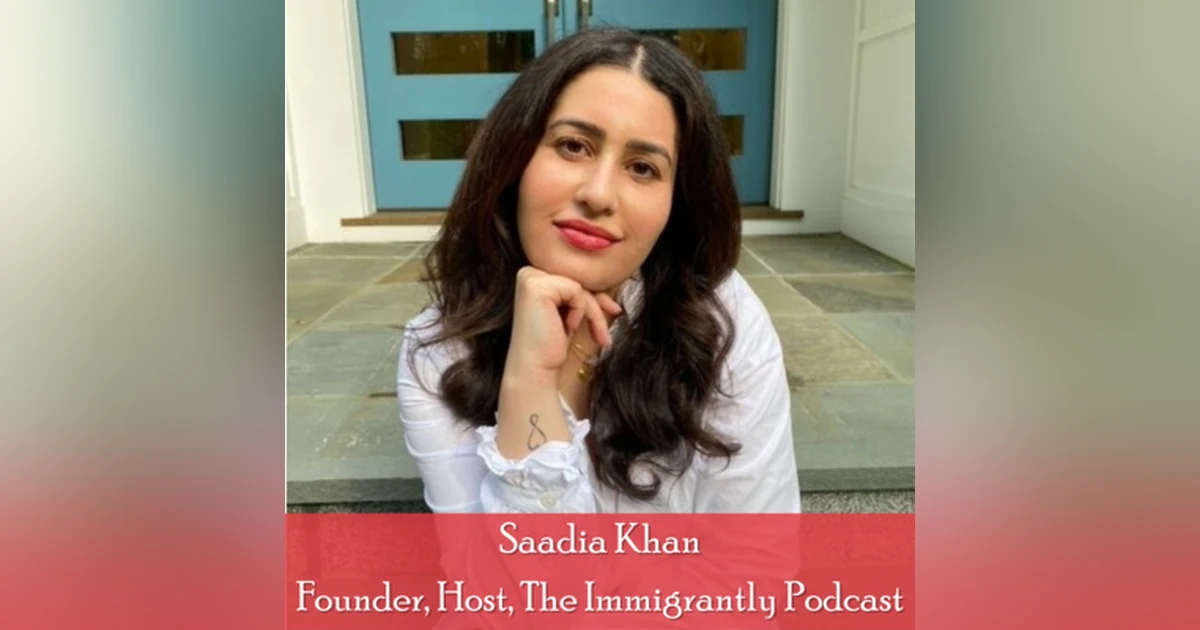
Saadia Khan is the host of The Immigrantly Podcast, a weekly program that aims to deconstruct stereotypical narratives of immigrants, their second-generation kids, people of color, and change-makers with cross-cultural, nuanced conversations.
Nikhil and Shelly spoke with Saadia on a range of topics, including their journey of healing, the struggles of being a first generation immigrant, how their experience shaped their parenting philosophies, and the priceless gifts of abundance, awareness, and other elements of happiness.
To learn more about Saadia and The Immigrantly Podcast, please visit https://immigrantlypod.com/. You can find out more about Nikhil and Shelly at https://shellysood.com.
0:06 Okay. So I am so glad that we are doing this, and thank you guys for being so patient with me through this content ordeal but I'm really excited. And today we are going to talk about something extremely extremely important, which is mental health and its impact on relationships. Something that both of you have talked about extensively. So before we delve in, can you both introduce yourselves and just give Thought story as to who you are. So I'm Sally sued and entrepreneur author as well as mental health, Advocate and mother of three as well. So, you know, the kill and I, my husband here were married for 20 years and he was suffering from undiagnosed. Bipolar disorder for nearly two decades. So I eventually helped save his life, you know, he had quite a journey to his healing and his whole Process. I've been doing some Visa John both of you and it seems like there's so much to unpack, right? And I'm just trying to think, where do we start? But Shelly, what I have noticed is that both of you have had different Journeys.
1:19 When it comes to dealing with nickels, bipolar disorder, you've had your own Journey, he's had his own and then add immigrant identity pressures of being, you know, this alpha male career kids, all of that in there. And it's a recipe for disaster, right? But I want to focus on healing. How has the healing been for both of you so far? And what have you learned through this process? First of all shouting. Oh, thanks so much for having us and I really appreciate you braving the elements as they say, to make this happen. So we're really excited for this discussion.
1:59 So to add to what Shelley was saying. So, yeah, I have been suffering from undiagnosed. And bipolar disorder for about two decades. I recently got my diagnosis about five years ago and you know, I learned firsthand what the difficulties are with stigma of mental health, within the South Asian Community just because as you note noted before about the need to achieve, the need to live up to that immigrant ideal was really challenging but fortunately with Shelly's, help and some work that I've done. I was able to to overcome that, I think it really for me, it starts with humility and awareness because that was something that was not.
2:45 It was not in my wheelhouse as they say, for so many years because, you know, I'd gone to a top business school. I had worked at a lot of the top consulting firm some of the top Banks. And it really just wasn't in my vocabulary was just about the whole grin. And Barrett take the stoic approach and the merits of grits and Of attitude. So it really took a real bottoming out for me to wake up and Shelly, says smell the cappuccino and realized that, you know, I really needed some help. I think for me, it was, you know, I often times with mental health, I think about in Corporate America, how they have those trust exercises, you know, where there's a group of people, and you sort of fall back, that's really, what was the springboard from my recovery?
3:35 I was trusting in shally and trusting in her family and realizing that they really saw the real me and saw Beyond just some of the behaviors that I was exhibiting, you know, saw that I was a caring, father, caring husband, you know, someone who had a really good sense of humor and you know, just just had a good heart, you know. So that's really important. It part of healing is to have somebody in your corner. Honor and I am very fortunate and blessed to have that, you know, and I really encourage people who, you know, whether it's friend or family or really seek out that person who really knows the real you and we can and Shelly can add to this also.
4:22 But I think you have to have a very well-rounded approach and you can't rely on one specific tool over the other. So for me, obviously medication was the start of that. That cognitive behavioral therapy obviously you know talking to a good therapist, not just one who tells you, what you want to hear and you know just ignores kind of what's hiding in plain sight more recently. What's entered into that equation is going Beyond those sort of the table Stakes as they say and that would involve like meditation and mindfulness. And that's something showing I really actively embraced because there's so many different Guru's, I guess you could say out there but the one that's really resonated with us as been Deepak Chopra, we went to one of his Retreats.
5:15 We listened to his meditations and I think one of the key teachings that I've taken away from that is, you know, the body is it's not a noun, it's a verb and I say that because there's so many processes going on in our mind you know, there's so many people who get a diagnosis you know whether it's Multiple sclerosis, or it's something like arthritis and they sort of accept that as fait accompli. And they don't realize that obviously, there's a biological underpinning to it, but if you think about this in a holistic approach and you think about how much control you really have, you know, I think that can really win the day and so Shelly.
5:58 If you want to add to that one of my healing process as he indicated was meditation through this whole journey and it Really helped me because, you know, it as Deepak, Chopra puts it, a create a chaotic mind, no matter what the thought is, whether it's positive or negative is still a chaotic mind. So really quieting. That mind was very key to my own personal healing journey and you know it helped us rebuild our marriage and find a better place within ourselves to have a fulfilling life. Have a happy, a good career, a happy family life. Raise our children effectively, you know, the other thing that really drove me is, you know, I stopped caring about what other people think.
6:44 And I think that is one of the biggest downfalls. Whether it is South Asian culture, whether it is, you know, Americans in this country no matter what they're always driven. Their emotions are driven, a lot of times by other people. You know, I was going to do this Shelly because in this day and age of social media, when social media sets up such unrealistic expectations about relationships about marriage, you see these, you know, picture, perfect, you know, Images of people, vacationing and having good time, nobody talks about the Dark Secrets weaknesses anxieties fears that come along and both of you have been so brave in you know just stacking that head-on and having conversations, how hard was it to, you know, break through that and say, you know what, we are going to share our story and we don't care. As you said, what?
7:39 Others think it was very hard, it was an evolution. It was a Journey for me because I had made so many mistakes in the past. Like, as you know, South Asians were very Collective culture. Yeah? Right. We're not individualistic. We're looking out for our family. Any success that I had or that nikhil had was a success for me, as well. So any failure that he exhibited was a failure for me as well. So my problem was, I was so driven by my ego and I lived in this world of denial because that's just what you do. And that's how you keep the family unit strong, and, you know, that tend to like, suppress his emotions. So he wasn't able to express really what was going on with him.
8:22 And then one fine day just blew everything just blew out of the water. You know, it's interesting because I was listening to your podcast interview and you mentioned that you were in denial. You just said that right now as well. And what surprised me was that and you'll make it was exhibiting certain, behave Behavior, right? Certain traits. And I'm sure it must have been confusing for you at the time as to what was happening and why he was going through these highs and lows. And when he came to you and he said, look, this is what I'm saying. Suffering. From, in my mind I was thinking that could have been like, you know, this is what it is. Now we you know, nailed it, we know but you were hesitant like they were some reticence to even accept that and you you know, tied that to, you know, being a reflection on who you are and taking it as your failure.
9:19 Exactly. Do incredible. Yeah, so can you talk a little bit about that? That was the biggest mistake of my life. And you know when he had decided to file for divorce divorce and everything and our family was in such turmoil at that moment in time when this happened, I looked back. And I thought about why didn't I accept it? Why did not have? I was I so busy with the children with my job, with whatever outside distractions that I was not looking within our own family in it and I think that is a big problem because people really don't step back. Sit down and think about what's going on in their family, Dynamic. You know, there's tremendous amount of judgment has yard approach, both your approach.
10:07 And I want to pose this question for to both of you towards your kids changed because of the process or the trauma that you've gone through, are you more aware and mindful of, you know, we are kids behavior. And if they have any questions and if they have any fears, are you more attentive to that? Now versus say, I don't know, 10 years. The go. I think the biggest thing for me was just keeping up with the Joneses, or I guess, in our, in our culture, be keeping up with the James. I don't know what it is. It's just, you know, we are part of a Sunday school group and every week, you know, we would have to go there and I thought initially, these kinds of activities were great for educating our kids about the culture, but it became very competitive, you know, it just became about well, you know what?
10:56 How many activities Tivities is your kid in or you know what? How many spelling bees did your your daughter Rin? And that was very toxic, not just for us, but for the kids and I just think back to when you know when we were growing up and a lot of our achievement was just the trophies on our mantle or a proxy for our worth in our parents eyes. Maybe that's not, maybe that's definitely not the reality but that was the perception that we had. So you know if some other kid Want to tennis tournament and we, you know, got knocked out in the first round, you know, we were not worthy and so that I needed a lot of retraining in my mind. And I think about, you know, I think specifically about our son because he's just such a brilliant kid. And I mean, you know, he's going to go so far. And but, you know, he's one of these square peg in a round hole.
11:49 And if we were trying to apply that conventional template of, you know, X number of trophies equals, You know, a score or whatever the worth in our eyes, it would just crush him and you know, my hope is that and the other example would be like our daughter. She's she's an artist, she's an illustrator and she's going to the top illustration School in the country. This fall for college and that was a very unconventional career path. And I got to say, I mean, for me it was it was hard. I'm very proud of her not Her accomplishments but just she's a good person at the end of the day, I mean it's about what they're taking away and it's about how well adjusted they feel and how secure they feel because we want our grandkids also to have that, you know, sense of stability and self-worth. So, yeah, you know, to me, motherhood has changed quite a bit.
12:47 I was exactly the same way. How has it changed? You know, I was more about keeping up with the Joneses just like everybody else. And now, if my children are happy They're healthy and they're pursuing their own dreams, not my dreams for that, but their own dreams, then they're going to live a great life and I feel like that's my job. And if I can do that then yeah, I feel like I'm a good mother, you know, both of you. Bring up such important points. And most of what we are talking about is not linear, right? So it's one thing doesn't lead to another. I feel like as immigrants because I am an immigrant parent, you guys are second gen. So for you it's it may be a bit different but A lot of times, immigrant parents are harder than on themselves and on their kids, right? Because somehow, they are trying to find validation for leaving their home country.
13:41 Moving to a new country. He started. And in a way we pass on that trauma that you know, alienation those fears onto our kids. So I'm sure both your parents to some extent passed on that. At to both of you and nickel, you've talked about your mom, right? You've talked about how she hasn't been diagnosed with bipolar disorder but you think she may have it. And I remember one thing you said on one of your interviews was that she said something like I never had stress going out, right? That's good.
14:27 It's also being in a collectivist society, right? So I grew up in Pakistan, I had family extended, family, cousins, Aunts Uncles, even if you have stress it's somehow, I think she'll do you Shield it from it in a way or you are not as mindful of it. It's not part of your Consciousness because there is so much else going on and there is so much support. But when we come here, it's a nation it's you know being alone and I'm sure it's It's the same for both of you because as second gen kids, you don't have your immediate family close by right was that the case for both of you? They're close by, they're not in the same town. It's definitely nothing.
15:10 Like what you see in India, where families, you know, that he grew up in the same house and, you know, your grandparents and you see them every day. It wasn't wasn't like that for sure. Yeah, so tell me a little bit about your book, both of you have written written a book as well. What does it contains? Can you give us some Snippets of what people can expect from it? So untethered is it's a do? Boys, about a South Asian family, whose spouse suffered from mental illness and when I say do a voice, I mean it is my voice as well as Nikki's voice and it's very interesting because it's really never been done because you know, there's one incident that happens per se and I have a certain analysis of it, right?
15:56 But the kills analysis could be completely opposite from what I was thinking. So it gives a very interesting perspective to the caretaker And somebody suffering from mental illness as well as both perspectives. So that can be an example of a situation where your perspectives were completely different. Sure. So, when he had filed for divorce, he had said to me, you know, stop this load. If you're trying to dislocate my shoulder, you're trying to hurt me, you know? And he was exhibiting paranoia, he was somewhat delusional at the time versus me, I was tapping on. His shoulder trying to talk to him, trying to figure out what happened to our marriage.
16:39 Why did it fall apart suddenly? So that's just a prime example of his perception of what was real and true versus what I saw as real and true. And so, I was able to eventually when I came to grips with what was happening, understand that this illness is, it's an illness exactly that, you know, and it has to be separated from the individual and their Personality. And I knew his heart, I knew his heart and his soul was pure and a he was a beautiful person inside. So I knew what he was exhibiting and showing me was an illness. When did you Nikolai because you initiated divorce? When did you decide not to pursue it like, was that a moment was there some trigger when you said, you know, I'm not going to pursue it.
17:31 I think the universe kind of decided that for me because You know as what as very common with people with bipolar disorder, there comes a point where you know, as they say the scales kind of fell and you're living in this fantasy world. Where you know you're on top of the world, everyone else is beneath you and you know, you can, you can just do whatever Financial constraints. Don't matter, you know, health concerns don't matter. And I reached a point where, you know, I didn't have a job. I did. A place to live, you know, I had my friends quote unquote, but, you know, I was completely estranged from my family and, you know, I don't want to get too much into my relationship with my parents. I mean, I think deep down they're good people but, you know, unfortunately, it's not a relationship that is, you know, really in place right now.
18:29 But my Shelly jewelry should have shared with me a comment that my dad made when she She was, you know, there was no reason for her to try to help me at that point. Because like I said, I had filed for divorce, you know, I was just hell bent on just walking away from this marriage and you know what was interesting? Was she told me, I guess, my dad had basically intimated that this was all a plan and that, you know, I wasn't really going through any of this and that I was, you know, conning her. And he actually called me a sociopath and, you know, I hate to dredge up the past. Ask. But I bring that up because there comes a point, you know, when you get sort of like a gut punch, you know, and you and you realize you sort of have the rug pulled out from under you. And at that point, I said to myself, okay, whatever I'm doing and I thought it had been working all this time. It ain't cutting it anymore.
19:27 So I basically turned my whole self over to Shelley, you know, it's interesting when they talk about Alcoholics Anonymous, you know, they They say, one of the precepts of that is turning yourself over to a higher power. And, you know, I have the higher power seeing right here is just basically like I and again, I mean, I'm indescribably fortunate and blessed because there are a lot of people who, you know, their spouses would have given up on them, it wasn't that bad. But and that and honestly at that point, the term divorce wasn't even in the equation at that point. I mean, it was just literally like, you know, like A person, I think about it. Like a person who was Shipwrecked in, they're drowning at Sea.
20:11 They're not talking about, hey, maybe I can save 10 bucks on my ear internet, at that point, that that was about the level of the priority was like, I just wanted to save my life. I wanted to get my relationship back with my kids and at that point Shelly, you know, wasn't even the the marriage hadn't even occurred to me. But as I saw, you know how much belief she had in me as I saw it. You know how much commission? It meant there was, you know, it did everything just kind of fell into place and that was, you know, that was, when I decided, you know, call the dogs off, call this call the rock pile, you have such an inspiring story, but I want to get into, you know, your head space and what you were thinking at the time.
21:00 And why did you decide to just stick it out like, You know, despite everything that was happening. I love you all. So I had given up on the marriage at the point. When Noah was getting treatment. Yeah, I had given up on the marriage and my main Pursuit was that this man. I want him to be a good father to my children, he can be a good father to my children and I want to give that to my children and my family. And so I had pushed the marriage, totally aside, mentally, and I did not deal with the marriage, until he moved back to into the house. And, you know, he actually lived in the basement for a couple of months. Months because I needed to heal, I needed to process everything. I wasn't ready to jump back into this marriage.
21:42 When I had so much to process myself, I had so much internal healing to do myself that the marriage was really a low priority. It was more about his health, that's that's amazing. Now, in gives off South Asian Community. Specifically, I grew up in Pakistan, your parents are from India. So it's like, culturally, we are pretty similar. Believe it or not, what do you think are some of the challenges we are still facing in South Asian communities? When it comes to having these open and honest conversations around mental health mental illness healing because sometimes I feel like in South Asian Community, especially among immigrants like myself, we still think of it as a vested contract. It's not something that happens to us. It's thing that's been created in the west that, you know, people who have, you know, don't have other issues to think about them just focus on this.
22:44 So, how do we change that narrative? Go ahead. I was going to say, I mean, the, the collective concept that you talked about earlier, so important, and I don't really fault immigrants for their views, on mental health and that's because, you know, for second generation immigrants. The thing is, we have, you know, our Our peers, we have the Indian Community, they have the temple but there's not really that equation of that Community with family. You have to remember like when our parents came here, first of all, you know, my our parents Shelly and my they're from the same Community, they were both in Toledo, which is a not a very diverse town and this was in the 70s. So you got to remember, I mean, you know, they were pretty much, I mean, the term used to be called illegal. Aliens.
23:36 And I mean, that's because a lot of the perception of immigrants in this country was just, they were other, you know what I mean? Yeah. So really in that context. When you don't have anyone, you band together, this is basically a proxy for your family. And so coming out and admitting any weakness, when it's something like mental illness, which is so misunderstood and demonize literally demonized and India that I mean, I would say it's beyond courage. I mean, I think it takes a lot of audacity to take that jump because literally, you're coming out and you're, you know, saying to these people who have been your Lifeline that you know, hey I'm I'm damaged goods or whatever. Obviously, I don't think that but and I think that, you know, even in the 97, not the night, even in the, what are we in the 20s?
24:32 God, I feel old. With all this information coming out with all these people, you know, sharing their stories and social media. And there's still so much entrenched shame, and fear, and that's part of, that's part of our book. I mean, the book is called untethered, and that's really what it comes down to is it's about breaking free of that false safety net, you know. Because at the end of the day I mean you're You have this sense that you know, I have this quote-unquote community and they're like my family but you're harboring a lot of this hurt and this dysfunction inside.
25:16 So you know, on the surface as you alluded to earlier, I mean if on Instagram and Facebook you have this beautifully curated collection of you know World travels and your kid winning the spelling bee it's all Bs, right? And so so that's what it is. It's just a fear of, you know, it's almost like an elf. So, like, when a kids learning to swim, you know, a fear of pulling out the paddleboard of the floaties. And so that's really what our book gets into. It talks about untethering, your life, and getting rid of those shackles, because it's a false sense of security that really in the end can really be destructive more than anything.
25:58 Yeah, I would agree. And additionally, I think there's so many other factors rights, especially people who identify as male we Have certain expectations, we have certain, I guess, idea of what, you know, cisgender male looks like or how they act and that in itself can be problematic, right? Because then you can't show vulnerability. You can't show anxiety weakness. How did you overcome that nickel? I mean, it's still, it's still something I'm struggling with every day. I would, I'd be lying if I say that, you know, I've I've become the perfectly idealized version of myself.
26:41 I mean, you know it's just something that I remind myself, you know, I remind myself of what I have. I just remind myself that there's no there's no benefit in, you know, being that person. Obviously, I'm still very driven. I, you know, I'm very grateful to my parents for helping provide me with the education that allowed me to get A good career I had to, you know, pivot quite a bit, you know, going from high stress, high power, you know, banking career into something that's, you know, it's obviously we're here to make money but it's more altruistic, it's more, it's more about helping humanity and so that's really what it is. It's just I always, you know, my buzzword meters going off but at the end of the day it's gratitude it's just about stopping to think like okay you know, and in the initial All stages of my recovery.
27:37 There was a lot of, oh, you know, I was making this amazing salary before. I was, you know, traveling all around. I had all these great names on my resume but I was miserable inside. So even though success looks a lot different right now, at the end of the day I mean it's just about gratitude and it's about remembering it's about remembering what I have. How do you focus on gratitude? Like what is there a ritual you followed to you know, Just keep track of what you have, what you want, you want to have. Um, you know, obviously, and that's what I was alluding to earlier about the buzzword m going off, is that, you know, you go to Target, they've got all these gratitude journals. You've got my go on YouTube, there's like how to be more grateful but for me it's just, it goes back a lot to the simple things and going back to a Deepak Chopra said about the body being a verb and not a noun. It's about mindfulness and taking that breath. Because this happens all the time and Shelly, you know, agree, it's like in our business, you know, sometimes will get an email from somebody and it'll just it'll just drive me nuts, but I will literally step back. I'll take a deep breath and I will say maybe that person is going through something in their life. That's, you know, not not great.
29:00 I've been there before and yeah, I mean it's just about, it's really just about keeping, I guess, keeping my eye on how far I've come. And and not not succumbing to that desire to, you know, judge my life based on that template, that was handed down. I agree, and I think it's a major reprogramming and the one thing you know, that I take away and learn the last 67 years is not to be reactive to what else is going on around me and be more proactive. And so once I learned how to do that through meditation, Tation through my mindfulness techniques, I was able to turn off that noise and exhibit my creativity and launch a company and, you know, work on a book and all this other things that really gave my, it was soul food to me.
29:57 So I think it's so important for everybody to find their soul food. In the end if you want, whoever is watching this or even people who listened to your podcast if you want. One thing, one take away and I know it's hard. Like they could be millions, they do is right now. What would it be? You want to go first? So, I think the most important thing is, you know, yes, your family is important. Your children part in your spouse is important, right? But you have to remember, you are also important, and you really need to look within yourself and what makes you happy. And I think as a South Asian Asian mother and entrepreneur, you know, it's difficult to see that and the only way to do that is to step back from everything that's going on around you. You know what your kill children need what your husband means and to look within yourself, what is one thing that brings you total Joy?
30:59 Because a lot of times, you know, these these degenerative conditions and these diseases come up because there is not just you know, only 5% are really attributed to a gene mutation. And the rest is all about your environment and all about how you are, you know, exhibiting yourself and living your life. What you're eating, what you're feeling, what your subconscious mind is really thinking. So I'd say that would be my biggest thing was shady. What does happiness mean to you then? In This Moment. happiness is Abundance to me. And I, when I say abundance, I don't mean Financial abundance.
31:42 I mean, emotional, abundance, and internal wealth. I love it. And what about you, Nicole? I guess I would say the takeaway really should be, don't subscribe to any template. That's that's been thrust upon you. I mean obviously respect for your parents is very important and you know that's something that we want our kids to remember is that, you know, we did really did bring them into this life. We have had many Sleepless sleepless nights, you know, financially. So we've had to struggle and strive to help them, but at the end of the day, we don't want, we don't personally want them to feel that we've been, you know, that we've given them this impossible, standard to live up to. So I would say that would be the number one. Takeaway is just not to have this one-size-fits-all about what it really means to make it.
32:43 As long as you know, you can sleep. See, at night, I mean, as long as, you know, you're comfortable with what you're contributing to society, as long as you're, you know, happy with the impact you're making. Then, you know, I in my mind, that's that would be making it. And then I guess your second question about what does happiness mean? So obviously Shelley use the word abundant so I can't use it. But, you know, it's a simple term. It's just like gratitude. But it's a simple term that I think is so powerful and that is awareness, you know, I guess what I would say is it's like when you go to the museum and you look at a painting, you know, when you when you get up close, there's so many little dots and there's so many little details that you can really, you know, it can be overwhelming, can you imagine, you know, your brain trying to process all those individual pieces of stimulus? Whereas when you step back, you know, you see this beautiful Astri.
33:47 You know, my art history lessons are kind of escaping right now. But I think that's impressionist painting. I can't remember. I should know more I guess since my daughter is such accomplished artists but the point is it's just about really seeing the forest for the trees and that means not just kind of externally. But also internally it's about understanding you know, the processes in your body. It's about when you're stressed out not You know, getting into that fight or flight response that's you know so easy to jump into and sort of at quieting that Reptilian Brain you know the Primitive fight or flight response. And so yeah I mean I think for me that's that's really what What happiness means is looking at what you have looking at, you know who you are.
34:41 And you know just really taking stock of what. You know what God has given you regardless of your religion? I mean what God what the universe has provided for you? And really embracing the present? You know, not not dredging up the past not getting depressed by your previous mistakes or not, not Conjuring up some, you know, doomsday scenario, that might happen in the future. So really just, I mean the bottom line is the present is a gift. Yeah. And so that's, you know, she's Enos aside my apologies but that's really kind of my key. Takeaways.
35:23 I love you. Thank you so much both of you and we did it finally, with all the glitches and all they conspiracy that Khan had against us. We were able to do this. I am so. Glad is there a website? People can go and find more information about your words, your book, your upcoming Hollywood project, your company way, can they go? So so yeah, there's a couple. So the first I'd say to learn about both of us would be Shelly. Sued.com that's shellikins89 d.com. Then our podcast is it's on all the platforms but I'd say the one that we tend to direct people to is the Shelly story.com so it's just the Shelly that's you know story.com and then our business is Geo star Chicago.com.
36:15 So it's like GI o, STAAR Chicago.com. Wonderful, have a great rest of the day, guys. This was so much fun. Yeah, I really enjoyed it. Thanks so much. Thank you. Thank you.

